Creating a stunning front yard that conserves water no longer means settling for a sparse, uninviting landscape of rocks and cacti. Modern water-saving gardening techniques have evolved to transform your outdoor space into a sophisticated, magazine-worthy sanctuary that actually reduces your water bills while increasing your home’s curb appeal. By combining drought-tolerant plants, smart irrigation systems, and strategic design principles, you can achieve that luxurious garden aesthetic while cutting outdoor water consumption by 30-50% or more—all without the guilt of excessive watering.
The key to this transformation lies in understanding that water conservation isn’t about deprivation; it’s about working with nature rather than against it. Whether you’re motivated by rising utility costs, local water restrictions, or simply want to create a low-maintenance outdoor space, the strategies in this guide will help you design a front yard that impresses neighbors and visitors while requiring minimal intervention.
Why Water-Saving Gardening Makes Both Environmental and Financial Sense
The numbers tell a compelling story. The average American household uses about 300 gallons of water per day, and roughly 30% of that goes to outdoor irrigation. For those living in drought-prone regions or areas with water restrictions, this statistic becomes even more critical. Converting to water-efficient landscaping can reduce outdoor water use by 30-50%, translating to annual savings of $150-$300 for a quarter-acre property.
Beyond the immediate financial benefits, water conservation gardens support local ecosystems, reduce your carbon footprint by decreasing water treatment and transportation needs, and often increase property values by 10-20% according to recent real estate studies. Property buyers increasingly view water-wise landscaping as a premium feature rather than a compromise, especially in regions prone to drought.
The Foundation: Understanding Xeriscaping and Its Core Principles
Xeriscaping—often called low-water or water-wise landscaping—is fundamentally a design philosophy, not a style. It’s based on seven core principles that work together to create beautiful, sustainable landscapes.
The first principle is thoughtful planning and design. Before you plant a single specimen, assess your front yard’s unique characteristics: sun exposure (full sun, partial shade, or full shade), soil type (clay, sandy, or loamy), drainage patterns, and existing infrastructure. Group plants with similar water needs together in zones called “hydrozoning,” which allows your irrigation system to run more efficiently and prevents the common mistake of overwatering some plants while underwatering others.
The second principle involves improving your soil. Healthy soil is the foundation of any water-efficient garden. If you have clay soil, amend it with coarse sand, perlite, or decomposed granite to improve drainage. Sandy soils benefit from the addition of compost or aged manure to increase water retention. Research shows that well-amended soil can enhance moisture retention by up to 22%, meaning your plants need less frequent watering.
The third principle is selecting appropriate plants—those that naturally thrive in your local climate and soil conditions. Native plants are naturally adapted to your region’s rainfall patterns and require minimal irrigation once established. Even if you can’t source exclusively native plants, choosing drought-tolerant alternatives that match your climate will dramatically reduce water needs.
The fourth principle, efficient irrigation, uses targeted delivery systems like drip irrigation that apply water directly to plant roots, minimizing evaporation and runoff. The fifth involves strategic mulching to reduce evaporation, regulate soil temperature, and suppress weeds. The sixth addresses limiting turf areas by replacing water-hungry grass with drought-tolerant groundcovers, hardscape features, or ornamental plants. Finally, the seventh principle is appropriate maintenance—regular monitoring, seasonal adjustments, and careful plant management to keep your landscape healthy without excessive intervention.
Together, these principles can reduce water usage by up to 80% compared to traditional landscapes.
Selecting Drought-Tolerant Plants That Deliver Year-Round Beauty
The most common misconception about water-saving gardens is that they lack visual interest. In reality, drought-tolerant plants offer extraordinary diversity in texture, color, foliage patterns, and bloom times. The key is understanding which plants thrive in your specific region and how to combine them strategically.
For Colorful, Low-Water Perennials:
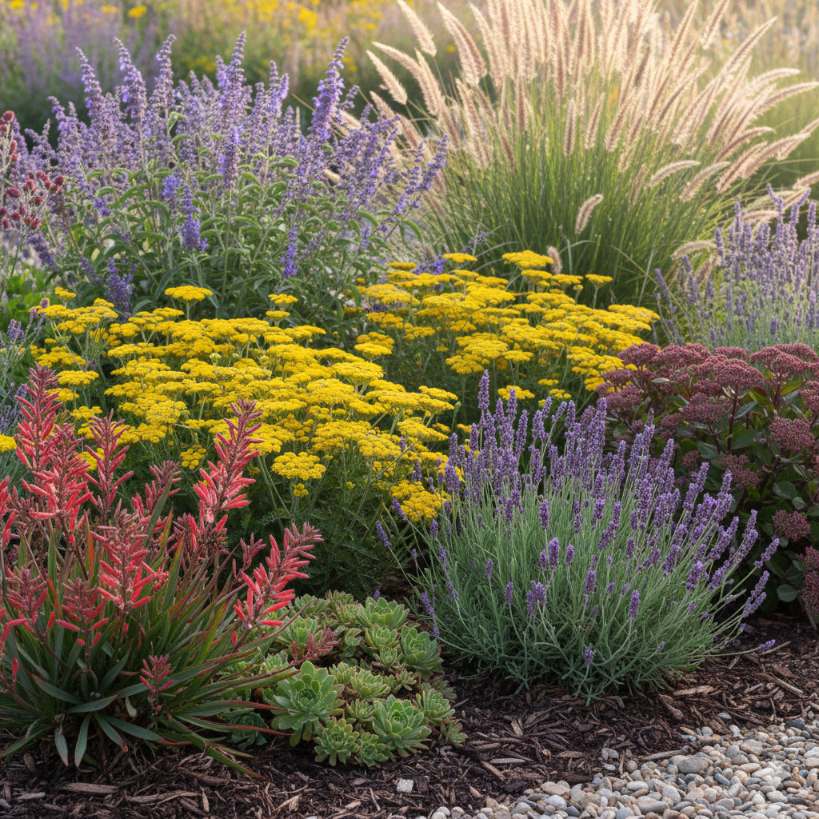
Russian Sage (Perovskia atriplicifolia) delivers dramatic spiky blue flowers from mid-summer through fall and thrives in full sun with minimal water once established. Its silvery foliage provides contrast to other plantings. Yarrow (Achillea spp.) produces long-blooming flower clusters in yellow, white, pink, orange, or red, attracting butterflies and pollinators while tolerating heat, cold, humidity, poor soils, and drought. These plants often reach 1-3 feet tall and look stunning when grouped in odd-numbered clusters of three to five plants.
Blanket Flower (Gaillardia) brings vibrant red and yellow blooms throughout summer, while Black-Eyed Susan (Rudbeckia) offers cheerful golden-bronze daisy-like flowers and coarse-haired green foliage that’s distasteful to deer. Salvia varieties provide spiky flowers in blue, purple, white, or pink, depending on the cultivar, and many species rebloom prolifically when deadheaded.
Catmint (Nepeta spp.) produces long spikes of cool blue, white, or pink flowers from late spring through fall, tolerating different soil conditions and requiring minimal maintenance.
For Sculptural Impact:
Ornamental grasses like Blue Fescue (Festuca glauca), fountain grass, and big bluestem add movement, texture, and height variation. Their deep root systems—often extending 3-10 feet into the soil—allow them to access water unavailable to shallow-rooted plants. These grasses provide year-round interest, with spring green foliage transitioning to bronze or copper tones in fall and holding attractive seed heads through winter.
Agave and Yucca species create dramatic focal points with their bold architectural forms. Texas yucca and red yucca thrive in hot, dry conditions and produce stunning flower spikes. These plants require virtually no supplemental watering once established and add instant luxury to any front yard.
For Delicate Groundcovers:
Sedum varieties like Sunsparkler and Autumn Joy offer succulent foliage in varying colors, from deep burgundy to chartreuse, with small flowers that attract pollinators. These compact plants (typically 6-24 inches tall) work beautifully in rock gardens, between pavers, and as foreground plantings.
Creeping thyme and other low-growing herbs provide fragrant foliage, delicate flowers, and the practical benefit of culinary use. They tolerate foot traffic, fill gaps between hardscape elements, and require minimal water once established.
For Fragrance and Culinary Use:
Lavender (Lavandula angustifolia) produces iconic fragrant purple spikes and thrives in full sun with well-draining soil. This Mediterranean native handles drought with ease and attracts pollinators. Rosemary (Salvia rosmarinus) is equally drought-tolerant and offers both culinary leaves and delicate flowers in blue, white, purple, or pink.
The Art of Layering: Creating Depth and Luxury
A common mistake in water-saving gardens is treating plant placement as an afterthought. Professional designers use a three-tier layering system that creates visual depth and architectural interest while maintaining water efficiency.
Tier 1 – Tall Focal Points (4-8+ feet): Position specimen plants like trees, large shrubs, or tall ornamental grasses at the back of planting beds or as focal points when viewed from the street. Texas Mountain Laurel (Sophora secundiflora) offers glossy dark green foliage and fragrant deep purple flowers. Crepe Myrtle (Lagerstroemia spp.) provides striking summer flowers, attractive peeling bark, and drought resistance once established. Eastern Juniper (Juniperus virginiana) delivers evergreen structure and shelter for beneficial wildlife.
Tier 2 – Mid-Level Plants (2-4 feet): Fill the middle layer with shrubs and compact trees that provide structure and visual interest. Purple Rain Sage (Leucophyllum x zygophyllum ‘Purple Rain’) offers silvery foliage and deep purple flowers in an upright 3-5 foot form. Desert Marigold and Texas Sage produce delicate flowers that respond to summer humidity changes. This middle layer is crucial for creating that lush, full appearance while maintaining visual balance.
Tier 3 – Low Groundcovers and Accent Plantings (6-24 inches): Creeping plants, sedums, and colorful perennials tie the composition together and soften hardscape edges. Vary leaf colors, textures, and flower colors across this layer—silvery foliage contrasts beautifully with deep green, and purple flowers complement yellow or orange tones.
The luxury secret lies in repetition and odd-numbered groupings. Instead of one Russian Sage, plant three in a triangular cluster, spaced 3-5 feet apart. Repeat this grouping elsewhere in the front yard for visual coherence. This creates a polished, intentional appearance rather than a random plant-by-plant approach.
Hardscaping: Structure, Elegance, and Water Efficiency
While plants provide beauty, hardscaping elements deliver the structure and luxury feel that transforms a water-saving garden from practical to prestigious. Strategic hardscape design reduces the overall amount of irrigated plant material while improving drainage and creating functional spaces.
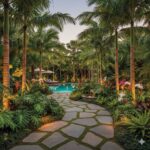
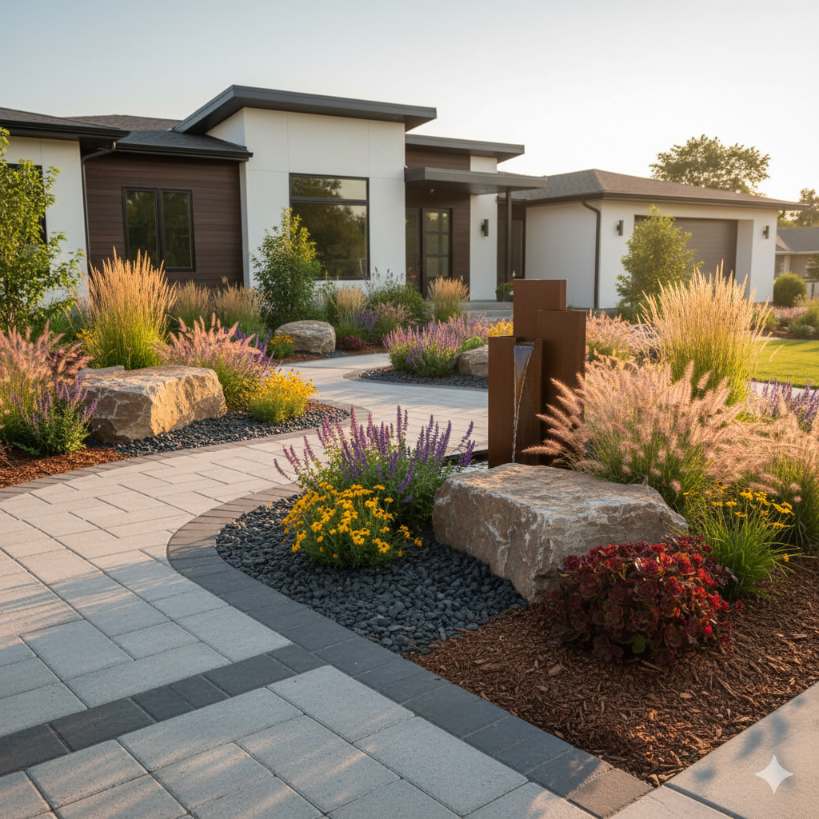
Permeable Pavers and Pathways: Use permeable pavers, gravel, or decomposed granite for walkways and patio areas. These materials allow water to infiltrate the soil rather than running off, reducing erosion and supporting groundwater recharge. Modern permeable pavers come in sophisticated finishes—from light gray to warm tan—that complement contemporary home architecture. Arrange them in geometric patterns, running bonds, or organic curved paths depending on your desired aesthetic.
Decorative Mulch and Gravel: Layer different materials to create visual interest and functionality. Dark river rock contrasts beautifully with reddish bark mulch or light-colored decomposed granite. These materials suppress weeds, reduce evaporation by up to 58.8%, and improve soil structure as organic mulch decomposes. Professional installations often use 2-3 inches of mulch or gravel, refreshing it annually or as needed.
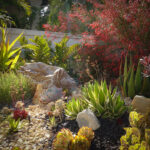
Boulders and Rock Features: Large, naturally weathered boulders create instant focal points and add permanence to the landscape. Arrange them in odd-numbered groupings (one large, two medium, or three small) for visual impact. Dry creek beds using smooth river stones create dynamic movement through the yard while managing water flow during rain events.
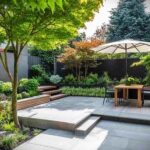
Outdoor Living Areas: Modern water-saving front yards incorporate small seating areas, fire pit zones, or decorative benches. These features reduce the overall irrigated plant area while creating welcoming spaces for relaxation and entertaining. A small patio or sitting area crafted from warm-toned pavers with comfortable seating instantly elevates curb appeal.
Irrigation Mastery: Smart Systems That Conserve Water While Keeping Plants Healthy
Even the most drought-tolerant plants need water during establishment (the first 1-2 years after planting). The difference is that efficient irrigation systems deliver that water precisely where it’s needed, eliminating waste.
Drip Irrigation: The Gold Standard
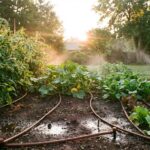
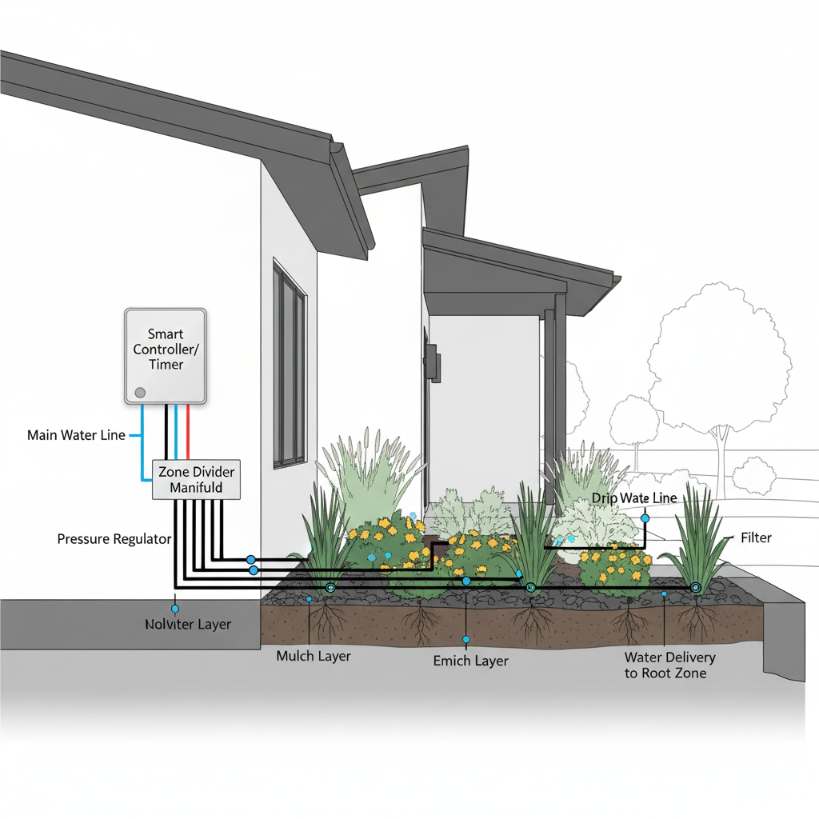
Drip irrigation delivers water directly to plant root zones at a slow, steady rate, reducing water loss through evaporation and runoff by up to 60% compared to traditional overhead sprinklers. These systems consist of a main water line fed from your home’s faucet, supply tubes running to different zones, and emitter lines or individual drippers positioned near plant bases.
For a typical quarter-acre property, drip irrigation might cost $500-$1,000 to install professionally, but the water savings (often $150-$300 annually) recoup the investment within 2-3 years. Many homeowners successfully install DIY drip systems for $200-$400 by purchasing components from garden centers and assembling them according to simple plans.
Design your drip system with hydrozones—separate zones for plants with different water needs. High-water plants (like newly established shrubs) run on one zone, while drought-tolerant mature plants run on another zone that operates less frequently.
Smart Irrigation Controllers
Upgrading from a basic timer to a weather-based smart controller prevents the wasteful “set-and-forget” approach where your system waters regardless of rainfall or temperature. Smart controllers automatically adjust watering schedules based on real-time local weather data, soil moisture levels, seasonal changes, and plant types.
A quality smart controller costs $60-$350 before installation, with professional setup adding $75-$150. The average homeowner achieves water savings of 30-50% compared to traditional timers, potentially saving 7,600 gallons annually. Some municipalities, particularly in water-conscious regions like California, offer rebates up to $100 for smart controller installations, further reducing your costs.
Watering Fundamentals
Regardless of your system type, follow these evidence-based watering practices:
- Water deeply and infrequently. Rather than light, daily sprinkling, deliver half an inch to an inch of water once or twice weekly. This encourages deep root growth, making plants more drought-resistant over time.
- Water early morning or evening. Watering between 5-9 AM allows plants to absorb moisture before daytime heat drives evaporation. Avoid midday watering, which wastes water and can cause leaf damage.
- Avoid overhead spray patterns. Direct water to soil surfaces, not leaves. This prevents fungal diseases, reduces foliage waste, and ensures water reaches roots where it’s needed.
- Check your work. After watering, dig 8-12 inches into the soil to verify moisture has penetrated deeply. Shallow watering creates shallow roots and stress-prone plants.
Mulching: The Secret Ingredient for Water Retention and Luxury Appearance
Don’t underestimate mulch—it’s one of the most effective and affordable water-saving tools available. A protective mulch layer reduces surface evaporation, regulates soil temperature, suppresses weeds, and gradually improves soil structure as organic materials decompose.
Types of Mulch:
Organic Mulches break down over time, enriching soil with nutrients and organic matter. Wood chips, shredded bark, straw, and compost all fall into this category. These materials improve soil drainage, increase beneficial microorganism populations, and create that upscale, naturalistic appearance. Apply 2-3 inches annually, refreshing or supplementing as needed.
Inorganic Mulches like gravel, river rock, lava rock, and decorative stone don’t decompose, so they last longer and never need replacement. They offer excellent design flexibility—choose from neutral grays, warm tans, rustic reds, or bold charcoal tones to complement your home’s architecture.
The Mulching Formula for Success:
Research confirms that mulch reduces soil water loss by 28-58.8% depending on mulch type, depth, and application method. For maximum effectiveness, apply mulch to a depth of 2-4 inches around plants, keeping it 6-12 inches away from tree or shrub trunks to prevent rot.
When combined with drip irrigation, mulch creates a synergistic effect—the irrigation system delivers water efficiently to roots, while mulch prevents that moisture from evaporating. This combination means less frequent watering and healthier, more resilient plants.
Design Principles for Luxury on a Water-Conscious Budget
Creating that high-end aesthetic doesn’t require expensive materials or complicated systems. Instead, it’s about intentional design choices and attention to detail.
Color and Texture Contrast:
Pair silvery-leaf plants (like lamb’s ear, silver sage, or artemisia) with deep green or burgundy foliage (such as purple sage or dark sedum). This contrast immediately catches the eye and creates visual interest. Add pops of color through flowering perennials—a cluster of hot pink blanket flower contrasts beautifully against gray gravel, while blue Russian sage offers a cooling visual effect.
Natural Repetition:
Rather than scattering random plants throughout your front yard, use the design principle of repetition. Plant the same species in three separate groupings across the yard. This creates a cohesive, professionally designed appearance rather than a casual selection.
Balance and Proportion:
Divide your front yard mentally into thirds using a design principle called the “rule of thirds.” Place your largest focal point (a specimen tree, large boulder, or ornamental grass mass) at one intersection of these thirds, smaller plants at other intersections, and hardscape features distributed throughout. This creates natural visual balance without feeling symmetrical or rigid.
Seasonal Interest:
Select plants with staggered bloom times to ensure color year-round. Spring-blooming salvias transition to summer-flowering yarrow and Russian sage, followed by fall-blooming asters and ornamental grasses with golden seed heads. Evergreen plants like junipers and sedums provide winter structure and color.
Lighting Considerations:
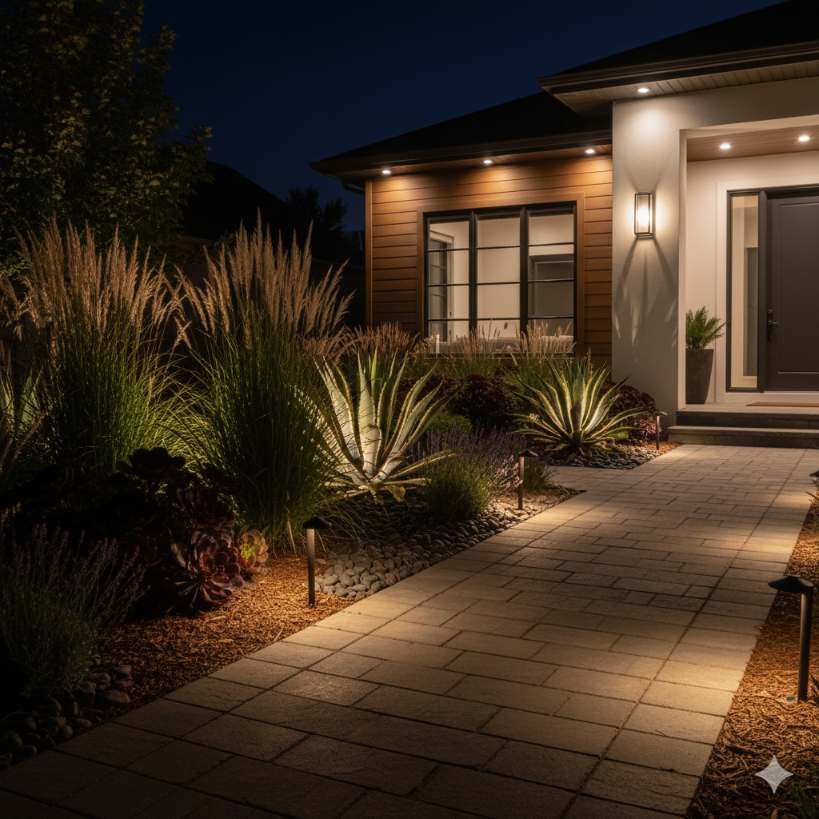
Even water-saving gardens benefit from subtle landscape lighting. Solar-powered uplights highlighting specimen plants, ground-level pathway lights, or warm-toned fixture lights near the home entrance add evening dimension and security. These elements cost $20-$100 per light, making a dramatic impact without breaking the budget.
Water-Saving Gardening Techniques Mistakes to Avoid
Even with the best intentions, first-time water-savers often make predictable errors that undermine their conservation efforts.
Overwatering Despite Drought-Tolerant Plant Selection:
This is the single most common mistake. Just because a plant is drought-tolerant doesn’t mean it needs daily watering. Overwatering causes root rot, fungal diseases, and wasted water. Remember: more plants die from overwatering than underwatering. New plantings need consistent moisture during the establishment period (usually 12-24 months), but once rooted, dramatically reduce watering frequency.
Mismatched Plant Communities:
Grouping plants with vastly different water needs—for example, planting a thirsty butterfly bush next to a drought-tolerant sedum and expecting them both to thrive—leads to inevitable problems. One will either starve for water or develop root rot from excess moisture. Always hydrozode by grouping plants with similar needs.
Insufficient Mulch Application:
Many gardeners apply 1 inch of mulch when the research-backed recommendation is 2-3 inches. Thin mulch doesn’t adequately suppress weeds or retain moisture. Don’t skimp on this critical layer.
Poor Soil Preparation:
Soil isn’t just a growing medium—it’s a living ecosystem. Planting into hard, compacted clay without amendment guarantees drainage problems and plant stress. Spend time improving your soil before planting.
Choosing Non-Native Plants for Your Region:
While not every plant must be native, selecting plants significantly outside your climate’s parameters ensures constant struggle. A tender tropical shrub in a cold climate requires protection, extra water, and constant management. Choose plants appropriate to your zone and climate.
Neglecting Irrigation Maintenance:
Smart systems are only effective if properly maintained. Clean filter screens quarterly, flush drip lines to remove debris, adjust emitter positions as plants grow, and winterize systems in freezing climates.
Frequently Asked Questions About Water-Saving Gardening Techniques
Q: Will my front yard look barren and sparse if I remove my lawn?
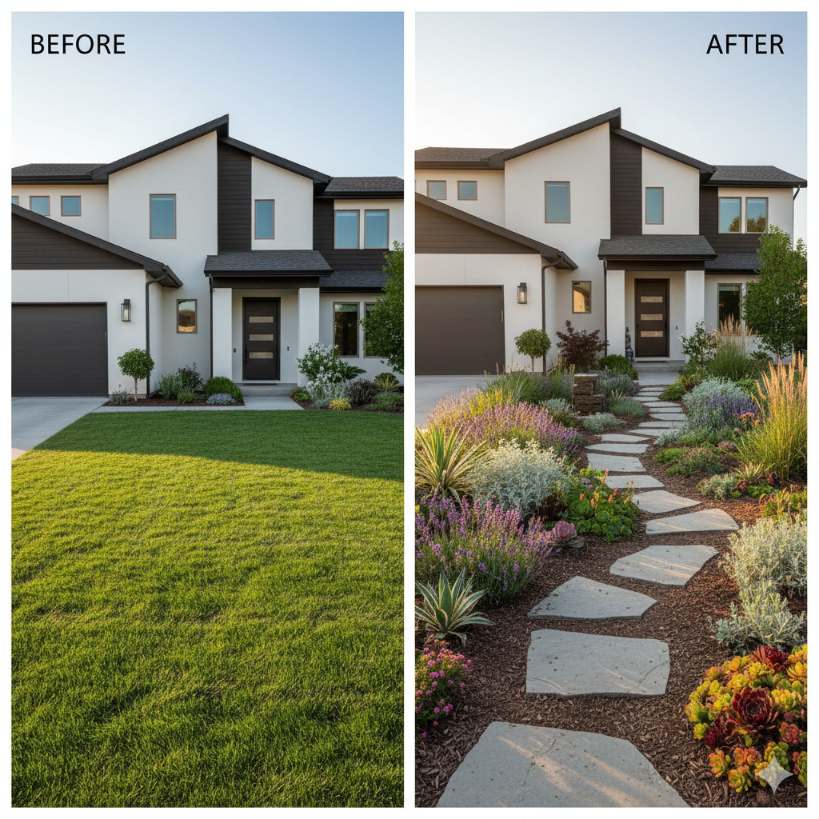
A: Absolutely not. A well-designed water-saving front yard uses layered plantings, varied textures, contrasting colors, and strategic hardscaping to create fullness and visual interest. In fact, most visitors perceive water-wise gardens as more sophisticated and intentional than traditional lawns.
Q: How much will converting my front yard cost?
A: Installation costs for a 1,000-2,000 square foot front yard water-saving garden range from $5,000-$15,000 depending on complexity, material choices, and whether you hire professionals or tackle portions yourself. Breaking this into phases (irrigation first, hardscape second, planting third) allows you to spread costs across multiple years. The ROI comes from reduced water bills and decreased maintenance time.
Q: What’s the best plant choice if I’m a beginner?
A: Start with tried-and-true species like Russian sage, yarrow, lavender, creeping thyme, sedums, and ornamental grasses. These plants are nearly impossible to kill, tolerate a wide range of soil conditions, and provide beautiful results even with imperfect care.
Q: Can I water my new plants by hand instead of installing irrigation?
A: Yes, but it’s labor-intensive and unreliable. Hand watering requires consistency and attention—miss a day during hot weather and newly planted specimens can suffer. Automated systems, even budget DIY drip setups, provide more reliable water delivery.
Q: How often should I water my water-saving garden?
A: Newly planted areas need consistent moisture (typically daily or every other day) for 12-24 months until roots establish deeply. Once mature, most drought-tolerant plants thrive on deep, infrequent watering—typically once per week or every 10 days during the growing season, less frequently in fall and dormant periods.
Q: Do I need to hire a landscape designer?
A: Not necessarily. Many gardeners successfully create beautiful water-wise landscapes using online inspiration, local nursery staff recommendations, and simple design principles. However, professional designers can streamline the process, ensure proper hydrozoning, and prevent costly mistakes.
Q: Will deer and rabbits destroy my plants?
A: Many drought-tolerant plants are naturally unpalatable to wildlife. Deer dislike fuzzy or strongly aromatic foliage like lamb’s ear, sage, lavender, and catmint. However, no plant is deer-proof. If wildlife pressure is severe, install protective fencing around vulnerable areas.
Q: What’s the best time to plant a water-saving garden?
A: Fall through early spring is ideal in most regions, allowing plants to establish strong roots before summer heat arrives. In cold climates, spring planting after frost danger passes works well. Avoid planting in peak summer heat when newly installed plants face immediate stress.
Conclusion: Water-Saving Gardening Techniques
Designing a water-saving front yard that still delivers luxury and curb appeal is entirely achievable, regardless of your climate, budget, or gardening experience. The key is understanding that water conservation isn’t about sacrifice—it’s about working intelligently with nature to create beautiful, resilient landscapes that thrive year-round.
Start by assessing your property’s unique characteristics: sun exposure, soil type, drainage patterns, and existing infrastructure. Choose drought-tolerant plants appropriate to your region, layer them strategically from tall focal points to delicate groundcovers, and integrate hardscape elements that reduce irrigated plant areas while adding sophistication.
Invest in efficient irrigation—whether a professional drip system or a DIY setup paired with a smart controller—and don’t underestimate the power of mulch. These three elements (appropriate plants, efficient irrigation, and mulch) form the foundation of successful water-saving gardens.
Remember that creating a beautiful landscape is a journey, not a destination. Start with one planting bed, gain experience, expand your design as your confidence grows, and adjust your approach based on what thrives in your specific conditions. Within 2-3 years, your water-wise garden will mature into a stunning, low-maintenance outdoor space that provides both environmental and financial benefits.
The most successful water-saving gardeners share one trait: they view their landscapes not as static installations but as living ecosystems deserving care, attention, and adaptation. By embracing this perspective while following the evidence-based techniques outlined here, you’ll create a front yard that’s beautiful, sustainable, and perfectly suited to your unique property and climate.

Asif Ali is a gardening blogger with over 2 years of experience writing about garden inspiration, eco-friendly gardening, and beautiful garden destinations. He focuses on practical, sustainable ideas that help beginners create inspiring gardens with ease.