1.The Charm of Modern Farmhouse Gardens
Modern farmhouse garden design has emerged as one of the most sought-after landscaping trends, captivating homeowners and garden enthusiasts across India and worldwide. This design philosophy beautifully marries the rustic charm of traditional agricultural spaces with the clean lines and functionality of contemporary landscaping.
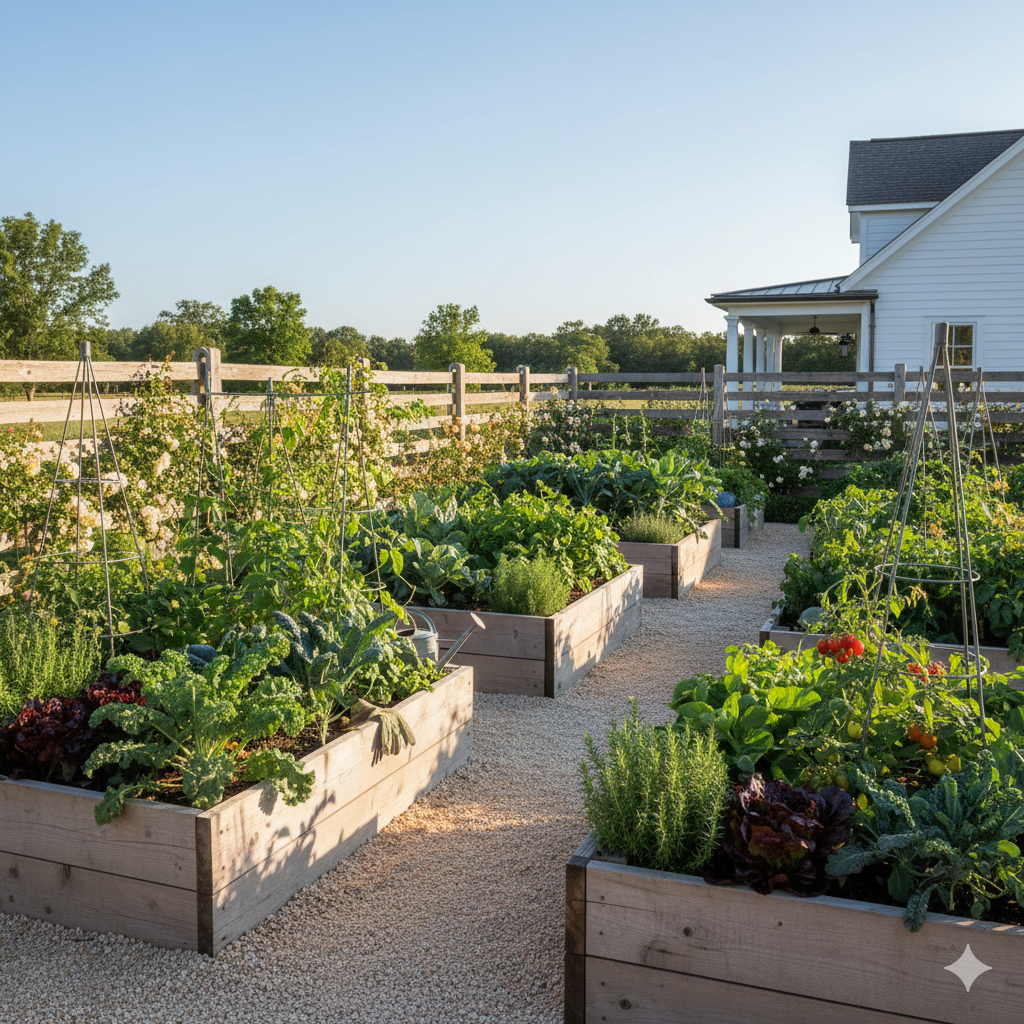
At the heart of this aesthetic lie two fundamental elements: raised garden beds and gravel pathways. These components work together to create outdoor spaces that are not only visually stunning but also highly practical for everyday use. The raised beds provide organized growing spaces with improved soil conditions, while gravel paths offer an accessible, low-maintenance circulation system throughout the garden.
What makes this design approach particularly appealing is its blend of rustic warmth and modern structure. The natural materials, neutral color palettes, and thoughtful layouts create gardens that feel both timeless and current, offering a peaceful retreat from urban living while maintaining a sophisticated appearance.
2. Understanding the Modern Farmhouse Garden Aesthetic
The modern farmhouse garden aesthetic draws inspiration from working farms and rural homesteads, where functionality has always been paramount. However, it refines these traditional elements with contemporary design sensibilities, creating spaces that honor heritage while embracing modern living.
Natural materials form the foundation of this style. Wood, stone, metal, and brick appear throughout the garden, chosen for their durability and organic beauty. Color palettes typically favor neutral tones such as whites, grays, weathered browns, and soft greens, allowing the natural beauty of plants to take center stage.
The balance between functionality and beauty distinguishes modern farmhouse gardens from purely decorative landscapes. These gardens are designed to be productive spaces where vegetables, herbs, and flowers grow together harmoniously. Every element serves a purpose, whether providing food, supporting pollinators, or creating visual interest.
This design philosophy has gained particular relevance in India, where growing interest in organic farming, sustainable living, and self-sufficiency has encouraged many homeowners to incorporate edible gardens into their outdoor spaces.
3. Raised Garden Beds: The Heart of Farmhouse Gardening
Raised garden beds are elevated planting areas constructed above ground level, typically enclosed by a frame or border. These structures define the modern farmhouse garden, providing organized growing spaces that elevate both the plants and the overall garden aesthetic.
Popular materials for constructing raised beds include natural wood such as cedar, teak, or treated pine, which offers a classic farmhouse appearance. Stone and brick provide more permanent solutions with excellent durability, though at higher costs. Metal options, including galvanized steel and cor-ten steel, bring an industrial edge to farmhouse designs while offering longevity.
The ideal shapes and layouts for farmhouse gardens typically favor rectangular beds, which maximize growing space while maintaining clean lines. Dimensions commonly range from three to four feet in width, allowing gardeners to reach the center without stepping into the bed. Lengths vary according to available space, though beds between six and eight feet long create pleasing proportions.
4. Benefits of Raised Beds in Modern Farmhouse Design
Raised beds offer numerous practical advantages that make them essential to modern farmhouse gardens. Improved soil quality stands as perhaps the most significant benefit, as gardeners can fill beds with custom soil mixtures tailored to specific plants. This eliminates concerns about poor native soil and allows for optimal growing conditions.
Drainage improvements accompany raised construction, as water flows freely through the elevated soil rather than pooling. This prevents root rot and other moisture-related problems, particularly beneficial during India’s monsoon season when excess water can devastate ground-level gardens.
Easier maintenance and accessibility make raised beds especially valuable for gardeners of all ages and abilities. The elevated height reduces the need for bending and kneeling, making garden work more comfortable and sustainable over time. This accessibility encourages more frequent garden care, resulting in healthier, more productive plants.
From a visual perspective, raised beds create clean, organized spaces that embody the modern farmhouse aesthetic. The defined borders contain plant growth, preventing the sprawling, unkempt appearance that can develop in traditional ground-level gardens.
5. Designing Raised Beds for Visual Impact
Optimal bed height typically ranges from fifteen to thirty inches, balancing visual impact with practical considerations. Lower beds conserve materials and soil while still providing drainage benefits. Higher beds offer superior accessibility and make stronger architectural statements within the garden.
Spacing between beds requires careful planning to ensure comfortable access. Pathways should measure at least two feet wide for basic access, though three to four feet allows for wheelbarrow passage and more comfortable movement. This spacing also provides adequate room for plant growth and air circulation.
Mixing vegetables, herbs, and flowers within and between beds creates the quintessential farmhouse garden appearance. This approach, known as companion planting, not only looks beautiful but can also improve plant health by attracting beneficial insects and deterring pests naturally.
6. Gravel Paths: Functional Beauty in Garden Design
Gravel paths provide the perfect complement to raised beds in farmhouse gardens, offering functional circulation routes that enhance rather than compete with the planting areas. Their natural appearance, excellent drainage, and textural contrast make them ideal for this design style.
Several gravel types suit farmhouse applications. Pea gravel, with its smooth, rounded stones, offers comfortable walking surfaces in neutral tones. Crushed stone provides angular pieces that lock together more firmly, creating stable paths. Decomposed granite, popular in drier regions, compacts well while maintaining a natural appearance.
Color and texture selection should complement the raised bed materials and overall garden palette. Warm beige and tan gravels harmonize with wooden beds, while gray stones pair beautifully with metal or painted structures. The size of individual stones affects both appearance and comfort, with smaller gravels generally providing smoother walking surfaces.
7. Advantages of Gravel Paths
Excellent drainage makes gravel paths particularly valuable in garden settings where water management is crucial. Unlike solid paving, gravel allows rainwater to percolate into the ground naturally, reducing runoff and supporting sustainable water practices.
Maintenance requirements remain minimal compared to other path materials. Gravel paths require no mowing like grass, minimal weeding when properly installed over landscape fabric, and no sealing or refinishing like wooden decking. Occasional raking keeps them looking fresh and distributes stones evenly.
The budget-friendly nature of gravel paths appeals to many homeowners embarking on garden projects. Material costs remain low, and installation typically qualifies as a manageable DIY project, requiring no specialized equipment or skills. This affordability allows gardeners to allocate more resources to raised bed construction and plants.
Texturally, gravel provides pleasing contrast to the greenery and flowers of garden beds. The fine, irregular surface creates visual interest and a satisfying crunch underfoot that enhances the sensory garden experience.
8. How to Plan Raised Beds with Gravel Path Layouts
Layout planning determines the overall garden flow and functionality. Symmetrical arrangements create formal, orderly appearances that many associate with traditional farmhouse gardens. This approach typically features beds aligned in rows or grids with perpendicular intersecting paths.
Organic layouts offer more relaxed alternatives, with beds arranged in irregular patterns that follow the natural contours of the space. This approach can make gardens feel larger and more intimate simultaneously, creating discovery moments as visitors navigate the space.
Creating focal points guides visitors through the garden and establishes visual hierarchy. A central bed filled with flowering plants, a decorative element at a path intersection, or a seating area surrounded by productive beds can serve as anchors around which the rest of the garden revolves.
Bordering paths with steel edging, brick, or timber defines the transition between gravel and planted areas while preventing gravel migration into beds. These borders also contribute to the clean, finished appearance essential to modern farmhouse design.
9. Complementary Elements for a Modern Farmhouse Look
Wooden pergolas and trellises add vertical interest while providing support for climbing vegetables and flowers. These structures, constructed from natural wood or painted white, reinforce the farmhouse aesthetic while expanding growing capacity.
Vintage garden tools and planters introduce character and nostalgia. Old watering cans, galvanized buckets, and weathered wooden crates can be repurposed as decorative elements or functional containers, adding personal touches that distinguish individual gardens.
Farmhouse lighting extends garden enjoyment into evening hours. Lanterns hung from pergola beams, string lights draped between posts, and path lighting along gravel walkways create ambiance while improving safety and visibility.
10. Plant Choices That Enhance Farmhouse Style
Vegetables and herbs form the productive core of farmhouse gardens. Tomatoes, peppers, lettuce, and beans provide fresh produce while looking attractive throughout the growing season. Herbs such as basil, rosemary, thyme, and parsley offer culinary value alongside fragrance and visual appeal.
Cottage-style flowers soften the structured appearance of raised beds and gravel paths. Zinnias, cosmos, sunflowers, and marigolds provide cheerful color while supporting pollinators. These flowers can be mixed into vegetable beds or planted in dedicated cutting gardens.
Choosing between perennials and seasonal plants affects maintenance and appearance. Perennials such as lavender, sage, and ornamental grasses provide consistent structure year after year, while seasonal annuals allow for changing displays that keep gardens feeling fresh and dynamic.
11. Maintenance Tips for Long-Lasting Appeal
Weed control in gravel paths begins with proper installation over landscape fabric or weed barrier. Regular raking disturbs weed seedlings before they establish, while spot treatment with natural herbicides addresses persistent problems without damaging surrounding plants.
Seasonal care for raised beds includes adding compost or aged manure annually to replenish nutrients, rotating crops to prevent soil depletion and pest buildup, and removing spent plants promptly to maintain tidy appearances.
Refreshing gravel periodically maintains path appearance and functionality. Adding a thin layer of new gravel every few years compensates for settling and displacement while brightening pathways that may have darkened from organic debris.
12. Common Mistakes to Avoid
Poor drainage planning can undermine even well-designed gardens. Ensuring raised beds have adequate drainage holes or gaps in their bases prevents waterlogging, while proper gravel depth, typically three to four inches, maintains path integrity.
Overcrowding raised beds reduces air circulation, increases disease pressure, and makes harvesting difficult. Following spacing recommendations for each plant variety ensures healthy growth and simplifies maintenance.
Using mismatched materials throughout the garden creates visual confusion rather than cohesive design. Selecting a consistent material palette for bed construction, edging, and hardscape elements produces more professional, harmonious results.
13. Sustainable and Eco-Friendly Considerations
Recycled materials for beds and borders reduce environmental impact while adding character. Reclaimed wood, salvaged bricks, and repurposed metal containers offer sustainable alternatives to new materials while contributing unique aesthetic qualities.
Water-saving irrigation ideas include drip systems that deliver moisture directly to plant roots, reducing waste from evaporation and runoff. Mulching bed surfaces conserves moisture while suppressing weeds and regulating soil temperature.
Encouraging pollinators through plant selection and habitat creation supports ecosystem health. Including native flowering plants, avoiding pesticides, and providing water sources attracts bees, butterflies, and other beneficial insects essential for productive gardens.
14. Conclusion: Creating a Timeless Farmhouse Garden
Raised beds and gravel paths work beautifully together because they share common qualities that define modern farmhouse garden design: functionality, natural materials, clean aesthetics, and sustainable practices. The raised beds provide organized, productive growing spaces that make gardening more accessible and enjoyable, while gravel paths offer practical circulation routes that enhance rather than compete with the plantings.
This combination creates gardens that feel both nostalgic and contemporary, honoring agricultural traditions while embracing modern living. Whether cultivating vegetables for the family table, growing herbs for cooking, or simply creating beautiful outdoor spaces for relaxation, the modern farmhouse garden delivers on multiple levels.
For those embarking on their own farmhouse garden journey, starting with these essential elements provides a solid foundation. Choose materials that complement your home’s architecture and your personal style, plan layouts that balance beauty with functionality, and select plants that bring you joy while supporting local ecosystems.
The timeless appeal of modern farmhouse garden design lies in its ability to create spaces that are both productive and peaceful, beautiful and practical, rooted in tradition yet perfectly suited to contemporary life. With raised beds and gravel paths as your foundation, you can cultivate a garden that nourishes body, mind, and spirit for years to come.

Asif Ali is a gardening blogger with over 2 years of experience writing about garden inspiration, eco-friendly gardening, and beautiful garden destinations. He focuses on practical, sustainable ideas that help beginners create inspiring gardens with ease.