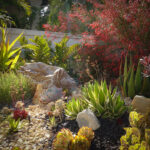
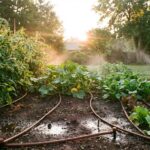
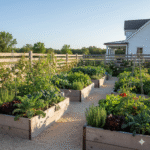
Native plants for eco gardening USA: Nature that feels straight out of a dream. That’s what an eco-friendly garden can look like when it’s built around native plants. Across the United States, more homeowners and nature lovers are discovering that beautiful gardens don’t have to be water-hungry or high-maintenance.
Eco-gardening is about working with nature instead of against it. By choosing plants that naturally belong in your region, you can create a garden that thrives, supports wildlife, and saves resources—all without sacrificing color or charm.
This guide is designed for beginners, homeowners, and anyone curious about sustainable gardening. Let’s explore why native plants are the heart of eco gardening in the USA and which ones truly shine.
What Eco-Gardening Means in the USA
Eco-gardening focuses on sustainability, conservation, and harmony with local ecosystems. In the U.S., this often means reducing water use, avoiding chemicals, and planting species that evolved naturally in your region.
Native plants are perfectly adapted to local climates, soils, and rainfall patterns. They don’t need constant attention, making them ideal for eco-conscious gardens.
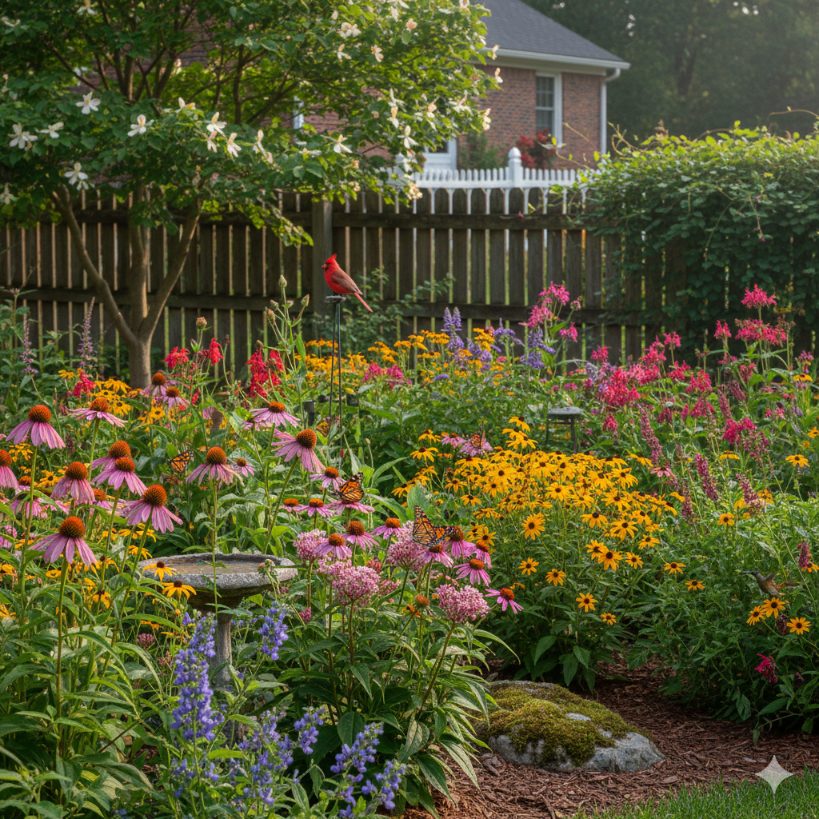
Eco-gardening also supports birds, bees, and butterflies—many of which rely on native plants for survival.
Why Choose Native Plants for Eco-Gardening?
Native plants offer unmatched benefits for sustainable gardens.
They require less water because they’re adapted to local rainfall. Fertilizers and pesticides become unnecessary, which protects soil and waterways. Native plants also provide food and shelter for local wildlife, helping restore ecological balance.
Over time, native gardens are healthier and more resilient, reducing long-term costs and effort.
How We Selected the Best Native Plants
Each plant on this list meets practical and ecological standards.
- Native to U.S. regions
- Beginner-friendly growth
- Drought-tolerant or low-water needs
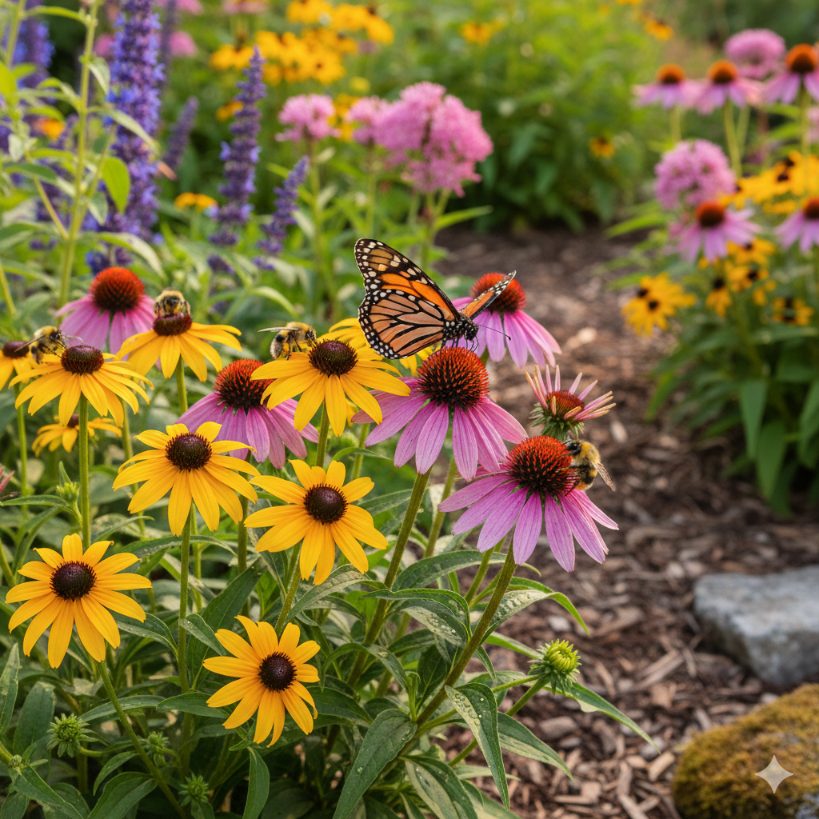
- Pollinator and wildlife support
- Suitable for home gardens
This ensures every plant is both beautiful and functional.
Top 25 Native Plants for Eco-Gardening in the USA
Native Flowering Plants
- Purple Coneflower – Midwest, full sun, attracts bees
- Black-Eyed Susan – East & Central U.S., drought-tolerant
- Blanket Flower – Plains & Southwest, heat-resistant
- Bee Balm – Northeast, moist soil, hummingbird favorite
- California Poppy – West Coast, low water needs
- Wild Lupine – Sandy soils, nitrogen-fixing
- Coreopsis – Southeast, long bloom season
- Columbine – Mountain regions, partial shade
Native Shrubs for Sustainable Gardens
- Serviceberry – Edible berries, bird-friendly
- Elderberry – Fast-growing, erosion control
- Buttonbush – Wet soils, pollinator magnet
- Ninebark – Hardy, great privacy shrub
- Wax Myrtle – Evergreen, coastal regions
Native Grasses and Ground Covers
- Little Bluestem – Prairie grass, drought-tolerant
- Buffalo Grass – Low-maintenance lawn alternative
- Pennsylvania Sedge – Shade-tolerant ground cover
- Switchgrass – Soil stabilization
Native Trees for Eco-Friendly Landscapes
- Red Maple – Northeast, fall color
- Live Oak – Southeast, long lifespan
- Eastern Redbud – Pollinator-friendly spring blooms
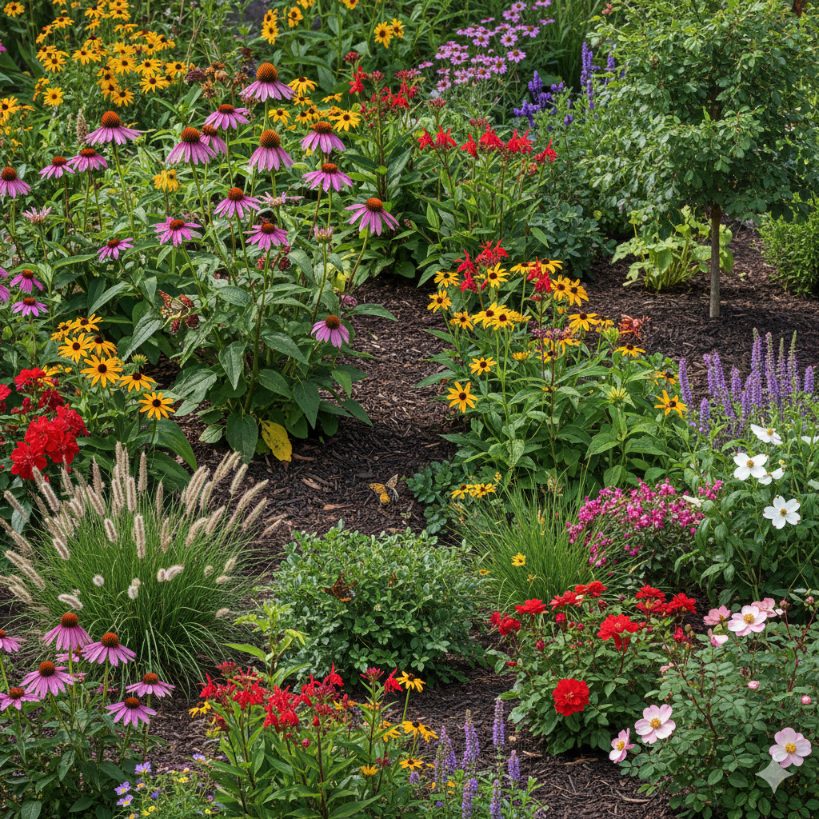
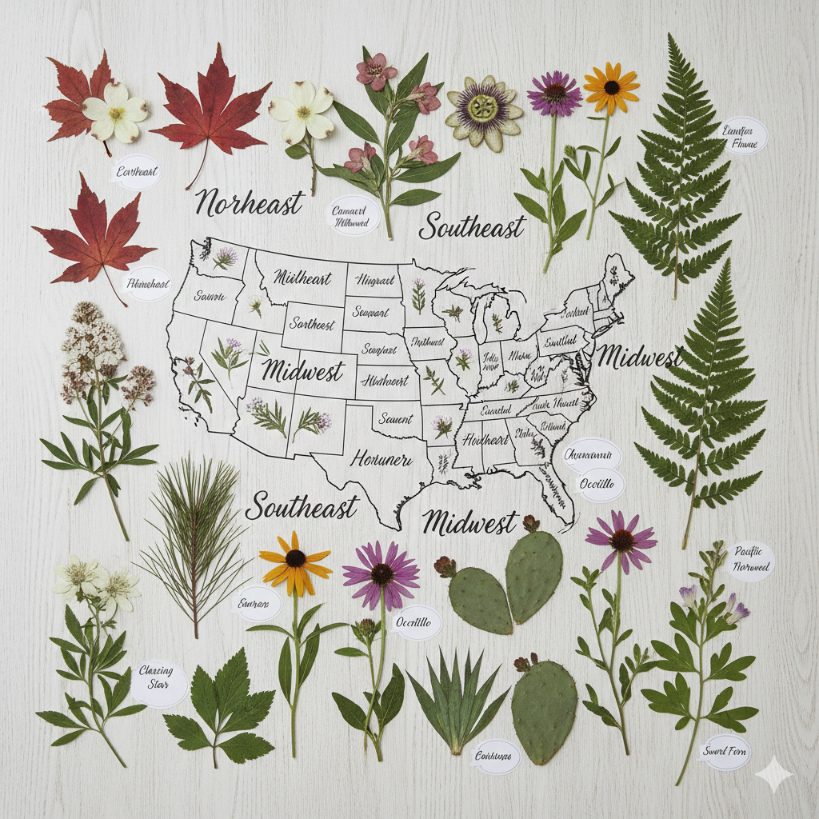
Best Native Plants by U.S. Region
- Northeast: Bee Balm, Red Maple
- Southeast: Live Oak, Coreopsis
- Midwest: Purple Coneflower, Little Bluestem
- Southwest: Blanket Flower, Buffalo Grass
- West Coast: California Poppy, Manzanita
Choosing region-appropriate plants ensures success with minimal effort.
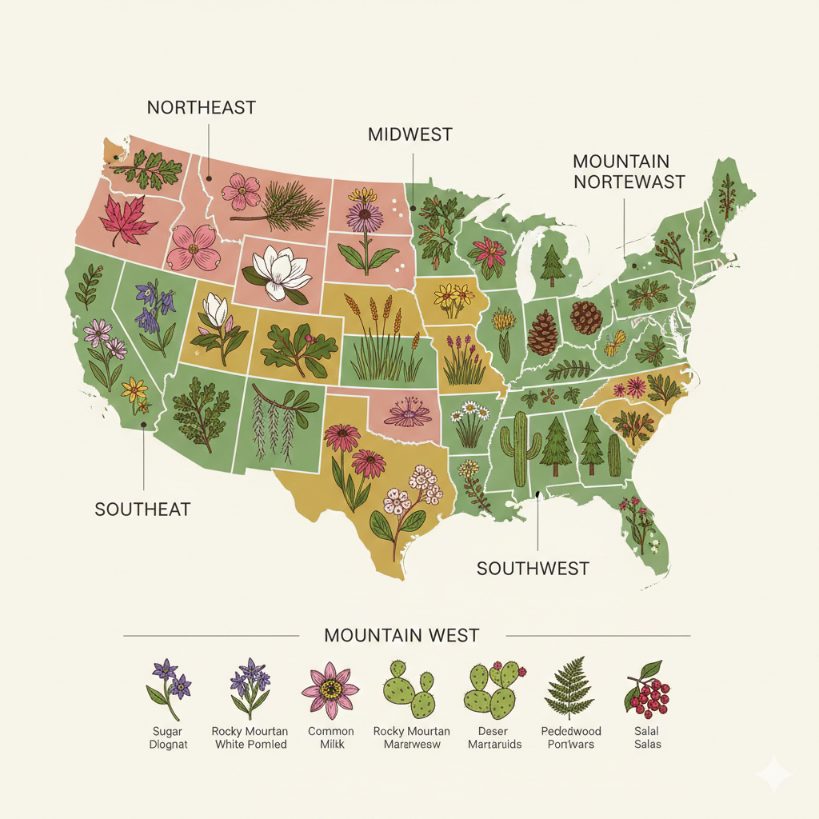
How to Start an Eco-Friendly Native Plant Garden
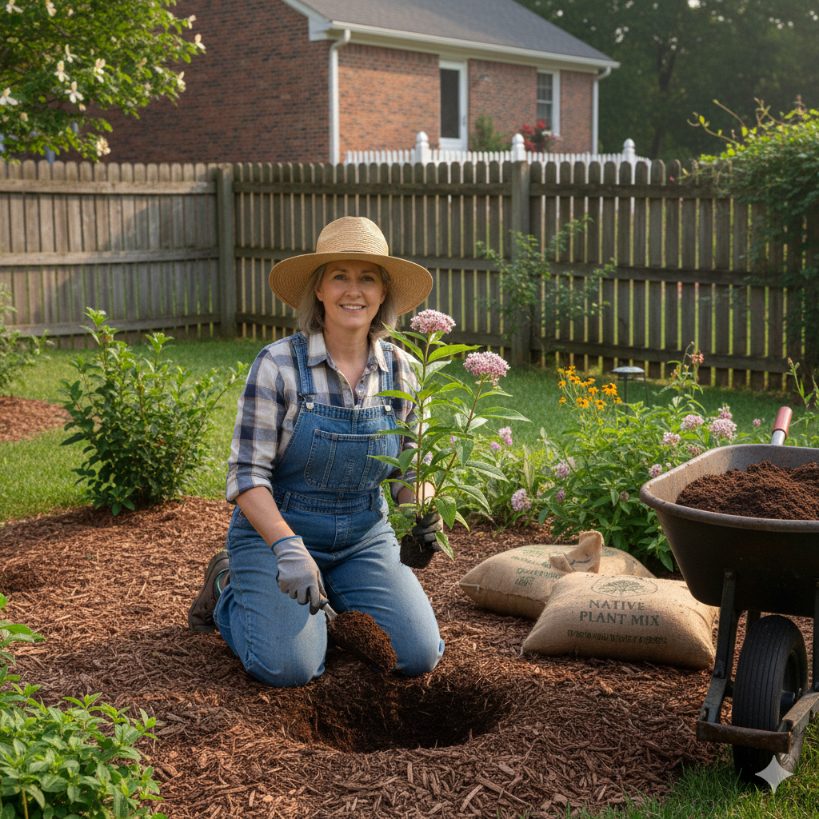
Start by observing sunlight, soil type, and drainage. Choose plants native to your state or region. Prepare soil gently—native plants prefer natural conditions.
Use mulch to retain moisture and compost to enrich soil. Water deeply but infrequently, encouraging strong root systems.
Seasonal Garden Travel Ideas by Month: Your Year-Round Guide to Stunning Botanical Destinations
Common Mistakes to Avoid When Planting Native Plants
Avoid mixing invasive species with natives. Overwatering is another common mistake—native plants prefer less water.
Pay attention to sunlight needs and spacing. Crowded plants struggle to thrive.
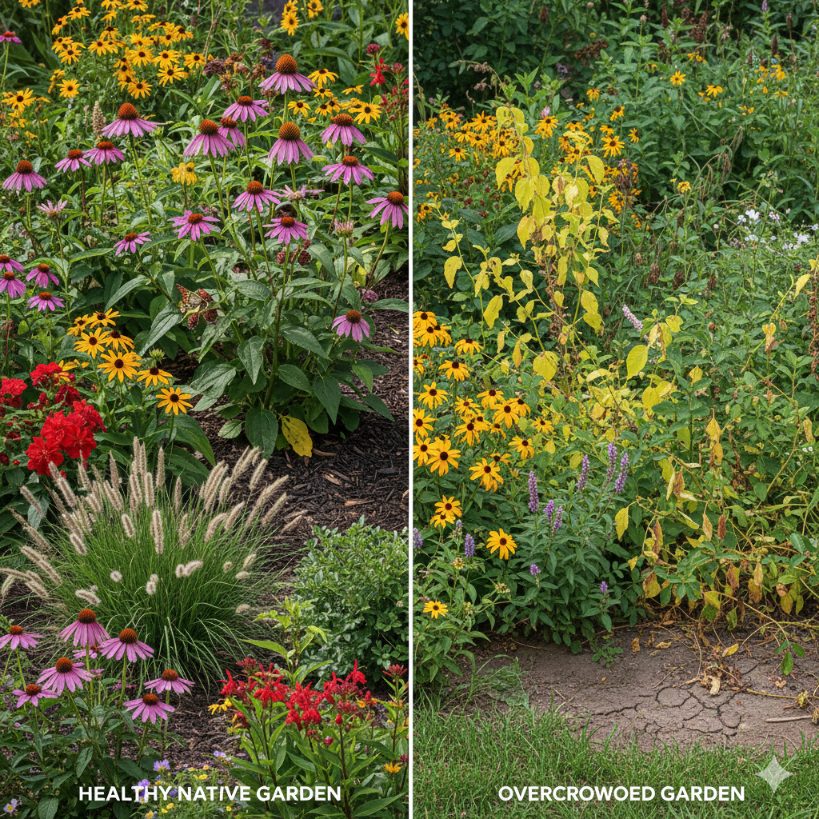
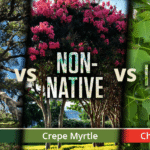
Native Plants vs Non-Native Plants
Native plants use significantly less water and require minimal maintenance. Non-native plants often need fertilizers and constant care.
Over time, native gardens cost less and support healthier ecosystems.
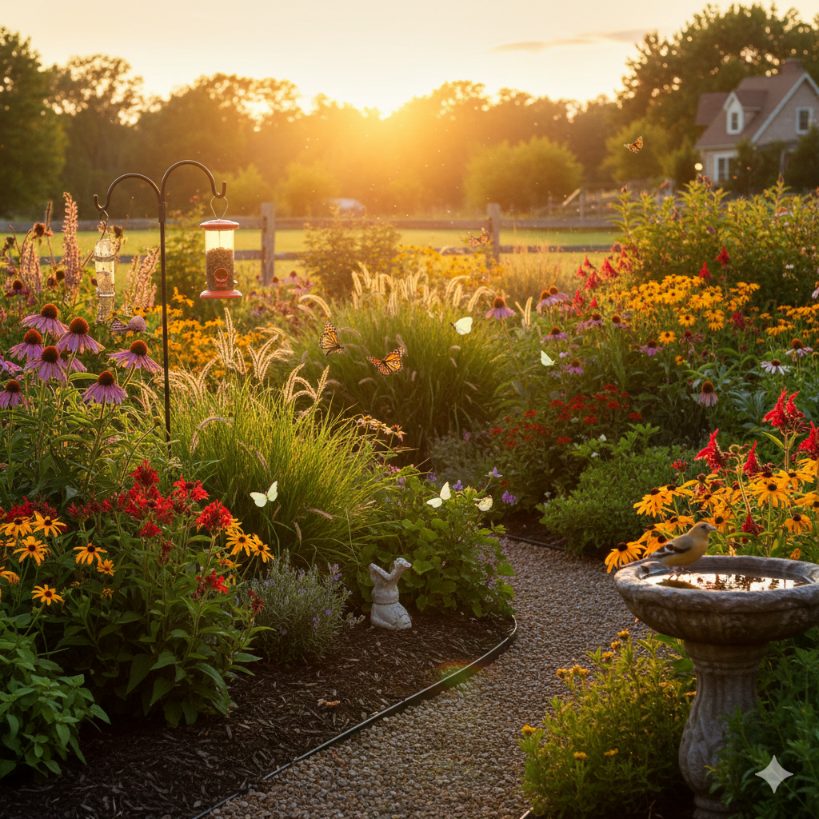
Benefits of Eco-Gardening With Native Plants
- Lower water bills
- Increased birds and pollinators
- Improved soil health
- Reduced carbon footprint
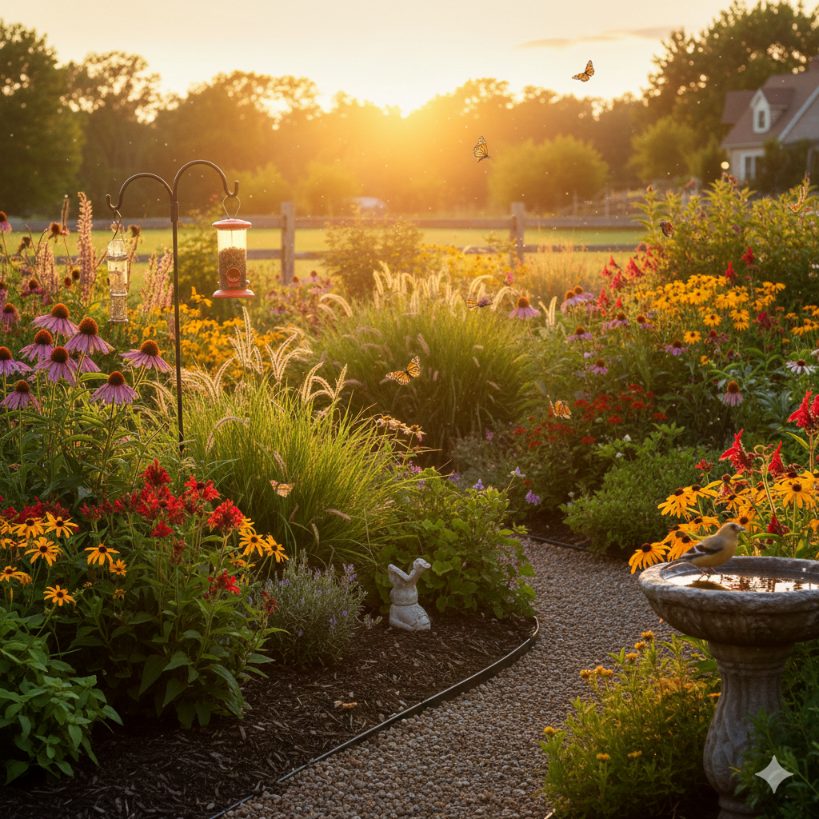
Eco-gardening creates beauty with purpose.
Frequently Asked Questions (FAQ)
Are native plants hard to maintain?
No, they are easier than most non-native plants.
Do native plants attract pests?
They attract beneficial insects that balance ecosystems.
Can native plants grow in small gardens?
Yes, many thrive in containers or small spaces.
Where can I buy native plants in the USA?
Local nurseries and native plant societies are ideal.
Do native plants need fertilizer?
Usually not; they prefer natural soil conditions.
Conclusion
Native plants are the future of eco gardening in the USA. They save water, support wildlife, and create landscapes that feel alive and authentic.
Starting small makes a big difference. Even a few native plants can transform your garden into a sustainable sanctuary.
Nature already knows what works—eco gardening simply lets it lead.

Asif Ali is a gardening blogger with over 2 years of experience writing about garden inspiration, eco-friendly gardening, and beautiful garden destinations. He focuses on practical, sustainable ideas that help beginners create inspiring gardens with ease.