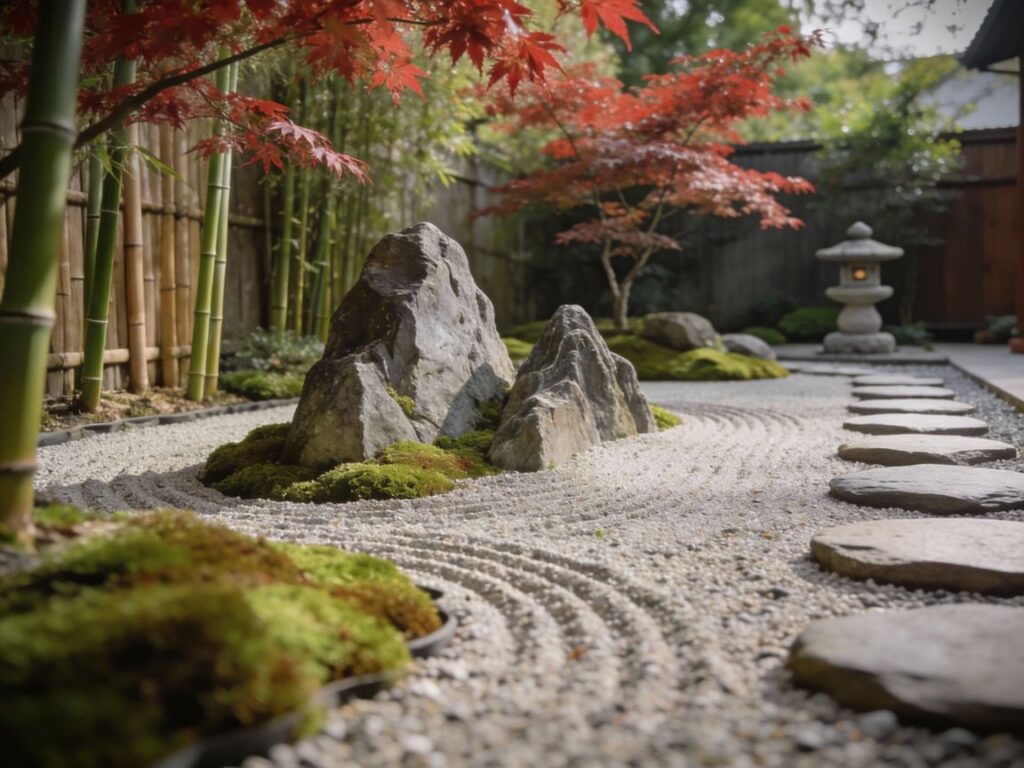
Discovering idesign inspiration from Japanese gardens in the US doesn’t require a passport—or a massive budget. These masterfully designed landscapes, found across America, prove that Japanese garden principles work beautifully in American homes. Whether you’re creating a meditation corner in your backyard or reimagining your entire outdoor space, the peaceful aesthetics and thoughtful design of Japanese gardens offer timeless solutions for anyone seeking tranquility through nature.
Japanese gardens are fundamentally different from Western landscapes. Rather than showcasing flowers and plants for their abundance, these gardens celebrate restraint, simplicity, and the relationship between humans and nature. Every element—from a single stone to a carefully raked path—carries purpose and meaning. The good news? You don’t need acres of land or specialized skills to apply these principles to your home. This guide explores real American gardens that demonstrate how authentic Japanese design translates to residential spaces, plus practical ways to bring these concepts into your own yard.
Understanding the Core Elements of Japanese Garden Design
Before visiting inspiring examples, it helps to understand what makes Japanese gardens distinct. The philosophy behind these spaces stretches back centuries, rooted in Zen Buddhism and the concept of finding spiritual meaning through nature.
The seven guiding principles that structure authentic Japanese gardens include austerity, simplicity, naturalness, asymmetry, mystery, spontaneity, and stillness. Unlike gardens designed primarily for visual impact, Japanese gardens aim to inspire contemplation and create a sense of peace. This is why you’ll notice careful attention to detail—nothing is random, yet everything appears natural.
Water serves multiple roles in Japanese garden design. Still water symbolizes reflection and the passage of time, while moving water represents energy and continuity. Whether expressed through actual ponds, flowing streams, or symbolically through raked gravel patterns, water is essential. Rocks and stones carry equally significant meaning. Large boulders represent mountains and permanence, while smaller pebbles symbolize flowing water and movement. The placement of every stone follows deliberate reasoning rooted in centuries of tradition.
Plants in Japanese gardens are selected with restraint. Japanese maples, bamboo, evergreen shrubs, and moss form the backbone of most designs, chosen for their elegant forms rather than showy blooms. This preference for understated greenery means your garden remains beautiful year-round, not just during peak flowering seasons.
Gibbs Gardens: Georgia’s Hidden Masterpiece
Located just an hour north of Atlanta in Ball Ground, Georgia, Gibbs Gardens represents one of the largest Japanese garden collections in the United States. Founder Jim Gibbs spent 15 years visiting world-renowned gardens before developing this 40-acre Japanese Hill and Pond stroll garden on his 356-acre estate.
Location & Best Time to Visit
Address: 1987 Gibbs Drive, Ball Ground, GA 30107
Hours: Wednesday–Sunday, 9 AM–4 PM
Admission: Adults $25, Seniors $18, Children $10
What Makes Gibbs Gardens Special
The Japanese gardens feature everything American homeowners dream about implementing: seven spring-fed ponds connected by bridges, massive boulders carefully positioned as focal points, and over 5,000 Japanese maples representing 300 different varieties. The garden’s authenticity comes from Gibbs’ personal study with master gardeners and his commitment to traditional design principles.
Walking through Gibbs’ gardens teaches practical lessons about layering. You’ll discover how winding paths reveal new views around each corner—a principle called “hide and reveal”. Instead of viewing the entire garden at once, visitors experience a series of intimate moments. This technique works beautifully in smaller home gardens too.
Fall transforms the Japanese gardens into a technicolor experience. The various maple varieties change color at different times, creating weeks of peak visual interest. For homeowners, this demonstrates why choosing multiple maple varieties ensures color evolution rather than a single dramatic burst followed by dormancy.
Frederik Meijer Gardens: Michigan’s Authentic Japanese Experience
In Grand Rapids, Michigan, the 8-acre Richard & Helen DeVos Japanese Garden at Frederik Meijer Gardens & Sculpture Park offers visitors authentic Japanese design on a more accessible scale. Opened in 2015, this garden was designed by renowned Master Craftsman Hoichi Kurisu, the same designer behind Anderson Japanese Gardens in Illinois.
Location & Best Time to Visit
Address: 1000 E Beltline Ave NE, Grand Rapids, MI
Admission: Included with Frederik Meijer Gardens general admission
Highlights: Traditional teahouse, zen garden, tea ceremonies (third Saturday of each month, May–October)
Why This Garden Teaches Home Design
The Meijer garden demonstrates how Japanese design elements function within a contemporary landscape. An 8-acre authentic Japanese garden might seem large, but its design principles apply directly to backyards of any size. The garden features distinct zones: a viewing hill, tea house area, zen-style garden with raked gravel, bonsai collections, and numerous water features.
One compelling feature is the cherry tree promenade—a secluded grove that requires effort to find. This teaches an important lesson about Japanese garden design: not everything should be immediately visible. Creating mystery through hidden pathways and obscured views makes smaller spaces feel expansive.
The teahouse itself illustrates how structures anchor Japanese gardens. Rather than random placement, architectural elements like tea houses connect the garden to human experience and purpose. For homeowners, this might mean adding a simple bench in a quiet corner or creating a sheltered seating area that invites contemplation.
Anderson Japanese Gardens: Illinois’ 12-Acre Oasis
In Rockford, Illinois, Anderson Japanese Gardens ranks among North America’s highest-quality Japanese gardens. Built beginning in 1978 by businessman John Anderson with master craftsman Hoichi Kurisu, this 12-acre landscape transforms a formerly swampy area into an internationally recognized destination.
Location & Best Time to Visit
What to Expect: A 700-ton boulder cascade, multiple bridges, teahouse, guesthouse, gazebo, and winding pathways with koi-filled ponds
Lessons for Your Home Garden
Anderson Gardens demonstrates what authentic Japanese design looks like when built by someone who studied traditional methods. Every rock placement, tree alignment, and pathway layout reflects careful consideration.
For home gardeners, Anderson Gardens illustrates the importance of water movement and sound. The boulder cascade creates visual and auditory interest—water doesn’t need to be a large pond to make an impact. This principle translates beautifully to smaller properties where a simple bamboo fountain or recirculating water feature creates the same meditative effect.
Practical Steps to Create Japanese Garden iDesign at Home
Understanding these magnificent gardens is one thing; recreating their essence at home is another. The good news: you don’t need their scale to capture their spirit.
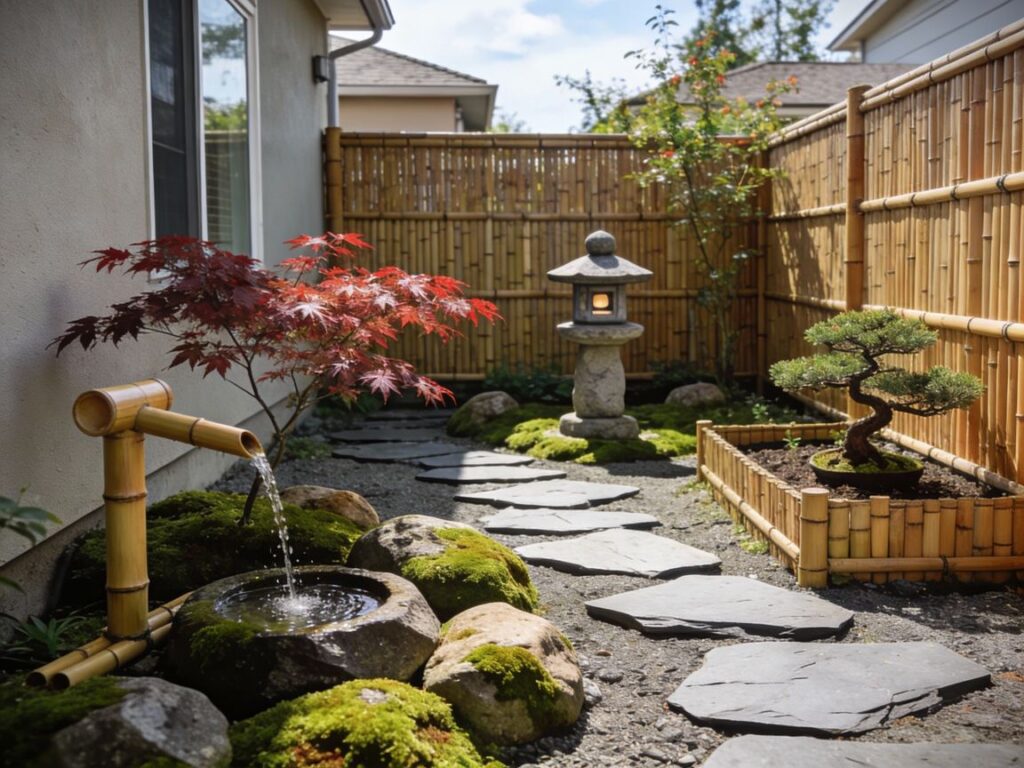
Start Small: The Tabletop Zen Garden
For apartment dwellers or those with minimal space, a tabletop zen garden offers an accessible entry point. A shallow ceramic tray filled with fine gravel or sand, a few carefully selected stones, moss, and perhaps a single bonsai plant creates a genuine meditation tool. Using a small rake to create patterns in the gravel engages both mind and hands—a practice Japanese gardeners have used for centuries for mindfulness.
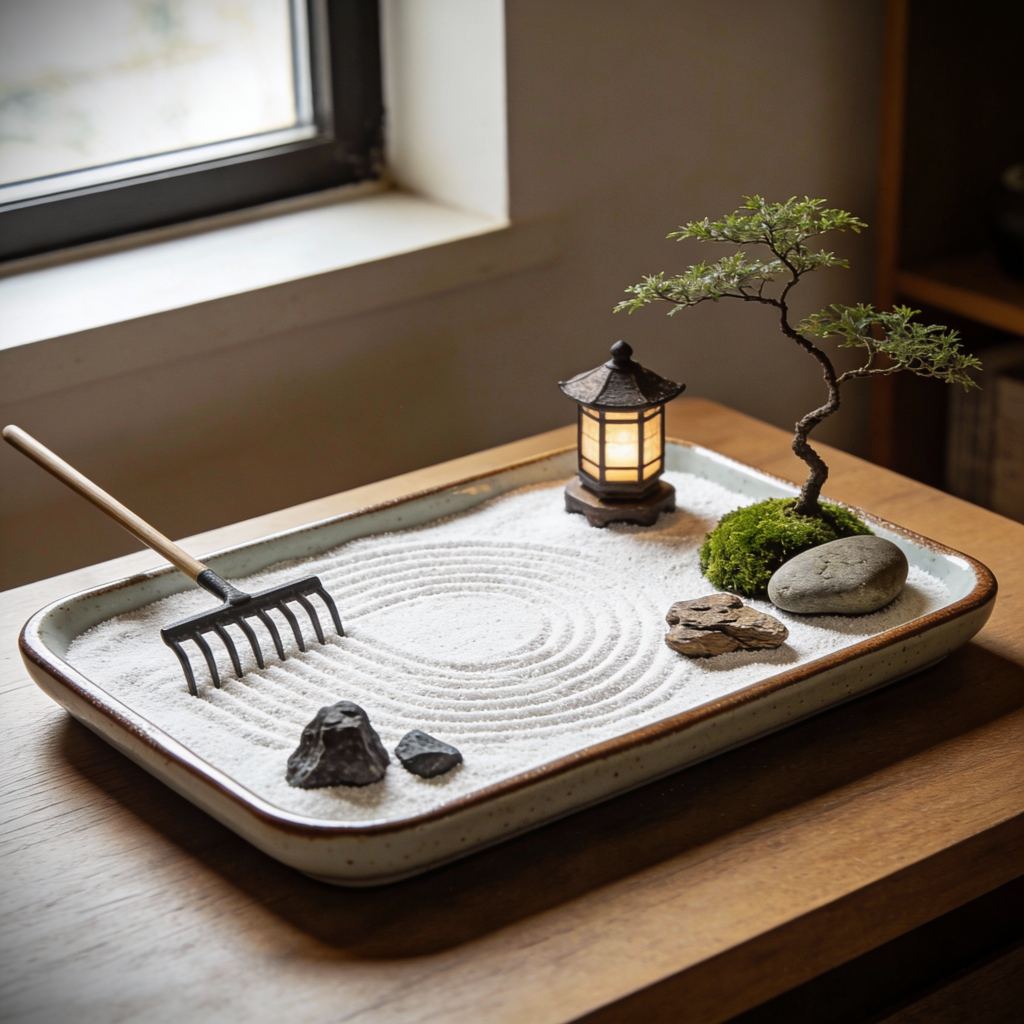
Build in Layers: The Backyard Transformation
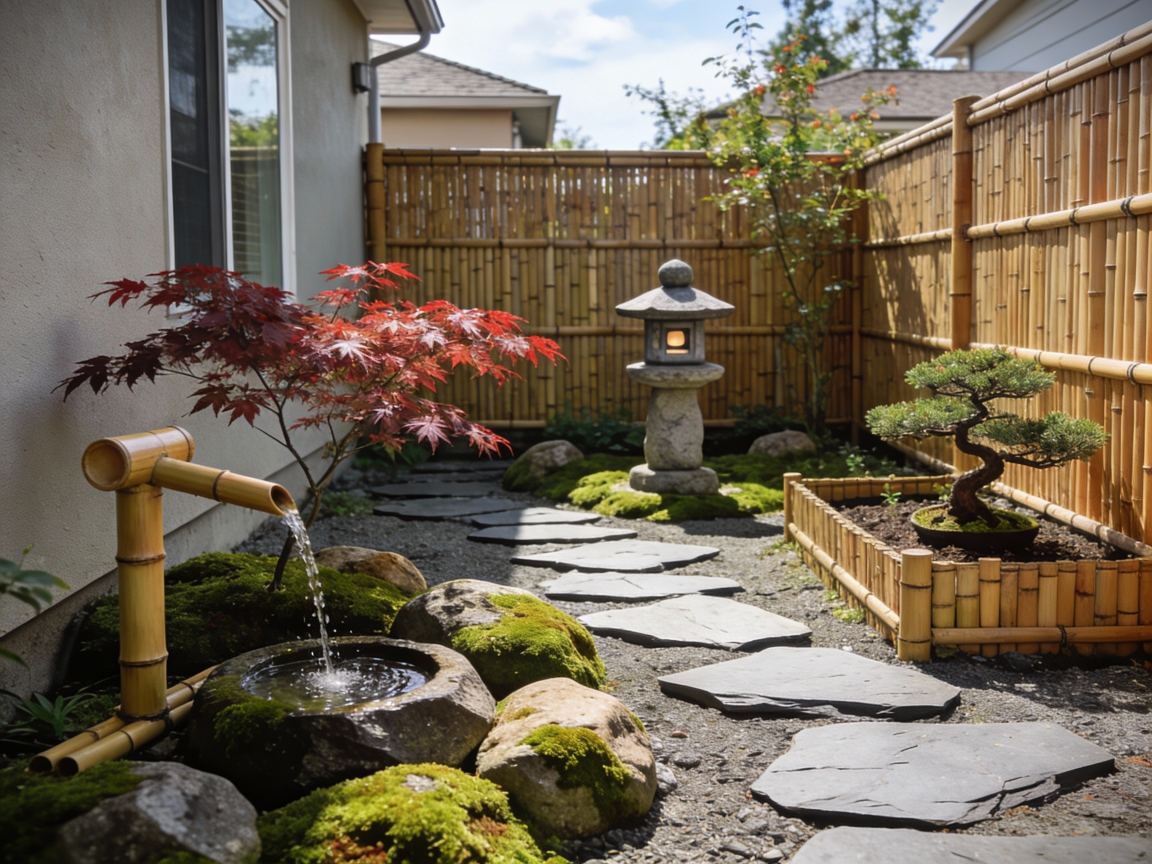
If you have outdoor space, apply the principle of layered design. Begin with hardscape elements—stepping stones, gravel paths, and stone lanterns. These form your garden’s skeleton. Next, add larger plantings: a Japanese maple as a focal point, evergreen shrubs for structure, and moss or ground covers in shaded areas.
Water features come last, but don’t require complexity. A simple bamboo fountain or small stone basin (tsukubai) serves both aesthetic and symbolic purposes. These features encourage pausing and reflection.
Essential Plants for American Homes
Japanese maples are non-negotiable—they provide color, form, and seasonal interest. In colder zones, choose hardy varieties. Bamboo adds height and movement while serving as a privacy screen. Moss, ferns, and azaleas fill understory layers with texture and subtle color.
For drought-prone regions, consider native species that echo Japanese aesthetics. The key is selecting plants for their form—not their flowers.
The Art of Asymmetry
Western gardeners often default to symmetry, but Japanese gardens embrace asymmetrical balance. Plant trees off-center, position rocks in odd numbers, and let pathways curve rather than follow straight lines. This creates a sense of organic growth that feels more natural and inherently peaceful.
Seasonal Changes: Beauty Year-Round
One advantage of Japanese garden design is its seasonal evolution. Spring brings cherry blossoms and fresh growth. Summer offers lush greenery and water features that cool both physically and psychologically. Fall transforms deciduous trees into displays of red, orange, and gold. Winter reveals the garden’s skeleton—evergreens, stone structures, and architectural elements shine.
Frequently Asked Questions
Q: How much space do I need for a Japanese garden?
A: Japanese gardens work at any scale. Even a corner of a patio can become a zen-inspired retreat. The 8-acre Meijer garden and 2-square-foot tabletop gardens both follow the same principles.
Q: Do I need authentic materials from Japan?
A: No. Use locally sourced stones, native evergreens that match the aesthetic, and materials available in your region. Authenticity comes from design principles, not material origin.
Q: How much maintenance do Japanese gardens require?
A: Less than you might think. Regular raking of gravel patterns, moss maintenance, and light pruning keep gardens manageable. The emphasis on evergreens and minimal flowering plants reduces seasonal demands.
Q: Can I create a Japanese garden in a hot, dry climate?
A: Absolutely. Dry gravel gardens (karesansui) actually originated as solutions to water scarcity. Use gravel to symbolize water, drought-tolerant plants, and embrace the minimalist aesthetic.
Q: What’s the best starting point for beginners?
A: Begin with a small designated area rather than trying to transform your entire yard at once. Create a contemplative corner with stepping stones, gravel, a few stones, and one focal plant.
Conclusion: Bringing Tranquility Home
The world-class Japanese gardens scattered across America—from Georgia to Michigan to California—offer more than beautiful spaces to visit. They’re blueprints for transforming your own outdoor environment into a personal sanctuary. iDesign inspiration from Japanese gardens in the US doesn’t require expensive exotic plants or professional designers. It requires understanding the core principles: simplicity, asymmetry, respect for natural materials, and intentional space planning.
Whether you visit Gibbs Gardens’ massive maple collection, walk through Frederik Meijer’s authentic teahouse experience, or simply create a tabletop zen garden on your desk, you’re engaging with a design philosophy that has brought peace to humans for centuries. Start small, embrace imperfection, and trust that your garden will evolve naturally—just like the thousands of successful Japanese gardens flourishing in American yards right now.Transform Your Outdoor Space: Japanese Garden Design Inspiration You Can Actually Create at Home
Discovering idesign inspiration from Japanese gardens in the US doesn’t require a passport—or a massive budget. These masterfully designed landscapes, found across America, prove that Japanese garden principles work beautifully in American homes. Whether you’re creating a meditation corner in your backyard or reimagining your entire outdoor space, the peaceful aesthetics and thoughtful design of Japanese gardens offer timeless solutions for anyone seeking tranquility through nature.
Japanese gardens are fundamentally different from Western landscapes. Rather than showcasing flowers and plants for their abundance, these gardens celebrate restraint, simplicity, and the relationship between humans and nature. Every element—from a single stone to a carefully raked path—carries purpose and meaning. The good news? You don’t need acres of land or specialized skills to apply these principles to your home. This guide explores real American gardens that demonstrate how authentic Japanese design translates to residential spaces, plus practical ways to bring these concepts into your own yard.
Understanding the Core Elements of Japanese Garden Design
Before visiting inspiring examples, it helps to understand what makes Japanese gardens distinct. The philosophy behind these spaces stretches back centuries, rooted in Zen Buddhism and the concept of finding spiritual meaning through nature.
The seven guiding principles that structure authentic Japanese gardens include austerity, simplicity, naturalness, asymmetry, mystery, spontaneity, and stillness. Unlike gardens designed primarily for visual impact, Japanese gardens aim to inspire contemplation and create a sense of peace. This is why you’ll notice careful attention to detail—nothing is random, yet everything appears natural.
Water serves multiple roles in Japanese garden design. Still water symbolizes reflection and the passage of time, while moving water represents energy and continuity. Whether expressed through actual ponds, flowing streams, or symbolically through raked gravel patterns, water is essential. Rocks and stones carry equally significant meaning. Large boulders represent mountains and permanence, while smaller pebbles symbolize flowing water and movement. The placement of every stone follows deliberate reasoning rooted in centuries of tradition.
Plants in Japanese gardens are selected with restraint. Japanese maples, bamboo, evergreen shrubs, and moss form the backbone of most designs, chosen for their elegant forms rather than showy blooms. This preference for understated greenery means your garden remains beautiful year-round, not just during peak flowering seasons.
Gibbs Gardens: Georgia’s Hidden Masterpiece
Located just an hour north of Atlanta in Ball Ground, Georgia, Gibbs Gardens represents one of the largest Japanese garden collections in the United States. Founder Jim Gibbs spent 15 years visiting world-renowned gardens before developing this 40-acre Japanese Hill and Pond stroll garden on his 356-acre estate.
Location & Best Time to Visit
Address: 1987 Gibbs Drive, Ball Ground, GA 30107
Hours: Wednesday–Sunday, 9 AM–4 PM
Admission: Adults $25, Seniors $18, Children $10
What Makes Gibbs Gardens Special
The Japanese gardens feature everything American homeowners dream about implementing: seven spring-fed ponds connected by bridges, massive boulders carefully positioned as focal points, and over 5,000 Japanese maples representing 300 different varieties. The garden’s authenticity comes from Gibbs’ personal study with master gardeners and his commitment to traditional design principles.
Walking through Gibbs’ gardens teaches practical lessons about layering. You’ll discover how winding paths reveal new views around each corner—a principle called “hide and reveal”. Instead of viewing the entire garden at once, visitors experience a series of intimate moments. This technique works beautifully in smaller home gardens too.
Fall transforms the Japanese gardens into a technicolor experience. The various maple varieties change color at different times, creating weeks of peak visual interest. For homeowners, this demonstrates why choosing multiple maple varieties ensures color evolution rather than a single dramatic burst followed by dormancy.
Frederik Meijer Gardens: Michigan’s Authentic Japanese Experience
In Grand Rapids, Michigan, the 8-acre Richard & Helen DeVos Japanese Garden at Frederik Meijer Gardens & Sculpture Park offers visitors authentic Japanese design on a more accessible scale. Opened in 2015, this garden was designed by renowned Master Craftsman Hoichi Kurisu, the same designer behind Anderson Japanese Gardens in Illinois.
Location & Best Time to Visit
Address: 1000 E Beltline Ave NE, Grand Rapids, MI
Admission: Included with Frederik Meijer Gardens general admission
Highlights: Traditional teahouse, zen garden, tea ceremonies (third Saturday of each month, May–October)
Why This Garden Teaches Home Design
The Meijer garden demonstrates how Japanese design elements function within a contemporary landscape. An 8-acre authentic Japanese garden might seem large, but its design principles apply directly to backyards of any size. The garden features distinct zones: a viewing hill, tea house area, zen-style garden with raked gravel, bonsai collections, and numerous water features.
One compelling feature is the cherry tree promenade—a secluded grove that requires effort to find. This teaches an important lesson about Japanese garden design: not everything should be immediately visible. Creating mystery through hidden pathways and obscured views makes smaller spaces feel expansive.
The teahouse itself illustrates how structures anchor Japanese gardens. Rather than random placement, architectural elements like tea houses connect the garden to human experience and purpose. For homeowners, this might mean adding a simple bench in a quiet corner or creating a sheltered seating area that invites contemplation.
Anderson Japanese Gardens: Illinois’ 12-Acre Oasis
In Rockford, Illinois, Anderson Japanese Gardens ranks among North America’s highest-quality Japanese gardens. Built beginning in 1978 by businessman John Anderson with master craftsman Hoichi Kurisu, this 12-acre landscape transforms a formerly swampy area into an internationally recognized destination.
Location & Best Time to Visit
What to Expect: A 700-ton boulder cascade, multiple bridges, teahouse, guesthouse, gazebo, and winding pathways with koi-filled ponds
Lessons for Your Home Garden
Anderson Gardens demonstrates what authentic Japanese design looks like when built by someone who studied traditional methods. Every rock placement, tree alignment, and pathway layout reflects careful consideration.
For home gardeners, Anderson Gardens illustrates the importance of water movement and sound. The boulder cascade creates visual and auditory interest—water doesn’t need to be a large pond to make an impact. This principle translates beautifully to smaller properties where a simple bamboo fountain or recirculating water feature creates the same meditative effect.
Practical Steps to Create Japanese Garden iDesign at Home
Understanding these magnificent gardens is one thing; recreating their essence at home is another. The good news: you don’t need their scale to capture their spirit.
Start Small: The Tabletop Zen Garden
For apartment dwellers or those with minimal space, a tabletop zen garden offers an accessible entry point. A shallow ceramic tray filled with fine gravel or sand, a few carefully selected stones, moss, and perhaps a single bonsai plant creates a genuine meditation tool. Using a small rake to create patterns in the gravel engages both mind and hands—a practice Japanese gardeners have used for centuries for mindfulness.
Build in Layers: The Backyard Transformation
If you have outdoor space, apply the principle of layered design. Begin with hardscape elements—stepping stones, gravel paths, and stone lanterns. These form your garden’s skeleton. Next, add larger plantings: a Japanese maple as a focal point, evergreen shrubs for structure, and moss or ground covers in shaded areas.
Water features come last, but don’t require complexity. A simple bamboo fountain or small stone basin (tsukubai) serves both aesthetic and symbolic purposes. These features encourage pausing and reflection.
Essential Plants for American Homes
Japanese maples are non-negotiable—they provide color, form, and seasonal interest. In colder zones, choose hardy varieties. Bamboo adds height and movement while serving as a privacy screen. Moss, ferns, and azaleas fill understory layers with texture and subtle color.
For drought-prone regions, consider native species that echo Japanese aesthetics. The key is selecting plants for their form—not their flowers.
The Art of Asymmetry
Western gardeners often default to symmetry, but Japanese gardens embrace asymmetrical balance. Plant trees off-center, position rocks in odd numbers, and let pathways curve rather than follow straight lines. This creates a sense of organic growth that feels more natural and inherently peaceful.
Seasonal Changes: Beauty Year-Round
One advantage of Japanese garden design is its seasonal evolution. Spring brings cherry blossoms and fresh growth. Summer offers lush greenery and water features that cool both physically and psychologically. Fall transforms deciduous trees into displays of red, orange, and gold. Winter reveals the garden’s skeleton—evergreens, stone structures, and architectural elements shine.
This seasonal cycle prevents garden fatigue. Your space never feels stale because it genuinely transforms.
Frequently Asked Questions
Q: How much space do I need for a Japanese garden?
A: Japanese gardens work at any scale. Even a corner of a patio can become a zen-inspired retreat. The 8-acre Meijer garden and 2-square-foot tabletop gardens both follow the same principles.
Q: Do I need authentic materials from Japan?
A: No. Use locally sourced stones, native evergreens that match the aesthetic, and materials available in your region. Authenticity comes from design principles, not material origin.
Q: How much maintenance do Japanese gardens require?
A: Less than you might think. Regular raking of gravel patterns, moss maintenance, and light pruning keep gardens manageable. The emphasis on evergreens and minimal flowering plants reduces seasonal demands.
Q: Can I create a Japanese garden in a hot, dry climate?
A: Absolutely. Dry gravel gardens (karesansui) actually originated as solutions to water scarcity. Use gravel to symbolize water, drought-tolerant plants, and embrace the minimalist aesthetic.
Q: What’s the best starting point for beginners?
A: Begin with a small designated area rather than trying to transform your entire yard at once. Create a contemplative corner with stepping stones, gravel, a few stones, and one focal plant.
Conclusion: Bringing Tranquility Home
The world-class Japanese gardens scattered across America—from Georgia to Michigan to California—offer more than beautiful spaces to visit. They’re blueprints for transforming your own outdoor environment into a personal sanctuary. iDesign inspiration from Japanese gardens in the US doesn’t require expensive exotic plants or professional designers. It requires understanding the core principles: simplicity, asymmetry, respect for natural materials, and intentional space planning.
Whether you visit Gibbs Gardens’ massive maple collection, walk through Frederik Meijer’s authentic teahouse experience, or simply create a tabletop zen garden on your desk, you’re engaging with a design philosophy that has brought peace to humans for centuries. Start small, embrace imperfection, and trust that your garden will evolve naturally—just like the thousands of successful Japanese gardens flourishing in American yards right now.Transform Your Outdoor Space: Japanese Garden Design Inspiration You Can Actually Create at Home
Discovering idesign inspiration from Japanese gardens in the US doesn’t require a passport—or a massive budget. These masterfully designed landscapes, found across America, prove that Japanese garden principles work beautifully in American homes. Whether you’re creating a meditation corner in your backyard or reimagining your entire outdoor space, the peaceful aesthetics and thoughtful design of Japanese gardens offer timeless solutions for anyone seeking tranquility through nature.
Japanese gardens are fundamentally different from Western landscapes. Rather than showcasing flowers and plants for their abundance, these gardens celebrate restraint, simplicity, and the relationship between humans and nature. Every element—from a single stone to a carefully raked path—carries purpose and meaning. The good news? You don’t need acres of land or specialized skills to apply these principles to your home. This guide explores real American gardens that demonstrate how authentic Japanese design translates to residential spaces, plus practical ways to bring these concepts into your own yard.
Understanding the Core Elements of Japanese Garden Design
Before visiting inspiring examples, it helps to understand what makes Japanese gardens distinct. The philosophy behind these spaces stretches back centuries, rooted in Zen Buddhism and the concept of finding spiritual meaning through nature.
The seven guiding principles that structure authentic Japanese gardens include austerity, simplicity, naturalness, asymmetry, mystery, spontaneity, and stillness. Unlike gardens designed primarily for visual impact, Japanese gardens aim to inspire contemplation and create a sense of peace. This is why you’ll notice careful attention to detail—nothing is random, yet everything appears natural.
Water serves multiple roles in Japanese garden design. Still water symbolizes reflection and the passage of time, while moving water represents energy and continuity. Whether expressed through actual ponds, flowing streams, or symbolically through raked gravel patterns, water is essential. Rocks and stones carry equally significant meaning. Large boulders represent mountains and permanence, while smaller pebbles symbolize flowing water and movement. The placement of every stone follows deliberate reasoning rooted in centuries of tradition.
Plants in Japanese gardens are selected with restraint. Japanese maples, bamboo, evergreen shrubs, and moss form the backbone of most designs, chosen for their elegant forms rather than showy blooms. This preference for understated greenery means your garden remains beautiful year-round, not just during peak flowering seasons.
Gibbs Gardens: Georgia’s Hidden Masterpiece
Located just an hour north of Atlanta in Ball Ground, Georgia, Gibbs Gardens represents one of the largest Japanese garden collections in the United States. Founder Jim Gibbs spent 15 years visiting world-renowned gardens before developing this 40-acre Japanese Hill and Pond stroll garden on his 356-acre estate.
Location & Best Time to Visit
Address: 1987 Gibbs Drive, Ball Ground, GA 30107
Hours: Wednesday–Sunday, 9 AM–4 PM
Admission: Adults $25, Seniors $18, Children $10
What Makes Gibbs Gardens Special
The Japanese gardens feature everything American homeowners dream about implementing: seven spring-fed ponds connected by bridges, massive boulders carefully positioned as focal points, and over 5,000 Japanese maples representing 300 different varieties. The garden’s authenticity comes from Gibbs’ personal study with master gardeners and his commitment to traditional design principles.
Walking through Gibbs’ gardens teaches practical lessons about layering. You’ll discover how winding paths reveal new views around each corner—a principle called “hide and reveal”. Instead of viewing the entire garden at once, visitors experience a series of intimate moments. This technique works beautifully in smaller home gardens too.
Fall transforms the Japanese gardens into a technicolor experience. The various maple varieties change color at different times, creating weeks of peak visual interest. For homeowners, this demonstrates why choosing multiple maple varieties ensures color evolution rather than a single dramatic burst followed by dormancy.
Frederik Meijer Gardens: Michigan’s Authentic Japanese Experience
In Grand Rapids, Michigan, the 8-acre Richard & Helen DeVos Japanese Garden at Frederik Meijer Gardens & Sculpture Park offers visitors authentic Japanese design on a more accessible scale. Opened in 2015, this garden was designed by renowned Master Craftsman Hoichi Kurisu, the same designer behind Anderson Japanese Gardens in Illinois.
Location & Best Time to Visit
Address: 1000 E Beltline Ave NE, Grand Rapids, MI
Admission: Included with Frederik Meijer Gardens general admission
Highlights: Traditional teahouse, zen garden, tea ceremonies (third Saturday of each month, May–October)
Why This Garden Teaches Home Design
The Meijer garden demonstrates how Japanese design elements function within a contemporary landscape. An 8-acre authentic Japanese garden might seem large, but its design principles apply directly to backyards of any size. The garden features distinct zones: a viewing hill, tea house area, zen-style garden with raked gravel, bonsai collections, and numerous water features.
One compelling feature is the cherry tree promenade—a secluded grove that requires effort to find. This teaches an important lesson about Japanese garden design: not everything should be immediately visible. Creating mystery through hidden pathways and obscured views makes smaller spaces feel expansive.
The teahouse itself illustrates how structures anchor Japanese gardens. Rather than random placement, architectural elements like tea houses connect the garden to human experience and purpose. For homeowners, this might mean adding a simple bench in a quiet corner or creating a sheltered seating area that invites contemplation.
Anderson Japanese Gardens: Illinois’ 12-Acre Oasis
In Rockford, Illinois, Anderson Japanese Gardens ranks among North America’s highest-quality Japanese gardens. Built beginning in 1978 by businessman John Anderson with master craftsman Hoichi Kurisu, this 12-acre landscape transforms a formerly swampy area into an internationally recognized destination.
Location & Best Time to Visit
What to Expect: A 700-ton boulder cascade, multiple bridges, teahouse, guesthouse, gazebo, and winding pathways with koi-filled ponds
Lessons for Your Home Garden
Anderson Gardens demonstrates what authentic Japanese design looks like when built by someone who studied traditional methods. Every rock placement, tree alignment, and pathway layout reflects careful consideration.
For home gardeners, Anderson Gardens illustrates the importance of water movement and sound. The boulder cascade creates visual and auditory interest—water doesn’t need to be a large pond to make an impact. This principle translates beautifully to smaller properties where a simple bamboo fountain or recirculating water feature creates the same meditative effect.

Organic Gardening Tips for Beginners USA: Start Growing Chemical-Free Without the Stress
Practical Steps to Create Japanese Garden iDesign at Home
Understanding these magnificent gardens is one thing; recreating their essence at home is another. The good news: you don’t need their scale to capture their spirit.
Start Small: The Tabletop Zen Garden
For apartment dwellers or those with minimal space, a tabletop zen garden offers an accessible entry point. A shallow ceramic tray filled with fine gravel or sand, a few carefully selected stones, moss, and perhaps a single bonsai plant creates a genuine meditation tool. Using a small rake to create patterns in the gravel engages both mind and hands—a practice Japanese gardeners have used for centuries for mindfulness.
Build in Layers: The Backyard Transformation
If you have outdoor space, apply the principle of layered design. Begin with hardscape elements—stepping stones, gravel paths, and stone lanterns. These form your garden’s skeleton. Next, add larger plantings: a Japanese maple as a focal point, evergreen shrubs for structure, and moss or ground covers in shaded areas.
Water features come last, but don’t require complexity. A simple bamboo fountain or small stone basin (tsukubai) serves both aesthetic and symbolic purposes. These features encourage pausing and reflection.
Essential Plants for American Homes
Japanese maples are non-negotiable—they provide color, form, and seasonal interest. In colder zones, choose hardy varieties. Bamboo adds height and movement while serving as a privacy screen. Moss, ferns, and azaleas fill understory layers with texture and subtle color.
For drought-prone regions, consider native species that echo Japanese aesthetics. The key is selecting plants for their form—not their flowers.
The Art of Asymmetry
Western gardeners often default to symmetry, but Japanese gardens embrace asymmetrical balance. Plant trees off-center, position rocks in odd numbers, and let pathways curve rather than follow straight lines. This creates a sense of organic growth that feels more natural and inherently peaceful.
Seasonal Changes: Beauty Year-Round
One advantage of Japanese garden design is its seasonal evolution. Spring brings cherry blossoms and fresh growth. Summer offers lush greenery and water features that cool both physically and psychologically. Fall transforms deciduous trees into displays of red, orange, and gold. Winter reveals the garden’s skeleton—evergreens, stone structures, and architectural elements shine.
This seasonal cycle prevents garden fatigue. Your space never feels stale because it genuinely transforms.
Frequently Asked Questions
Q: How much space do I need for a Japanese garden?
A: Japanese gardens work at any scale. Even a corner of a patio can become a zen-inspired retreat. The 8-acre Meijer garden and 2-square-foot tabletop gardens both follow the same principles.
Q: Do I need authentic materials from Japan?
A: No. Use locally sourced stones, native evergreens that match the aesthetic, and materials available in your region. Authenticity comes from design principles, not material origin.
Q: How much maintenance do Japanese gardens require?
A: Less than you might think. Regular raking of gravel patterns, moss maintenance, and light pruning keep gardens manageable. The emphasis on evergreens and minimal flowering plants reduces seasonal demands.
Q: Can I create a Japanese garden in a hot, dry climate?
A: Absolutely. Dry gravel gardens (karesansui) actually originated as solutions to water scarcity. Use gravel to symbolize water, drought-tolerant plants, and embrace the minimalist aesthetic.
Q: What’s the best starting point for beginners?
A: Begin with a small designated area rather than trying to transform your entire yard at once. Create a contemplative corner with stepping stones, gravel, a few stones, and one focal plant.
Conclusion: Bringing Tranquility Home
The world-class Japanese gardens scattered across America—from Georgia to Michigan to California—offer more than beautiful spaces to visit. They’re blueprints for transforming your own outdoor environment into a personal sanctuary. iDesign inspiration from Japanese gardens in the US doesn’t require expensive exotic plants or professional designers. It requires understanding the core principles: simplicity, asymmetry, respect for natural materials, and intentional space planning.
Whether you visit Gibbs Gardens’ massive maple collection, walk through Frederik Meijer’s authentic teahouse experience, or simply create a tabletop zen garden on your desk, you’re engaging with a design philosophy that has brought peace to humans for centuries. Start small, embrace imperfection, and trust that your garden will evolve naturally—just like the thousands of successful Japanese gardens flourishing in American yards right now.Transform Your Outdoor Space: Japanese Garden Design Inspiration You Can Actually Create at Home
Discovering idesign inspiration from Japanese gardens in the US doesn’t require a passport—or a massive budget. These masterfully designed landscapes, found across America, prove that Japanese garden principles work beautifully in American homes. Whether you’re creating a meditation corner in your backyard or reimagining your entire outdoor space, the peaceful aesthetics and thoughtful design of Japanese gardens offer timeless solutions for anyone seeking tranquility through nature.
Japanese gardens are fundamentally different from Western landscapes. Rather than showcasing flowers and plants for their abundance, these gardens celebrate restraint, simplicity, and the relationship between humans and nature. Every element—from a single stone to a carefully raked path—carries purpose and meaning. The good news? You don’t need acres of land or specialized skills to apply these principles to your home. This guide explores real American gardens that demonstrate how authentic Japanese design translates to residential spaces, plus practical ways to bring these concepts into your own yard.
Understanding the Core Elements of Japanese Garden Design
Before visiting inspiring examples, it helps to understand what makes Japanese gardens distinct. The philosophy behind these spaces stretches back centuries, rooted in Zen Buddhism and the concept of finding spiritual meaning through nature.
The seven guiding principles that structure authentic Japanese gardens include austerity, simplicity, naturalness, asymmetry, mystery, spontaneity, and stillness. Unlike gardens designed primarily for visual impact, Japanese gardens aim to inspire contemplation and create a sense of peace. This is why you’ll notice careful attention to detail—nothing is random, yet everything appears natural.
Water serves multiple roles in Japanese garden design. Still water symbolizes reflection and the passage of time, while moving water represents energy and continuity. Whether expressed through actual ponds, flowing streams, or symbolically through raked gravel patterns, water is essential. Rocks and stones carry equally significant meaning. Large boulders represent mountains and permanence, while smaller pebbles symbolize flowing water and movement. The placement of every stone follows deliberate reasoning rooted in centuries of tradition.
Plants in Japanese gardens are selected with restraint. Japanese maples, bamboo, evergreen shrubs, and moss form the backbone of most designs, chosen for their elegant forms rather than showy blooms. This preference for understated greenery means your garden remains beautiful year-round, not just during peak flowering seasons.
Gibbs Gardens: Georgia’s Hidden Masterpiece
Located just an hour north of Atlanta in Ball Ground, Georgia, Gibbs Gardens represents one of the largest Japanese garden collections in the United States. Founder Jim Gibbs spent 15 years visiting world-renowned gardens before developing this 40-acre Japanese Hill and Pond stroll garden on his 356-acre estate.
Location & Best Time to Visit
Address: 1987 Gibbs Drive, Ball Ground, GA 30107
Hours: Wednesday–Sunday, 9 AM–4 PM
Admission: Adults $25, Seniors $18, Children $10
What Makes Gibbs Gardens Special
The Japanese gardens feature everything American homeowners dream about implementing: seven spring-fed ponds connected by bridges, massive boulders carefully positioned as focal points, and over 5,000 Japanese maples representing 300 different varieties. The garden’s authenticity comes from Gibbs’ personal study with master gardeners and his commitment to traditional design principles.
Walking through Gibbs’ gardens teaches practical lessons about layering. You’ll discover how winding paths reveal new views around each corner—a principle called “hide and reveal”. Instead of viewing the entire garden at once, visitors experience a series of intimate moments. This technique works beautifully in smaller home gardens too.
Fall transforms the Japanese gardens into a technicolor experience. The various maple varieties change color at different times, creating weeks of peak visual interest. For homeowners, this demonstrates why choosing multiple maple varieties ensures color evolution rather than a single dramatic burst followed by dormancy.
Frederik Meijer Gardens: Michigan’s Authentic Japanese Experience
In Grand Rapids, Michigan, the 8-acre Richard & Helen DeVos Japanese Garden at Frederik Meijer Gardens & Sculpture Park offers visitors authentic Japanese design on a more accessible scale. Opened in 2015, this garden was designed by renowned Master Craftsman Hoichi Kurisu, the same designer behind Anderson Japanese Gardens in Illinois.
Location & Best Time to Visit
Address: 1000 E Beltline Ave NE, Grand Rapids, MI
Admission: Included with Frederik Meijer Gardens general admission
Highlights: Traditional teahouse, zen garden, tea ceremonies (third Saturday of each month, May–October)
Why This Garden Teaches Home Design
The Meijer garden demonstrates how Japanese design elements function within a contemporary landscape. An 8-acre authentic Japanese garden might seem large, but its design principles apply directly to backyards of any size. The garden features distinct zones: a viewing hill, tea house area, zen-style garden with raked gravel, bonsai collections, and numerous water features.
One compelling feature is the cherry tree promenade—a secluded grove that requires effort to find. This teaches an important lesson about Japanese garden design: not everything should be immediately visible. Creating mystery through hidden pathways and obscured views makes smaller spaces feel expansive.
The teahouse itself illustrates how structures anchor Japanese gardens. Rather than random placement, architectural elements like tea houses connect the garden to human experience and purpose. For homeowners, this might mean adding a simple bench in a quiet corner or creating a sheltered seating area that invites contemplation.
Anderson Japanese Gardens: Illinois’ 12-Acre Oasis
In Rockford, Illinois, Anderson Japanese Gardens ranks among North America’s highest-quality Japanese gardens. Built beginning in 1978 by businessman John Anderson with master craftsman Hoichi Kurisu, this 12-acre landscape transforms a formerly swampy area into an internationally recognized destination.
Location & Best Time to Visit
What to Expect: A 700-ton boulder cascade, multiple bridges, teahouse, guesthouse, gazebo, and winding pathways with koi-filled ponds
Lessons for Your Home Garden
Anderson Gardens demonstrates what authentic Japanese design looks like when built by someone who studied traditional methods. Every rock placement, tree alignment, and pathway layout reflects careful consideration.
For home gardeners, Anderson Gardens illustrates the importance of water movement and sound. The boulder cascade creates visual and auditory interest—water doesn’t need to be a large pond to make an impact. This principle translates beautifully to smaller properties where a simple bamboo fountain or recirculating water feature creates the same meditative effect.
Practical Steps to Create Japanese Garden iDesign at Home
Understanding these magnificent gardens is one thing; recreating their essence at home is another. The good news: you don’t need their scale to capture their spirit.
Start Small: The Tabletop Zen Garden
For apartment dwellers or those with minimal space, a tabletop zen garden offers an accessible entry point. A shallow ceramic tray filled with fine gravel or sand, a few carefully selected stones, moss, and perhaps a single bonsai plant creates a genuine meditation tool. Using a small rake to create patterns in the gravel engages both mind and hands—a practice Japanese gardeners have used for centuries for mindfulness.
Build in Layers: The Backyard Transformation
If you have outdoor space, apply the principle of layered design. Begin with hardscape elements—stepping stones, gravel paths, and stone lanterns. These form your garden’s skeleton. Next, add larger plantings: a Japanese maple as a focal point, evergreen shrubs for structure, and moss or ground covers in shaded areas.
Water features come last, but don’t require complexity. A simple bamboo fountain or small stone basin (tsukubai) serves both aesthetic and symbolic purposes. These features encourage pausing and reflection.
Essential Plants for American Homes
Japanese maples are non-negotiable—they provide color, form, and seasonal interest. In colder zones, choose hardy varieties. Bamboo adds height and movement while serving as a privacy screen. Moss, ferns, and azaleas fill understory layers with texture and subtle color.
For drought-prone regions, consider native species that echo Japanese aesthetics. The key is selecting plants for their form—not their flowers.
The Art of Asymmetry
Western gardeners often default to symmetry, but Japanese gardens embrace asymmetrical balance. Plant trees off-center, position rocks in odd numbers, and let pathways curve rather than follow straight lines. This creates a sense of organic growth that feels more natural and inherently peaceful.
Seasonal Changes: Beauty Year-Round
One advantage of Japanese garden design is its seasonal evolution. Spring brings cherry blossoms and fresh growth. Summer offers lush greenery and water features that cool both physically and psychologically. Fall transforms deciduous trees into displays of red, orange, and gold. Winter reveals the garden’s skeleton—evergreens, stone structures, and architectural elements shine.
This seasonal cycle prevents garden fatigue. Your space never feels stale because it genuinely transforms.
Frequently Asked Questions
Q: How much space do I need for a Japanese garden?
A: Japanese gardens work at any scale. Even a corner of a patio can become a zen-inspired retreat. The 8-acre Meijer garden and 2-square-foot tabletop gardens both follow the same principles.
Q: Do I need authentic materials from Japan?
A: No. Use locally sourced stones, native evergreens that match the aesthetic, and materials available in your region. Authenticity comes from design principles, not material origin.
Q: How much maintenance do Japanese gardens require?
A: Less than you might think. Regular raking of gravel patterns, moss maintenance, and light pruning keep gardens manageable. The emphasis on evergreens and minimal flowering plants reduces seasonal demands.
Q: Can I create a Japanese garden in a hot, dry climate?
A: Absolutely. Dry gravel gardens (karesansui) actually originated as solutions to water scarcity. Use gravel to symbolize water, drought-tolerant plants, and embrace the minimalist aesthetic.
Q: What’s the best starting point for beginners?
A: Begin with a small designated area rather than trying to transform your entire yard at once. Create a contemplative corner with stepping stones, gravel, a few stones, and one focal plant.
Conclusion: Bringing Tranquility Home
The world-class Japanese gardens scattered across America—from Georgia to Michigan to California—offer more than beautiful spaces to visit. They’re blueprints for transforming your own outdoor environment into a personal sanctuary. iDesign inspiration from Japanese gardens in the US doesn’t require expensive exotic plants or professional designers. It requires understanding the core principles: simplicity, asymmetry, respect for natural materials, and intentional space planning.
Whether you visit Gibbs Gardens’ massive maple collection, walk through Frederik Meijer’s authentic teahouse experience, or simply create a tabletop zen garden on your desk, you’re engaging with a design philosophy that has brought peace to humans for centuries. Start small, embrace imperfection, and trust that your garden will evolve naturally—just like the thousands of successful Japanese gardens flourishing in American yards right now.Transform Your Outdoor Space: Japanese Garden Design Inspiration You Can Actually Create at Home
Discovering idesign inspiration from Japanese gardens in the US doesn’t require a passport—or a massive budget. These masterfully designed landscapes, found across America, prove that Japanese garden principles work beautifully in American homes. Whether you’re creating a meditation corner in your backyard or reimagining your entire outdoor space, the peaceful aesthetics and thoughtful design of Japanese gardens offer timeless solutions for anyone seeking tranquility through nature.
Japanese gardens are fundamentally different from Western landscapes. Rather than showcasing flowers and plants for their abundance, these gardens celebrate restraint, simplicity, and the relationship between humans and nature. Every element—from a single stone to a carefully raked path—carries purpose and meaning. The good news? You don’t need acres of land or specialized skills to apply these principles to your home. This guide explores real American gardens that demonstrate how authentic Japanese design translates to residential spaces, plus practical ways to bring these concepts into your own yard.
Understanding the Core Elements of Japanese Garden Design
Before visiting inspiring examples, it helps to understand what makes Japanese gardens distinct. The philosophy behind these spaces stretches back centuries, rooted in Zen Buddhism and the concept of finding spiritual meaning through nature.
The seven guiding principles that structure authentic Japanese gardens include austerity, simplicity, naturalness, asymmetry, mystery, spontaneity, and stillness. Unlike gardens designed primarily for visual impact, Japanese gardens aim to inspire contemplation and create a sense of peace. This is why you’ll notice careful attention to detail—nothing is random, yet everything appears natural.
Water serves multiple roles in Japanese garden design. Still water symbolizes reflection and the passage of time, while moving water represents energy and continuity. Whether expressed through actual ponds, flowing streams, or symbolically through raked gravel patterns, water is essential. Rocks and stones carry equally significant meaning. Large boulders represent mountains and permanence, while smaller pebbles symbolize flowing water and movement. The placement of every stone follows deliberate reasoning rooted in centuries of tradition.
Plants in Japanese gardens are selected with restraint. Japanese maples, bamboo, evergreen shrubs, and moss form the backbone of most designs, chosen for their elegant forms rather than showy blooms. This preference for understated greenery means your garden remains beautiful year-round, not just during peak flowering seasons.
Gibbs Gardens: Georgia’s Hidden Masterpiece
Located just an hour north of Atlanta in Ball Ground, Georgia, Gibbs Gardens represents one of the largest Japanese garden collections in the United States. Founder Jim Gibbs spent 15 years visiting world-renowned gardens before developing this 40-acre Japanese Hill and Pond stroll garden on his 356-acre estate.
Location & Best Time to Visit
Address: 1987 Gibbs Drive, Ball Ground, GA 30107
Hours: Wednesday–Sunday, 9 AM–4 PM
Admission: Adults $25, Seniors $18, Children $10
What Makes Gibbs Gardens Special
The Japanese gardens feature everything American homeowners dream about implementing: seven spring-fed ponds connected by bridges, massive boulders carefully positioned as focal points, and over 5,000 Japanese maples representing 300 different varieties. The garden’s authenticity comes from Gibbs’ personal study with master gardeners and his commitment to traditional design principles.
Walking through Gibbs’ gardens teaches practical lessons about layering. You’ll discover how winding paths reveal new views around each corner—a principle called “hide and reveal”. Instead of viewing the entire garden at once, visitors experience a series of intimate moments. This technique works beautifully in smaller home gardens too.
Fall transforms the Japanese gardens into a technicolor experience. The various maple varieties change color at different times, creating weeks of peak visual interest. For homeowners, this demonstrates why choosing multiple maple varieties ensures color evolution rather than a single dramatic burst followed by dormancy.
Frederik Meijer Gardens: Michigan’s Authentic Japanese Experience
In Grand Rapids, Michigan, the 8-acre Richard & Helen DeVos Japanese Garden at Frederik Meijer Gardens & Sculpture Park offers visitors authentic Japanese design on a more accessible scale. Opened in 2015, this garden was designed by renowned Master Craftsman Hoichi Kurisu, the same designer behind Anderson Japanese Gardens in Illinois.
Location & Best Time to Visit
Address: 1000 E Beltline Ave NE, Grand Rapids, MI
Admission: Included with Frederik Meijer Gardens general admission
Highlights: Traditional teahouse, zen garden, tea ceremonies (third Saturday of each month, May–October)
Why This Garden Teaches Home Design
The Meijer garden demonstrates how Japanese design elements function within a contemporary landscape. An 8-acre authentic Japanese garden might seem large, but its design principles apply directly to backyards of any size. The garden features distinct zones: a viewing hill, tea house area, zen-style garden with raked gravel, bonsai collections, and numerous water features.
One compelling feature is the cherry tree promenade—a secluded grove that requires effort to find. This teaches an important lesson about Japanese garden design: not everything should be immediately visible. Creating mystery through hidden pathways and obscured views makes smaller spaces feel expansive.
The teahouse itself illustrates how structures anchor Japanese gardens. Rather than random placement, architectural elements like tea houses connect the garden to human experience and purpose. For homeowners, this might mean adding a simple bench in a quiet corner or creating a sheltered seating area that invites contemplation.
Anderson Japanese Gardens: Illinois’ 12-Acre Oasis
In Rockford, Illinois, Anderson Japanese Gardens ranks among North America’s highest-quality Japanese gardens. Built beginning in 1978 by businessman John Anderson with master craftsman Hoichi Kurisu, this 12-acre landscape transforms a formerly swampy area into an internationally recognized destination.
Location & Best Time to Visit
What to Expect: A 700-ton boulder cascade, multiple bridges, teahouse, guesthouse, gazebo, and winding pathways with koi-filled ponds
Lessons for Your Home Garden
Anderson Gardens demonstrates what authentic Japanese design looks like when built by someone who studied traditional methods. Every rock placement, tree alignment, and pathway layout reflects careful consideration.
For home gardeners, Anderson Gardens illustrates the importance of water movement and sound. The boulder cascade creates visual and auditory interest—water doesn’t need to be a large pond to make an impact. This principle translates beautifully to smaller properties where a simple bamboo fountain or recirculating water feature creates the same meditative effect.
Practical Steps to Create Japanese Garden iDesign at Home
Understanding these magnificent gardens is one thing; recreating their essence at home is another. The good news: you don’t need their scale to capture their spirit.
Start Small: The Tabletop Zen Garden
For apartment dwellers or those with minimal space, a tabletop zen garden offers an accessible entry point. A shallow ceramic tray filled with fine gravel or sand, a few carefully selected stones, moss, and perhaps a single bonsai plant creates a genuine meditation tool. Using a small rake to create patterns in the gravel engages both mind and hands—a practice Japanese gardeners have used for centuries for mindfulness.
Build in Layers: The Backyard Transformation
If you have outdoor space, apply the principle of layered design. Begin with hardscape elements—stepping stones, gravel paths, and stone lanterns. These form your garden’s skeleton. Next, add larger plantings: a Japanese maple as a focal point, evergreen shrubs for structure, and moss or ground covers in shaded areas.
Water features come last, but don’t require complexity. A simple bamboo fountain or small stone basin (tsukubai) serves both aesthetic and symbolic purposes. These features encourage pausing and reflection.
Essential Plants for American Homes
Japanese maples are non-negotiable—they provide color, form, and seasonal interest. In colder zones, choose hardy varieties. Bamboo adds height and movement while serving as a privacy screen. Moss, ferns, and azaleas fill understory layers with texture and subtle color.
For drought-prone regions, consider native species that echo Japanese aesthetics. The key is selecting plants for their form—not their flowers.
The Art of Asymmetry
Western gardeners often default to symmetry, but Japanese gardens embrace asymmetrical balance. Plant trees off-center, position rocks in odd numbers, and let pathways curve rather than follow straight lines. This creates a sense of organic growth that feels more natural and inherently peaceful.
Seasonal Changes: Beauty Year-Round
One advantage of Japanese garden design is its seasonal evolution. Spring brings cherry blossoms and fresh growth. Summer offers lush greenery and water features that cool both physically and psychologically. Fall transforms deciduous trees into displays of red, orange, and gold. Winter reveals the garden’s skeleton—evergreens, stone structures, and architectural elements shine.
This seasonal cycle prevents garden fatigue. Your space never feels stale because it genuinely transforms.
Frequently Asked Questions
Q: How much space do I need for a Japanese garden?
A: Japanese gardens work at any scale. Even a corner of a patio can become a zen-inspired retreat. The 8-acre Meijer garden and 2-square-foot tabletop gardens both follow the same principles.
Q: Do I need authentic materials from Japan?
A: No. Use locally sourced stones, native evergreens that match the aesthetic, and materials available in your region. Authenticity comes from design principles, not material origin.
Q: How much maintenance do Japanese gardens require?
A: Less than you might think. Regular raking of gravel patterns, moss maintenance, and light pruning keep gardens manageable. The emphasis on evergreens and minimal flowering plants reduces seasonal demands.
Q: Can I create a Japanese garden in a hot, dry climate?
A: Absolutely. Dry gravel gardens (karesansui) actually originated as solutions to water scarcity. Use gravel to symbolize water, drought-tolerant plants, and embrace the minimalist aesthetic.
Q: What’s the best starting point for beginners?
A: Begin with a small designated area rather than trying to transform your entire yard at once. Create a contemplative corner with stepping stones, gravel, a few stones, and one focal plant.
Conclusion: Bringing Tranquility Home
The world-class Japanese gardens scattered across America—from Georgia to Michigan to California—offer more than beautiful spaces to visit. They’re blueprints for transforming your own outdoor environment into a personal sanctuary. iDesign inspiration from Japanese gardens in the US doesn’t require expensive exotic plants or professional designers. It requires understanding the core principles: simplicity, asymmetry, respect for natural materials, and intentional space planning.
Whether you visit Gibbs Gardens’ massive maple collection, walk through Frederik Meijer’s authentic teahouse experience, or simply create a tabletop zen garden on your desk, you’re engaging with a design philosophy that has brought peace to humans for centuries. Start small, embrace imperfection, and trust that your garden will evolve naturally—just like the thousands of successful Japanese gardens flourishing in American yards right now.Transform Your Outdoor Space: Japanese Garden Design Inspiration You Can Actually Create at Home
Discovering idesign inspiration from Japanese gardens in the US doesn’t require a passport—or a massive budget. These masterfully designed landscapes, found across America, prove that Japanese garden principles work beautifully in American homes. Whether you’re creating a meditation corner in your backyard or reimagining your entire outdoor space, the peaceful aesthetics and thoughtful design of Japanese gardens offer timeless solutions for anyone seeking tranquility through nature.
Japanese gardens are fundamentally different from Western landscapes. Rather than showcasing flowers and plants for their abundance, these gardens celebrate restraint, simplicity, and the relationship between humans and nature. Every element—from a single stone to a carefully raked path—carries purpose and meaning. The good news? You don’t need acres of land or specialized skills to apply these principles to your home. This guide explores real American gardens that demonstrate how authentic Japanese design translates to residential spaces, plus practical ways to bring these concepts into your own yard.
Understanding the Core Elements of Japanese Garden Design
Before visiting inspiring examples, it helps to understand what makes Japanese gardens distinct. The philosophy behind these spaces stretches back centuries, rooted in Zen Buddhism and the concept of finding spiritual meaning through nature.
The seven guiding principles that structure authentic Japanese gardens include austerity, simplicity, naturalness, asymmetry, mystery, spontaneity, and stillness. Unlike gardens designed primarily for visual impact, Japanese gardens aim to inspire contemplation and create a sense of peace. This is why you’ll notice careful attention to detail—nothing is random, yet everything appears natural.
Water serves multiple roles in Japanese garden design. Still water symbolizes reflection and the passage of time, while moving water represents energy and continuity. Whether expressed through actual ponds, flowing streams, or symbolically through raked gravel patterns, water is essential. Rocks and stones carry equally significant meaning. Large boulders represent mountains and permanence, while smaller pebbles symbolize flowing water and movement. The placement of every stone follows deliberate reasoning rooted in centuries of tradition.
Plants in Japanese gardens are selected with restraint. Japanese maples, bamboo, evergreen shrubs, and moss form the backbone of most designs, chosen for their elegant forms rather than showy blooms. This preference for understated greenery means your garden remains beautiful year-round, not just during peak flowering seasons.
Gibbs Gardens: Georgia’s Hidden Masterpiece
Located just an hour north of Atlanta in Ball Ground, Georgia, Gibbs Gardens represents one of the largest Japanese garden collections in the United States. Founder Jim Gibbs spent 15 years visiting world-renowned gardens before developing this 40-acre Japanese Hill and Pond stroll garden on his 356-acre estate.
Location & Best Time to Visit
Address: 1987 Gibbs Drive, Ball Ground, GA 30107
Hours: Wednesday–Sunday, 9 AM–4 PM
Admission: Adults $25, Seniors $18, Children $10
What Makes Gibbs Gardens Special
The Japanese gardens feature everything American homeowners dream about implementing: seven spring-fed ponds connected by bridges, massive boulders carefully positioned as focal points, and over 5,000 Japanese maples representing 300 different varieties. The garden’s authenticity comes from Gibbs’ personal study with master gardeners and his commitment to traditional design principles.
Walking through Gibbs’ gardens teaches practical lessons about layering. You’ll discover how winding paths reveal new views around each corner—a principle called “hide and reveal”. Instead of viewing the entire garden at once, visitors experience a series of intimate moments. This technique works beautifully in smaller home gardens too.
Fall transforms the Japanese gardens into a technicolor experience. The various maple varieties change color at different times, creating weeks of peak visual interest. For homeowners, this demonstrates why choosing multiple maple varieties ensures color evolution rather than a single dramatic burst followed by dormancy.
Frederik Meijer Gardens: Michigan’s Authentic Japanese Experience
In Grand Rapids, Michigan, the 8-acre Richard & Helen DeVos Japanese Garden at Frederik Meijer Gardens & Sculpture Park offers visitors authentic Japanese design on a more accessible scale. Opened in 2015, this garden was designed by renowned Master Craftsman Hoichi Kurisu, the same designer behind Anderson Japanese Gardens in Illinois.
Location & Best Time to Visit
Address: 1000 E Beltline Ave NE, Grand Rapids, MI
Admission: Included with Frederik Meijer Gardens general admission
Highlights: Traditional teahouse, zen garden, tea ceremonies (third Saturday of each month, May–October)
Why This Garden Teaches Home Design
The Meijer garden demonstrates how Japanese design elements function within a contemporary landscape. An 8-acre authentic Japanese garden might seem large, but its design principles apply directly to backyards of any size. The garden features distinct zones: a viewing hill, tea house area, zen-style garden with raked gravel, bonsai collections, and numerous water features.
One compelling feature is the cherry tree promenade—a secluded grove that requires effort to find. This teaches an important lesson about Japanese garden design: not everything should be immediately visible. Creating mystery through hidden pathways and obscured views makes smaller spaces feel expansive.
The teahouse itself illustrates how structures anchor Japanese gardens. Rather than random placement, architectural elements like tea houses connect the garden to human experience and purpose. For homeowners, this might mean adding a simple bench in a quiet corner or creating a sheltered seating area that invites contemplation.
Anderson Japanese Gardens: Illinois’ 12-Acre Oasis
In Rockford, Illinois, Anderson Japanese Gardens ranks among North America’s highest-quality Japanese gardens. Built beginning in 1978 by businessman John Anderson with master craftsman Hoichi Kurisu, this 12-acre landscape transforms a formerly swampy area into an internationally recognized destination.
Location & Best Time to Visit
What to Expect: A 700-ton boulder cascade, multiple bridges, teahouse, guesthouse, gazebo, and winding pathways with koi-filled ponds
Lessons for Your Home Garden
Anderson Gardens demonstrates what authentic Japanese design looks like when built by someone who studied traditional methods. Every rock placement, tree alignment, and pathway layout reflects careful consideration.
For home gardeners, Anderson Gardens illustrates the importance of water movement and sound. The boulder cascade creates visual and auditory interest—water doesn’t need to be a large pond to make an impact. This principle translates beautifully to smaller properties where a simple bamboo fountain or recirculating water feature creates the same meditative effect.
Practical Steps to Create Japanese Garden iDesign at Home
Understanding these magnificent gardens is one thing; recreating their essence at home is another. The good news: you don’t need their scale to capture their spirit.
Start Small: The Tabletop Zen Garden
For apartment dwellers or those with minimal space, a tabletop zen garden offers an accessible entry point. A shallow ceramic tray filled with fine gravel or sand, a few carefully selected stones, moss, and perhaps a single bonsai plant creates a genuine meditation tool. Using a small rake to create patterns in the gravel engages both mind and hands—a practice Japanese gardeners have used for centuries for mindfulness.
Build in Layers: The Backyard Transformation
If you have outdoor space, apply the principle of layered design. Begin with hardscape elements—stepping stones, gravel paths, and stone lanterns. These form your garden’s skeleton. Next, add larger plantings: a Japanese maple as a focal point, evergreen shrubs for structure, and moss or ground covers in shaded areas.
Water features come last, but don’t require complexity. A simple bamboo fountain or small stone basin (tsukubai) serves both aesthetic and symbolic purposes. These features encourage pausing and reflection.
Essential Plants for American Homes
Japanese maples are non-negotiable—they provide color, form, and seasonal interest. In colder zones, choose hardy varieties. Bamboo adds height and movement while serving as a privacy screen. Moss, ferns, and azaleas fill understory layers with texture and subtle color.
For drought-prone regions, consider native species that echo Japanese aesthetics. The key is selecting plants for their form—not their flowers.
The Art of Asymmetry
Western gardeners often default to symmetry, but Japanese gardens embrace asymmetrical balance. Plant trees off-center, position rocks in odd numbers, and let pathways curve rather than follow straight lines. This creates a sense of organic growth that feels more natural and inherently peaceful.
Seasonal Changes: Beauty Year-Round
One advantage of Japanese garden design is its seasonal evolution. Spring brings cherry blossoms and fresh growth. Summer offers lush greenery and water features that cool both physically and psychologically. Fall transforms deciduous trees into displays of red, orange, and gold. Winter reveals the garden’s skeleton—evergreens, stone structures, and architectural elements shine.
This seasonal cycle prevents garden fatigue. Your space never feels stale because it genuinely transforms.
Frequently Asked Questions
Q: How much space do I need for a Japanese garden?
A: Japanese gardens work at any scale. Even a corner of a patio can become a zen-inspired retreat. The 8-acre Meijer garden and 2-square-foot tabletop gardens both follow the same principles.
Q: Do I need authentic materials from Japan?
A: No. Use locally sourced stones, native evergreens that match the aesthetic, and materials available in your region. Authenticity comes from design principles, not material origin.
Q: How much maintenance do Japanese gardens require?
A: Less than you might think. Regular raking of gravel patterns, moss maintenance, and light pruning keep gardens manageable. The emphasis on evergreens and minimal flowering plants reduces seasonal demands.
Q: Can I create a Japanese garden in a hot, dry climate?
A: Absolutely. Dry gravel gardens (karesansui) actually originated as solutions to water scarcity. Use gravel to symbolize water, drought-tolerant plants, and embrace the minimalist aesthetic.
Q: What’s the best starting point for beginners?
A: Begin with a small designated area rather than trying to transform your entire yard at once. Create a contemplative corner with stepping stones, gravel, a few stones, and one focal plant.
Conclusion: Bringing Tranquility Home
The world-class Japanese gardens scattered across America—from Georgia to Michigan to California—offer more than beautiful spaces to visit. They’re blueprints for transforming your own outdoor environment into a personal sanctuary. iDesign inspiration from Japanese gardens in the US doesn’t require expensive exotic plants or professional designers. It requires understanding the core principles: simplicity, asymmetry, respect for natural materials, and intentional space planning.
Whether you visit Gibbs Gardens’ massive maple collection, walk through Frederik Meijer’s authentic teahouse experience, or simply create a tabletop zen garden on your desk, you’re engaging with a design philosophy that has brought peace to humans for centuries. Start small, embrace imperfection, and trust that your garden will evolve naturally—just like the thousands of successful Japanese gardens flourishing in American yards right now.Transform Your Outdoor Space: Japanese Garden Design Inspiration You Can Actually Create at Home
Discovering idesign inspiration from Japanese gardens in the US doesn’t require a passport—or a massive budget. These masterfully designed landscapes, found across America, prove that Japanese garden principles work beautifully in American homes. Whether you’re creating a meditation corner in your backyard or reimagining your entire outdoor space, the peaceful aesthetics and thoughtful design of Japanese gardens offer timeless solutions for anyone seeking tranquility through nature.
Japanese gardens are fundamentally different from Western landscapes. Rather than showcasing flowers and plants for their abundance, these gardens celebrate restraint, simplicity, and the relationship between humans and nature. Every element—from a single stone to a carefully raked path—carries purpose and meaning. The good news? You don’t need acres of land or specialized skills to apply these principles to your home. This guide explores real American gardens that demonstrate how authentic Japanese design translates to residential spaces, plus practical ways to bring these concepts into your own yard.
Understanding the Core Elements of Japanese Garden Design
Before visiting inspiring examples, it helps to understand what makes Japanese gardens distinct. The philosophy behind these spaces stretches back centuries, rooted in Zen Buddhism and the concept of finding spiritual meaning through nature.
The seven guiding principles that structure authentic Japanese gardens include austerity, simplicity, naturalness, asymmetry, mystery, spontaneity, and stillness. Unlike gardens designed primarily for visual impact, Japanese gardens aim to inspire contemplation and create a sense of peace. This is why you’ll notice careful attention to detail—nothing is random, yet everything appears natural.
Water serves multiple roles in Japanese garden design. Still water symbolizes reflection and the passage of time, while moving water represents energy and continuity. Whether expressed through actual ponds, flowing streams, or symbolically through raked gravel patterns, water is essential. Rocks and stones carry equally significant meaning. Large boulders represent mountains and permanence, while smaller pebbles symbolize flowing water and movement. The placement of every stone follows deliberate reasoning rooted in centuries of tradition.
Plants in Japanese gardens are selected with restraint. Japanese maples, bamboo, evergreen shrubs, and moss form the backbone of most designs, chosen for their elegant forms rather than showy blooms. This preference for understated greenery means your garden remains beautiful year-round, not just during peak flowering seasons.
Gibbs Gardens: Georgia’s Hidden Masterpiece
Located just an hour north of Atlanta in Ball Ground, Georgia, Gibbs Gardens represents one of the largest Japanese garden collections in the United States. Founder Jim Gibbs spent 15 years visiting world-renowned gardens before developing this 40-acre Japanese Hill and Pond stroll garden on his 356-acre estate.
Location & Best Time to Visit
Address: 1987 Gibbs Drive, Ball Ground, GA 30107
Hours: Wednesday–Sunday, 9 AM–4 PM
Admission: Adults $25, Seniors $18, Children $10
What Makes Gibbs Gardens Special
The Japanese gardens feature everything American homeowners dream about implementing: seven spring-fed ponds connected by bridges, massive boulders carefully positioned as focal points, and over 5,000 Japanese maples representing 300 different varieties. The garden’s authenticity comes from Gibbs’ personal study with master gardeners and his commitment to traditional design principles.
Walking through Gibbs’ gardens teaches practical lessons about layering. You’ll discover how winding paths reveal new views around each corner—a principle called “hide and reveal”. Instead of viewing the entire garden at once, visitors experience a series of intimate moments. This technique works beautifully in smaller home gardens too.
Fall transforms the Japanese gardens into a technicolor experience. The various maple varieties change color at different times, creating weeks of peak visual interest. For homeowners, this demonstrates why choosing multiple maple varieties ensures color evolution rather than a single dramatic burst followed by dormancy.
Frederik Meijer Gardens: Michigan’s Authentic Japanese Experience
In Grand Rapids, Michigan, the 8-acre Richard & Helen DeVos Japanese Garden at Frederik Meijer Gardens & Sculpture Park offers visitors authentic Japanese design on a more accessible scale. Opened in 2015, this garden was designed by renowned Master Craftsman Hoichi Kurisu, the same designer behind Anderson Japanese Gardens in Illinois.
Location & Best Time to Visit
Address: 1000 E Beltline Ave NE, Grand Rapids, MI
Admission: Included with Frederik Meijer Gardens general admission
Highlights: Traditional teahouse, zen garden, tea ceremonies (third Saturday of each month, May–October)
Why This Garden Teaches Home Design
The Meijer garden demonstrates how Japanese design elements function within a contemporary landscape. An 8-acre authentic Japanese garden might seem large, but its design principles apply directly to backyards of any size. The garden features distinct zones: a viewing hill, tea house area, zen-style garden with raked gravel, bonsai collections, and numerous water features.
One compelling feature is the cherry tree promenade—a secluded grove that requires effort to find. This teaches an important lesson about Japanese garden design: not everything should be immediately visible. Creating mystery through hidden pathways and obscured views makes smaller spaces feel expansive.
The teahouse itself illustrates how structures anchor Japanese gardens. Rather than random placement, architectural elements like tea houses connect the garden to human experience and purpose. For homeowners, this might mean adding a simple bench in a quiet corner or creating a sheltered seating area that invites contemplation.
Anderson Japanese Gardens: Illinois’ 12-Acre Oasis
In Rockford, Illinois, Anderson Japanese Gardens ranks among North America’s highest-quality Japanese gardens. Built beginning in 1978 by businessman John Anderson with master craftsman Hoichi Kurisu, this 12-acre landscape transforms a formerly swampy area into an internationally recognized destination.
Location & Best Time to Visit
What to Expect: A 700-ton boulder cascade, multiple bridges, teahouse, guesthouse, gazebo, and winding pathways with koi-filled ponds
Lessons for Your Home Garden
Anderson Gardens demonstrates what authentic Japanese design looks like when built by someone who studied traditional methods. Every rock placement, tree alignment, and pathway layout reflects careful consideration.
For home gardeners, Anderson Gardens illustrates the importance of water movement and sound. The boulder cascade creates visual and auditory interest—water doesn’t need to be a large pond to make an impact. This principle translates beautifully to smaller properties where a simple bamboo fountain or recirculating water feature creates the same meditative effect.
Practical Steps to Create Japanese Garden iDesign at Home
Understanding these magnificent gardens is one thing; recreating their essence at home is another. The good news: you don’t need their scale to capture their spirit.
Start Small: The Tabletop Zen Garden
For apartment dwellers or those with minimal space, a tabletop zen garden offers an accessible entry point. A shallow ceramic tray filled with fine gravel or sand, a few carefully selected stones, moss, and perhaps a single bonsai plant creates a genuine meditation tool. Using a small rake to create patterns in the gravel engages both mind and hands—a practice Japanese gardeners have used for centuries for mindfulness.
Build in Layers: The Backyard Transformation
If you have outdoor space, apply the principle of layered design. Begin with hardscape elements—stepping stones, gravel paths, and stone lanterns. These form your garden’s skeleton. Next, add larger plantings: a Japanese maple as a focal point, evergreen shrubs for structure, and moss or ground covers in shaded areas.
Water features come last, but don’t require complexity. A simple bamboo fountain or small stone basin (tsukubai) serves both aesthetic and symbolic purposes. These features encourage pausing and reflection.
Essential Plants for American Homes
Japanese maples are non-negotiable—they provide color, form, and seasonal interest. In colder zones, choose hardy varieties. Bamboo adds height and movement while serving as a privacy screen. Moss, ferns, and azaleas fill understory layers with texture and subtle color.
For drought-prone regions, consider native species that echo Japanese aesthetics. The key is selecting plants for their form—not their flowers.
The Art of Asymmetry
Western gardeners often default to symmetry, but Japanese gardens embrace asymmetrical balance. Plant trees off-center, position rocks in odd numbers, and let pathways curve rather than follow straight lines. This creates a sense of organic growth that feels more natural and inherently peaceful.
Seasonal Changes: Beauty Year-Round
One advantage of Japanese garden design is its seasonal evolution. Spring brings cherry blossoms and fresh growth. Summer offers lush greenery and water features that cool both physically and psychologically. Fall transforms deciduous trees into displays of red, orange, and gold. Winter reveals the garden’s skeleton—evergreens, stone structures, and architectural elements shine.
This seasonal cycle prevents garden fatigue. Your space never feels stale because it genuinely transforms.
Frequently Asked Questions
Q: How much space do I need for a Japanese garden?
A: Japanese gardens work at any scale. Even a corner of a patio can become a zen-inspired retreat. The 8-acre Meijer garden and 2-square-foot tabletop gardens both follow the same principles.
Q: Do I need authentic materials from Japan?
A: No. Use locally sourced stones, native evergreens that match the aesthetic, and materials available in your region. Authenticity comes from design principles, not material origin.
Q: How much maintenance do Japanese gardens require?
A: Less than you might think. Regular raking of gravel patterns, moss maintenance, and light pruning keep gardens manageable. The emphasis on evergreens and minimal flowering plants reduces seasonal demands.
Q: Can I create a Japanese garden in a hot, dry climate?
A: Absolutely. Dry gravel gardens (karesansui) actually originated as solutions to water scarcity. Use gravel to symbolize water, drought-tolerant plants, and embrace the minimalist aesthetic.
Q: What’s the best starting point for beginners?
A: Begin with a small designated area rather than trying to transform your entire yard at once. Create a contemplative corner with stepping stones, gravel, a few stones, and one focal plant.
Conclusion: Bringing Tranquility Home
The world-class Japanese gardens scattered across America—from Georgia to Michigan to California—offer more than beautiful spaces to visit. They’re blueprints for transforming your own outdoor environment into a personal sanctuary. iDesign inspiration from Japanese gardens in the US doesn’t require expensive exotic plants or professional designers. It requires understanding the core principles: simplicity, asymmetry, respect for natural materials, and intentional space planning.
Whether you visit Gibbs Gardens’ massive maple collection, walk through Frederik Meijer’s authentic teahouse experience, or simply create a tabletop zen garden on your desk, you’re engaging with a design philosophy that has brought peace to humans for centuries. Start small, embrace imperfection, and trust that your garden will evolve naturally—just like the thousands of successful Japanese gardens flourishing in American yards right now.Transform Your Outdoor Space: Japanese Garden Design Inspiration You Can Actually Create at Home
Discovering idesign inspiration from Japanese gardens in the US doesn’t require a passport—or a massive budget. These masterfully designed landscapes, found across America, prove that Japanese garden principles work beautifully in American homes. Whether you’re creating a meditation corner in your backyard or reimagining your entire outdoor space, the peaceful aesthetics and thoughtful design of Japanese gardens offer timeless solutions for anyone seeking tranquility through nature.
Japanese gardens are fundamentally different from Western landscapes. Rather than showcasing flowers and plants for their abundance, these gardens celebrate restraint, simplicity, and the relationship between humans and nature. Every element—from a single stone to a carefully raked path—carries purpose and meaning. The good news? You don’t need acres of land or specialized skills to apply these principles to your home. This guide explores real American gardens that demonstrate how authentic Japanese design translates to residential spaces, plus practical ways to bring these concepts into your own yard.
Understanding the Core Elements of Japanese Garden Design
Before visiting inspiring examples, it helps to understand what makes Japanese gardens distinct. The philosophy behind these spaces stretches back centuries, rooted in Zen Buddhism and the concept of finding spiritual meaning through nature.
The seven guiding principles that structure authentic Japanese gardens include austerity, simplicity, naturalness, asymmetry, mystery, spontaneity, and stillness. Unlike gardens designed primarily for visual impact, Japanese gardens aim to inspire contemplation and create a sense of peace. This is why you’ll notice careful attention to detail—nothing is random, yet everything appears natural.
Water serves multiple roles in Japanese garden design. Still water symbolizes reflection and the passage of time, while moving water represents energy and continuity. Whether expressed through actual ponds, flowing streams, or symbolically through raked gravel patterns, water is essential. Rocks and stones carry equally significant meaning. Large boulders represent mountains and permanence, while smaller pebbles symbolize flowing water and movement. The placement of every stone follows deliberate reasoning rooted in centuries of tradition.
Plants in Japanese gardens are selected with restraint. Japanese maples, bamboo, evergreen shrubs, and moss form the backbone of most designs, chosen for their elegant forms rather than showy blooms. This preference for understated greenery means your garden remains beautiful year-round, not just during peak flowering seasons.
Gibbs Gardens: Georgia’s Hidden Masterpiece
Located just an hour north of Atlanta in Ball Ground, Georgia, Gibbs Gardens represents one of the largest Japanese garden collections in the United States. Founder Jim Gibbs spent 15 years visiting world-renowned gardens before developing this 40-acre Japanese Hill and Pond stroll garden on his 356-acre estate.
Location & Best Time to Visit
Address: 1987 Gibbs Drive, Ball Ground, GA 30107
Hours: Wednesday–Sunday, 9 AM–4 PM
Admission: Adults $25, Seniors $18, Children $10
What Makes Gibbs Gardens Special
The Japanese gardens feature everything American homeowners dream about implementing: seven spring-fed ponds connected by bridges, massive boulders carefully positioned as focal points, and over 5,000 Japanese maples representing 300 different varieties. The garden’s authenticity comes from Gibbs’ personal study with master gardeners and his commitment to traditional design principles.
Walking through Gibbs’ gardens teaches practical lessons about layering. You’ll discover how winding paths reveal new views around each corner—a principle called “hide and reveal”. Instead of viewing the entire garden at once, visitors experience a series of intimate moments. This technique works beautifully in smaller home gardens too.
Fall transforms the Japanese gardens into a technicolor experience. The various maple varieties change color at different times, creating weeks of peak visual interest. For homeowners, this demonstrates why choosing multiple maple varieties ensures color evolution rather than a single dramatic burst followed by dormancy.
Frederik Meijer Gardens: Michigan’s Authentic Japanese Experience
In Grand Rapids, Michigan, the 8-acre Richard & Helen DeVos Japanese Garden at Frederik Meijer Gardens & Sculpture Park offers visitors authentic Japanese design on a more accessible scale. Opened in 2015, this garden was designed by renowned Master Craftsman Hoichi Kurisu, the same designer behind Anderson Japanese Gardens in Illinois.
Location & Best Time to Visit
Address: 1000 E Beltline Ave NE, Grand Rapids, MI
Admission: Included with Frederik Meijer Gardens general admission
Highlights: Traditional teahouse, zen garden, tea ceremonies (third Saturday of each month, May–October)
Why This Garden Teaches Home Design
The Meijer garden demonstrates how Japanese design elements function within a contemporary landscape. An 8-acre authentic Japanese garden might seem large, but its design principles apply directly to backyards of any size. The garden features distinct zones: a viewing hill, tea house area, zen-style garden with raked gravel, bonsai collections, and numerous water features.
One compelling feature is the cherry tree promenade—a secluded grove that requires effort to find. This teaches an important lesson about Japanese garden design: not everything should be immediately visible. Creating mystery through hidden pathways and obscured views makes smaller spaces feel expansive.
The teahouse itself illustrates how structures anchor Japanese gardens. Rather than random placement, architectural elements like tea houses connect the garden to human experience and purpose. For homeowners, this might mean adding a simple bench in a quiet corner or creating a sheltered seating area that invites contemplation.
Anderson Japanese Gardens: Illinois’ 12-Acre Oasis
In Rockford, Illinois, Anderson Japanese Gardens ranks among North America’s highest-quality Japanese gardens. Built beginning in 1978 by businessman John Anderson with master craftsman Hoichi Kurisu, this 12-acre landscape transforms a formerly swampy area into an internationally recognized destination.
Location & Best Time to Visit
What to Expect: A 700-ton boulder cascade, multiple bridges, teahouse, guesthouse, gazebo, and winding pathways with koi-filled ponds
Lessons for Your Home Garden
Anderson Gardens demonstrates what authentic Japanese design looks like when built by someone who studied traditional methods. Every rock placement, tree alignment, and pathway layout reflects careful consideration.
For home gardeners, Anderson Gardens illustrates the importance of water movement and sound. The boulder cascade creates visual and auditory interest—water doesn’t need to be a large pond to make an impact. This principle translates beautifully to smaller properties where a simple bamboo fountain or recirculating water feature creates the same meditative effect.
Practical Steps to Create Japanese Garden iDesign at Home
Understanding these magnificent gardens is one thing; recreating their essence at home is another. The good news: you don’t need their scale to capture their spirit.
Start Small: The Tabletop Zen Garden
For apartment dwellers or those with minimal space, a tabletop zen garden offers an accessible entry point. A shallow ceramic tray filled with fine gravel or sand, a few carefully selected stones, moss, and perhaps a single bonsai plant creates a genuine meditation tool. Using a small rake to create patterns in the gravel engages both mind and hands—a practice Japanese gardeners have used for centuries for mindfulness.
Build in Layers: The Backyard Transformation
If you have outdoor space, apply the principle of layered design. Begin with hardscape elements—stepping stones, gravel paths, and stone lanterns. These form your garden’s skeleton. Next, add larger plantings: a Japanese maple as a focal point, evergreen shrubs for structure, and moss or ground covers in shaded areas.
Water features come last, but don’t require complexity. A simple bamboo fountain or small stone basin (tsukubai) serves both aesthetic and symbolic purposes. These features encourage pausing and reflection.
Essential Plants for American Homes
Japanese maples are non-negotiable—they provide color, form, and seasonal interest. In colder zones, choose hardy varieties. Bamboo adds height and movement while serving as a privacy screen. Moss, ferns, and azaleas fill understory layers with texture and subtle color.
For drought-prone regions, consider native species that echo Japanese aesthetics. The key is selecting plants for their form—not their flowers.
The Art of Asymmetry
Western gardeners often default to symmetry, but Japanese gardens embrace asymmetrical balance. Plant trees off-center, position rocks in odd numbers, and let pathways curve rather than follow straight lines. This creates a sense of organic growth that feels more natural and inherently peaceful.
Seasonal Changes: Beauty Year-Round
One advantage of Japanese garden design is its seasonal evolution. Spring brings cherry blossoms and fresh growth. Summer offers lush greenery and water features that cool both physically and psychologically. Fall transforms deciduous trees into displays of red, orange, and gold. Winter reveals the garden’s skeleton—evergreens, stone structures, and architectural elements shine.
This seasonal cycle prevents garden fatigue. Your space never feels stale because it genuinely transforms.
Frequently Asked Questions
Q: How much space do I need for a Japanese garden?
A: Japanese gardens work at any scale. Even a corner of a patio can become a zen-inspired retreat. The 8-acre Meijer garden and 2-square-foot tabletop gardens both follow the same principles.
Q: Do I need authentic materials from Japan?
A: No. Use locally sourced stones, native evergreens that match the aesthetic, and materials available in your region. Authenticity comes from design principles, not material origin.
Q: How much maintenance do Japanese gardens require?
A: Less than you might think. Regular raking of gravel patterns, moss maintenance, and light pruning keep gardens manageable. The emphasis on evergreens and minimal flowering plants reduces seasonal demands.
Q: Can I create a Japanese garden in a hot, dry climate?
A: Absolutely. Dry gravel gardens (karesansui) actually originated as solutions to water scarcity. Use gravel to symbolize water, drought-tolerant plants, and embrace the minimalist aesthetic.
Q: What’s the best starting point for beginners?
A: Begin with a small designated area rather than trying to transform your entire yard at once. Create a contemplative corner with stepping stones, gravel, a few stones, and one focal plant.
Conclusion: Bringing Tranquility Home
The world-class Japanese gardens scattered across America—from Georgia to Michigan to California—offer more than beautiful spaces to visit. They’re blueprints for transforming your own outdoor environment into a personal sanctuary. iDesign inspiration from Japanese gardens in the US doesn’t require expensive exotic plants or professional designers. It requires understanding the core principles: simplicity, asymmetry, respect for natural materials, and intentional space planning.
Whether you visit Gibbs Gardens’ massive maple collection, walk through Frederik Meijer’s authentic teahouse experience, or simply create a tabletop zen garden on your desk, you’re engaging with a design philosophy that has brought peace to humans for centuries. Start small, embrace imperfection, and trust that your garden will evolve naturally—just like the thousands of successful Japanese gardens flourishing in American yards right now.Transform Your Outdoor Space: Japanese Garden Design Inspiration You Can Actually Create at Home
Discovering idesign inspiration from Japanese gardens in the US doesn’t require a passport—or a massive budget. These masterfully designed landscapes, found across America, prove that Japanese garden principles work beautifully in American homes. Whether you’re creating a meditation corner in your backyard or reimagining your entire outdoor space, the peaceful aesthetics and thoughtful design of Japanese gardens offer timeless solutions for anyone seeking tranquility through nature.
Japanese gardens are fundamentally different from Western landscapes. Rather than showcasing flowers and plants for their abundance, these gardens celebrate restraint, simplicity, and the relationship between humans and nature. Every element—from a single stone to a carefully raked path—carries purpose and meaning. The good news? You don’t need acres of land or specialized skills to apply these principles to your home. This guide explores real American gardens that demonstrate how authentic Japanese design translates to residential spaces, plus practical ways to bring these concepts into your own yard.
Understanding the Core Elements of Japanese Garden Design
Before visiting inspiring examples, it helps to understand what makes Japanese gardens distinct. The philosophy behind these spaces stretches back centuries, rooted in Zen Buddhism and the concept of finding spiritual meaning through nature.
The seven guiding principles that structure authentic Japanese gardens include austerity, simplicity, naturalness, asymmetry, mystery, spontaneity, and stillness. Unlike gardens designed primarily for visual impact, Japanese gardens aim to inspire contemplation and create a sense of peace. This is why you’ll notice careful attention to detail—nothing is random, yet everything appears natural.
Water serves multiple roles in Japanese garden design. Still water symbolizes reflection and the passage of time, while moving water represents energy and continuity. Whether expressed through actual ponds, flowing streams, or symbolically through raked gravel patterns, water is essential. Rocks and stones carry equally significant meaning. Large boulders represent mountains and permanence, while smaller pebbles symbolize flowing water and movement. The placement of every stone follows deliberate reasoning rooted in centuries of tradition.
Plants in Japanese gardens are selected with restraint. Japanese maples, bamboo, evergreen shrubs, and moss form the backbone of most designs, chosen for their elegant forms rather than showy blooms. This preference for understated greenery means your garden remains beautiful year-round, not just during peak flowering seasons.
Gibbs Gardens: Georgia’s Hidden Masterpiece
Located just an hour north of Atlanta in Ball Ground, Georgia, Gibbs Gardens represents one of the largest Japanese garden collections in the United States. Founder Jim Gibbs spent 15 years visiting world-renowned gardens before developing this 40-acre Japanese Hill and Pond stroll garden on his 356-acre estate.
Location & Best Time to Visit
Address: 1987 Gibbs Drive, Ball Ground, GA 30107
Hours: Wednesday–Sunday, 9 AM–4 PM
Admission: Adults $25, Seniors $18, Children $10
What Makes Gibbs Gardens Special
The Japanese gardens feature everything American homeowners dream about implementing: seven spring-fed ponds connected by bridges, massive boulders carefully positioned as focal points, and over 5,000 Japanese maples representing 300 different varieties. The garden’s authenticity comes from Gibbs’ personal study with master gardeners and his commitment to traditional design principles.
Walking through Gibbs’ gardens teaches practical lessons about layering. You’ll discover how winding paths reveal new views around each corner—a principle called “hide and reveal”. Instead of viewing the entire garden at once, visitors experience a series of intimate moments. This technique works beautifully in smaller home gardens too.
Fall transforms the Japanese gardens into a technicolor experience. The various maple varieties change color at different times, creating weeks of peak visual interest. For homeowners, this demonstrates why choosing multiple maple varieties ensures color evolution rather than a single dramatic burst followed by dormancy.
Frederik Meijer Gardens: Michigan’s Authentic Japanese Experience
In Grand Rapids, Michigan, the 8-acre Richard & Helen DeVos Japanese Garden at Frederik Meijer Gardens & Sculpture Park offers visitors authentic Japanese design on a more accessible scale. Opened in 2015, this garden was designed by renowned Master Craftsman Hoichi Kurisu, the same designer behind Anderson Japanese Gardens in Illinois.
Location & Best Time to Visit
Address: 1000 E Beltline Ave NE, Grand Rapids, MI
Admission: Included with Frederik Meijer Gardens general admission
Highlights: Traditional teahouse, zen garden, tea ceremonies (third Saturday of each month, May–October)
Why This Garden Teaches Home Design
The Meijer garden demonstrates how Japanese design elements function within a contemporary landscape. An 8-acre authentic Japanese garden might seem large, but its design principles apply directly to backyards of any size. The garden features distinct zones: a viewing hill, tea house area, zen-style garden with raked gravel, bonsai collections, and numerous water features.
One compelling feature is the cherry tree promenade—a secluded grove that requires effort to find. This teaches an important lesson about Japanese garden design: not everything should be immediately visible. Creating mystery through hidden pathways and obscured views makes smaller spaces feel expansive.
The teahouse itself illustrates how structures anchor Japanese gardens. Rather than random placement, architectural elements like tea houses connect the garden to human experience and purpose. For homeowners, this might mean adding a simple bench in a quiet corner or creating a sheltered seating area that invites contemplation.
Anderson Japanese Gardens: Illinois’ 12-Acre Oasis
In Rockford, Illinois, Anderson Japanese Gardens ranks among North America’s highest-quality Japanese gardens. Built beginning in 1978 by businessman John Anderson with master craftsman Hoichi Kurisu, this 12-acre landscape transforms a formerly swampy area into an internationally recognized destination.
Location & Best Time to Visit
What to Expect: A 700-ton boulder cascade, multiple bridges, teahouse, guesthouse, gazebo, and winding pathways with koi-filled ponds
Lessons for Your Home Garden
Anderson Gardens demonstrates what authentic Japanese design looks like when built by someone who studied traditional methods. Every rock placement, tree alignment, and pathway layout reflects careful consideration.
For home gardeners, Anderson Gardens illustrates the importance of water movement and sound. The boulder cascade creates visual and auditory interest—water doesn’t need to be a large pond to make an impact. This principle translates beautifully to smaller properties where a simple bamboo fountain or recirculating water feature creates the same meditative effect.
Practical Steps to Create Japanese Garden iDesign at Home
Understanding these magnificent gardens is one thing; recreating their essence at home is another. The good news: you don’t need their scale to capture their spirit.
Start Small: The Tabletop Zen Garden
For apartment dwellers or those with minimal space, a tabletop zen garden offers an accessible entry point. A shallow ceramic tray filled with fine gravel or sand, a few carefully selected stones, moss, and perhaps a single bonsai plant creates a genuine meditation tool. Using a small rake to create patterns in the gravel engages both mind and hands—a practice Japanese gardeners have used for centuries for mindfulness.
Build in Layers: The Backyard Transformation
If you have outdoor space, apply the principle of layered design. Begin with hardscape elements—stepping stones, gravel paths, and stone lanterns. These form your garden’s skeleton. Next, add larger plantings: a Japanese maple as a focal point, evergreen shrubs for structure, and moss or ground covers in shaded areas.
Water features come last, but don’t require complexity. A simple bamboo fountain or small stone basin (tsukubai) serves both aesthetic and symbolic purposes. These features encourage pausing and reflection.
Essential Plants for American Homes
Japanese maples are non-negotiable—they provide color, form, and seasonal interest. In colder zones, choose hardy varieties. Bamboo adds height and movement while serving as a privacy screen. Moss, ferns, and azaleas fill understory layers with texture and subtle color.
For drought-prone regions, consider native species that echo Japanese aesthetics. The key is selecting plants for their form—not their flowers.
The Art of Asymmetry
Western gardeners often default to symmetry, but Japanese gardens embrace asymmetrical balance. Plant trees off-center, position rocks in odd numbers, and let pathways curve rather than follow straight lines. This creates a sense of organic growth that feels more natural and inherently peaceful.
Seasonal Changes: Beauty Year-Round
One advantage of Japanese garden design is its seasonal evolution. Spring brings cherry blossoms and fresh growth. Summer offers lush greenery and water features that cool both physically and psychologically. Fall transforms deciduous trees into displays of red, orange, and gold. Winter reveals the garden’s skeleton—evergreens, stone structures, and architectural elements shine.
This seasonal cycle prevents garden fatigue. Your space never feels stale because it genuinely transforms.
Frequently Asked Questions
Q: How much space do I need for a Japanese garden?
A: Japanese gardens work at any scale. Even a corner of a patio can become a zen-inspired retreat. The 8-acre Meijer garden and 2-square-foot tabletop gardens both follow the same principles.
Q: Do I need authentic materials from Japan?
A: No. Use locally sourced stones, native evergreens that match the aesthetic, and materials available in your region. Authenticity comes from design principles, not material origin.
Q: How much maintenance do Japanese gardens require?
A: Less than you might think. Regular raking of gravel patterns, moss maintenance, and light pruning keep gardens manageable. The emphasis on evergreens and minimal flowering plants reduces seasonal demands.
Q: Can I create a Japanese garden in a hot, dry climate?
A: Absolutely. Dry gravel gardens (karesansui) actually originated as solutions to water scarcity. Use gravel to symbolize water, drought-tolerant plants, and embrace the minimalist aesthetic.
Q: What’s the best starting point for beginners?
A: Begin with a small designated area rather than trying to transform your entire yard at once. Create a contemplative corner with stepping stones, gravel, a few stones, and one focal plant.
Conclusion: Bringing Tranquility Home
The world-class Japanese gardens scattered across America—from Georgia to Michigan to California—offer more than beautiful spaces to visit. They’re blueprints for transforming your own outdoor environment into a personal sanctuary. iDesign inspiration from Japanese gardens in the US doesn’t require expensive exotic plants or professional designers. It requires understanding the core principles: simplicity, asymmetry, respect for natural materials, and intentional space planning.
Whether you visit Gibbs Gardens’ massive maple collection, walk through Frederik Meijer’s authentic teahouse experience, or simply create a tabletop zen garden on your desk, you’re engaging with a design philosophy that has brought peace to humans for centuries. Start small, embrace imperfection, and trust that your garden will evolve naturally—just like the thousands of successful Japanese gardens flourishing in American yards right now.Discovering idesign inspiration from Japanese gardens in the US doesn’t require a passport—or a massive budget. These masterfully designed landscapes, found across America, prove that Japanese garden principles work beautifully in American homes. Whether you’re creating a meditation corner in your backyard or reimagining your entire outdoor space, the peaceful aesthetics and thoughtful design of Japanese gardens offer timeless solutions for anyone seeking tranquility through nature.
Japanese gardens are fundamentally different from Western landscapes. Rather than showcasing flowers and plants for their abundance, these gardens celebrate restraint, simplicity, and the relationship between humans and nature. Every element—from a single stone to a carefully raked path—carries purpose and meaning. The good news? You don’t need acres of land or specialized skills to apply these principles to your home. This guide explores real American gardens that demonstrate how authentic Japanese design translates to residential spaces, plus practical ways to bring these concepts into your own yard.
Understanding the Core Elements of Japanese Garden Design
Before visiting inspiring examples, it helps to understand what makes Japanese gardens distinct. The philosophy behind these spaces stretches back centuries, rooted in Zen Buddhism and the concept of finding spiritual meaning through nature.
The seven guiding principles that structure authentic Japanese gardens include austerity, simplicity, naturalness, asymmetry, mystery, spontaneity, and stillness. Unlike gardens designed primarily for visual impact, Japanese gardens aim to inspire contemplation and create a sense of peace. This is why you’ll notice careful attention to detail—nothing is random, yet everything appears natural.
Water serves multiple roles in Japanese garden design. Still water symbolizes reflection and the passage of time, while moving water represents energy and continuity. Whether expressed through actual ponds, flowing streams, or symbolically through raked gravel patterns, water is essential. Rocks and stones carry equally significant meaning. Large boulders represent mountains and permanence, while smaller pebbles symbolize flowing water and movement. The placement of every stone follows deliberate reasoning rooted in centuries of tradition.
Plants in Japanese gardens are selected with restraint. Japanese maples, bamboo, evergreen shrubs, and moss form the backbone of most designs, chosen for their elegant forms rather than showy blooms. This preference for understated greenery means your garden remains beautiful year-round, not just during peak flowering seasons.
Gibbs Gardens: Georgia’s Hidden Masterpiece
Located just an hour north of Atlanta in Ball Ground, Georgia, Gibbs Gardens represents one of the largest Japanese garden collections in the United States. Founder Jim Gibbs spent 15 years visiting world-renowned gardens before developing this 40-acre Japanese Hill and Pond stroll garden on his 356-acre estate.
Location & Best Time to Visit
Address: 1987 Gibbs Drive, Ball Ground, GA 30107
Hours: Wednesday–Sunday, 9 AM–4 PM
Admission: Adults $25, Seniors $18, Children $10
What Makes Gibbs Gardens Special
The Japanese gardens feature everything American homeowners dream about implementing: seven spring-fed ponds connected by bridges, massive boulders carefully positioned as focal points, and over 5,000 Japanese maples representing 300 different varieties. The garden’s authenticity comes from Gibbs’ personal study with master gardeners and his commitment to traditional design principles.
Walking through Gibbs’ gardens teaches practical lessons about layering. You’ll discover how winding paths reveal new views around each corner—a principle called “hide and reveal”. Instead of viewing the entire garden at once, visitors experience a series of intimate moments. This technique works beautifully in smaller home gardens too.
Fall transforms the Japanese gardens into a technicolor experience. The various maple varieties change color at different times, creating weeks of peak visual interest. For homeowners, this demonstrates why choosing multiple maple varieties ensures color evolution rather than a single dramatic burst followed by dormancy.
Frederik Meijer Gardens: Michigan’s Authentic Japanese Experience
In Grand Rapids, Michigan, the 8-acre Richard & Helen DeVos Japanese Garden at Frederik Meijer Gardens & Sculpture Park offers visitors authentic Japanese design on a more accessible scale. Opened in 2015, this garden was designed by renowned Master Craftsman Hoichi Kurisu, the same designer behind Anderson Japanese Gardens in Illinois.
Location & Best Time to Visit
Address: 1000 E Beltline Ave NE, Grand Rapids, MI
Admission: Included with Frederik Meijer Gardens general admission
Highlights: Traditional teahouse, zen garden, tea ceremonies (third Saturday of each month, May–October)
Why This Garden Teaches Home Design
The Meijer garden demonstrates how Japanese design elements function within a contemporary landscape. An 8-acre authentic Japanese garden might seem large, but its design principles apply directly to backyards of any size. The garden features distinct zones: a viewing hill, tea house area, zen-style garden with raked gravel, bonsai collections, and numerous water features.
One compelling feature is the cherry tree promenade—a secluded grove that requires effort to find. This teaches an important lesson about Japanese garden design: not everything should be immediately visible. Creating mystery through hidden pathways and obscured views makes smaller spaces feel expansive.
The teahouse itself illustrates how structures anchor Japanese gardens. Rather than random placement, architectural elements like tea houses connect the garden to human experience and purpose. For homeowners, this might mean adding a simple bench in a quiet corner or creating a sheltered seating area that invites contemplation.
Anderson Japanese Gardens: Illinois’ 12-Acre Oasis
In Rockford, Illinois, Anderson Japanese Gardens ranks among North America’s highest-quality Japanese gardens. Built beginning in 1978 by businessman John Anderson with master craftsman Hoichi Kurisu, this 12-acre landscape transforms a formerly swampy area into an internationally recognized destination.
Location & Best Time to Visit
What to Expect: A 700-ton boulder cascade, multiple bridges, teahouse, guesthouse, gazebo, and winding pathways with koi-filled ponds
Lessons for Your Home Garden
Anderson Gardens demonstrates what authentic Japanese design looks like when built by someone who studied traditional methods. Every rock placement, tree alignment, and pathway layout reflects careful consideration.
For home gardeners, Anderson Gardens illustrates the importance of water movement and sound. The boulder cascade creates visual and auditory interest—water doesn’t need to be a large pond to make an impact. This principle translates beautifully to smaller properties where a simple bamboo fountain or recirculating water feature creates the same meditative effect.
Practical Steps to Create Japanese Garden iDesign at Home
Understanding these magnificent gardens is one thing; recreating their essence at home is another. The good news: you don’t need their scale to capture their spirit.
Start Small: The Tabletop Zen Garden
For apartment dwellers or those with minimal space, a tabletop zen garden offers an accessible entry point. A shallow ceramic tray filled with fine gravel or sand, a few carefully selected stones, moss, and perhaps a single bonsai plant creates a genuine meditation tool. Using a small rake to create patterns in the gravel engages both mind and hands—a practice Japanese gardeners have used for centuries for mindfulness.
Build in Layers: The Backyard Transformation
If you have outdoor space, apply the principle of layered design. Begin with hardscape elements—stepping stones, gravel paths, and stone lanterns. These form your garden’s skeleton. Next, add larger plantings: a Japanese maple as a focal point, evergreen shrubs for structure, and moss or ground covers in shaded areas.
Water features come last, but don’t require complexity. A simple bamboo fountain or small stone basin (tsukubai) serves both aesthetic and symbolic purposes. These features encourage pausing and reflection.
Essential Plants for American Homes
Japanese maples are non-negotiable—they provide color, form, and seasonal interest. In colder zones, choose hardy varieties. Bamboo adds height and movement while serving as a privacy screen. Moss, ferns, and azaleas fill understory layers with texture and subtle color.
For drought-prone regions, consider native species that echo Japanese aesthetics. The key is selecting plants for their form—not their flowers.
The Art of Asymmetry
Western gardeners often default to symmetry, but Japanese gardens embrace asymmetrical balance. Plant trees off-center, position rocks in odd numbers, and let pathways curve rather than follow straight lines. This creates a sense of organic growth that feels more natural and inherently peaceful.
Seasonal Changes: Beauty Year-Round
One advantage of Japanese garden design is its seasonal evolution. Spring brings cherry blossoms and fresh growth. Summer offers lush greenery and water features that cool both physically and psychologically. Fall transforms deciduous trees into displays of red, orange, and gold. Winter reveals the garden’s skeleton—evergreens, stone structures, and architectural elements shine.
This seasonal cycle prevents garden fatigue. Your space never feels stale because it genuinely transforms.
Frequently Asked Questions
Q: How much space do I need for a Japanese garden?
A: Japanese gardens work at any scale. Even a corner of a patio can become a zen-inspired retreat. The 8-acre Meijer garden and 2-square-foot tabletop gardens both follow the same principles.
Q: Do I need authentic materials from Japan?
A: No. Use locally sourced stones, native evergreens that match the aesthetic, and materials available in your region. Authenticity comes from design principles, not material origin.
Q: How much maintenance do Japanese gardens require?
A: Less than you might think. Regular raking of gravel patterns, moss maintenance, and light pruning keep gardens manageable. The emphasis on evergreens and minimal flowering plants reduces seasonal demands.
Q: Can I create a Japanese garden in a hot, dry climate?
A: Absolutely. Dry gravel gardens (karesansui) actually originated as solutions to water scarcity. Use gravel to symbolize water, drought-tolerant plants, and embrace the minimalist aesthetic.
Q: What’s the best starting point for beginners?
A: Begin with a small designated area rather than trying to transform your entire yard at once. Create a contemplative corner with stepping stones, gravel, a few stones, and one focal plant.
Conclusion: Bringing Tranquility Home
The world-class Japanese gardens scattered across America—from Georgia to Michigan to California—offer more than beautiful spaces to visit. They’re blueprints for transforming your own outdoor environment into a personal sanctuary. iDesign inspiration from Japanese gardens in the US doesn’t require expensive exotic plants or professional designers. It requires understanding the core principles: simplicity, asymmetry, respect for natural materials, and intentional space planning.
Whether you visit Gibbs Gardens’ massive maple collection, walk through Frederik Meijer’s authentic teahouse experience, or simply create a tabletop zen garden on your desk, you’re engaging with a design philosophy that has brought peace to humans for centuries. Start small, embrace imperfection, and trust that your garden will evolve naturally—just like the thousands of successful Japanese gardens flourishing in American yards right now.

Asif Ali is a gardening blogger with over 2 years of experience writing about garden inspiration, eco-friendly gardening, and beautiful garden destinations. He focuses on practical, sustainable ideas that help beginners create inspiring gardens with ease.