How to save an overwatered plant at home: Overwatering is the silent killer of houseplants—a mistake born from good intentions that can destroy your beloved greenery faster than you might realize. If you’ve noticed yellowing leaves, a foul smell from the soil, or mushy stems on your indoor plants, your plant may be drowning. The good news? With the right approach, most overwatered plants can bounce back to full health. This guide walks you through every step to identify, diagnose, and rescue your struggling plant, even if root rot has already set in.
Understanding Overwatering: Why It Happens and Why It’s Dangerous
What Is Overwatering, Really?
Many beginner plant parents confuse overwatering with giving your plant one large watering. That’s not quite accurate. Overwatering isn’t about the volume of water you give at once—it’s about how frequently you water without letting the soil dry out between sessions. When you water on a fixed schedule (like “every Sunday”) without checking soil moisture, you’re creating the perfect storm for disaster.
Here’s what happens: Indoor plant potting soil is specifically blended to allow air to circulate around the roots. When roots stay submerged in water or soggy soil, they cannot access oxygen. Think of it like holding your breath underwater—eventually, you suffocate. Plant roots are no different.
Why This Matters More Than You Think
The consequences of overwatering go far beyond wilting leaves. When roots lack oxygen, they become vulnerable to fungal infections like Pythium and Phytophthora, which thrive in damp environments. These infections rapidly destroy root tissue, turning roots from healthy white or light tan into mushy, black, spongy masses. This is root rot, and it’s the most dangerous complication of overwatering.
The tragedy is that many plant parents don’t realize what’s happening until it’s too late. By the time you notice a foul smell or complete leaf drop, significant damage has already occurred.
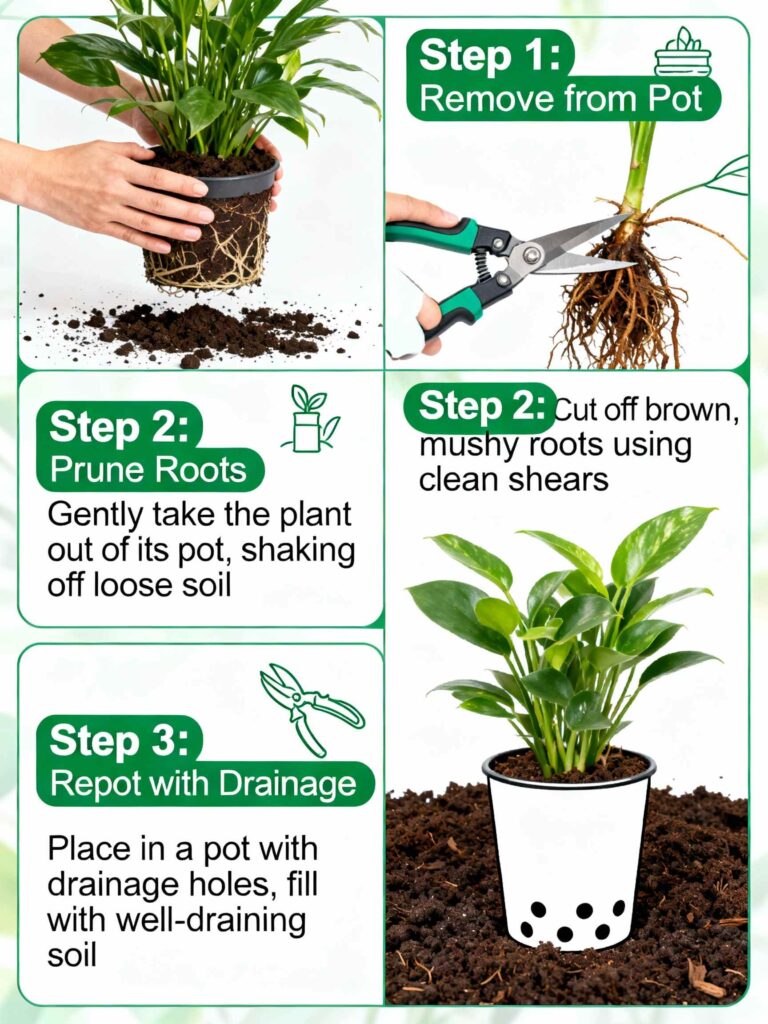
Visual guide to reviving an overwatered plant at home
The Five Signs How to save an overwatered plant at home
Before you can fix the problem, you need to recognize it. The tricky part? Overwatered plants display many of the same symptoms as underwatered plants, which confuses most people. Here’s how to tell the difference.
Sign #1: Yellowing or Browning Leaves That Feel Soft and Limp
Yellow leaves are the most common first warning sign of overwatering. However, the key difference from an underwatered plant is the texture. In an overwatered plant, the leaves feel soft, limp, and sometimes mushy to the touch. With underwatered plants, the leaves are dry and crispy.
Additionally, overwatered plants typically show yellowing that spreads from the base upward or affects both old and new leaves equally. In underwatered plants, yellowing starts at the tips and edges and gradually spreads inward.
Sign #2: Wilting Despite Wet Soil
This paradox confuses many plant parents: your plant looks wilted and sad, but the soil is wet. It seems logical to water more, but that’s the worst thing you can do. Wilting combined with wet soil is a classic indicator of root rot. The roots are too damaged to absorb and transport water up through the plant, even though water is present.
To confirm this, carefully lift your pot. Does it feel unnaturally heavy? That’s excess water trapped in the soil. This is your plant screaming for help.
Sign #3: Foul Odors and Fungal Growth on Soil
Trust your nose. A sour, musty, or distinctly unpleasant smell coming from the soil is a red flag for root rot and fungal colonization. This isn’t a pleasant earthy smell—it’s the odor of decay.
You might also notice visible fungal growth on the soil surface: white fuzz (mold), green slime (algae), or small flying insects (fungus gnats). These are nature’s signal that your soil is waterlogged and decomposing.
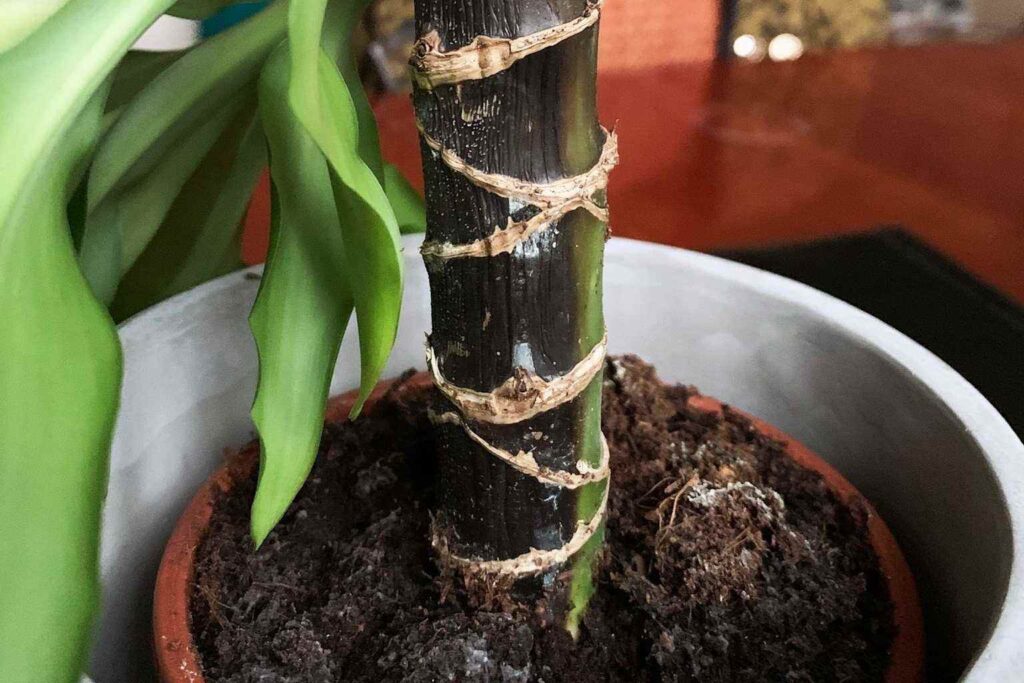
Sign #4: Mushy or Soft Stems Near the Base
Gently press the stem of your plant near the soil line. If it feels soft, squishy, or mushy instead of firm, you’re looking at advanced overwatering. This mushiness indicates that water molds and rot have migrated from the roots up into the stems. It’s a sign that immediate action is needed.
Sign #5: Edema (Brown Spots With Yellow Halos or Blisters)
This symptom is less commonly known but equally important. When a plant absorbs more water than it can use, pressure builds inside the plant’s leaf cells. Eventually, these cells burst, creating small brown spots, corky protrusions, or blister-like bumps on the leaves. Once the blisters rupture, tan, brown, or white wart-like growths may form.
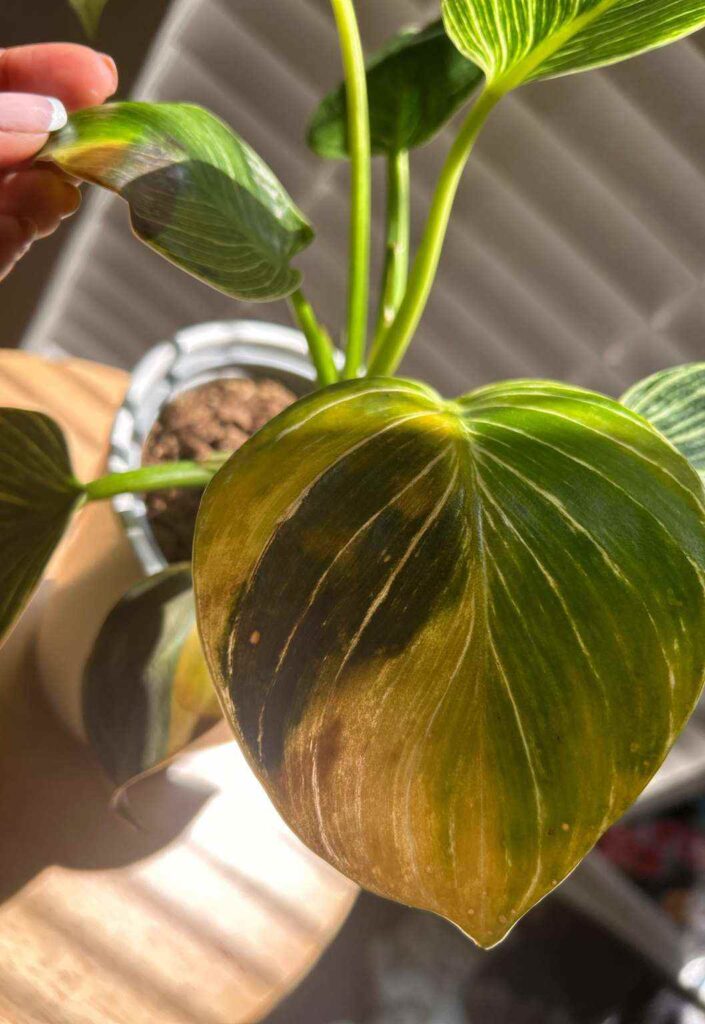
I overwatered my plant and now the leaves are turning yellow
Step-by-Step Guide: How to Save Your Overwatered Plant
Recovery is absolutely possible if you act strategically. The timeline and success rate depend on how severe the damage is, but even plants with significant root rot can survive with proper intervention.
Step 1: Stop Watering Immediately and Assess the Situation
This is your first and most critical action. Put down the watering can and resist the urge to water “just a little”. Overwatered plants need drying time, not more moisture.
Next, inspect your plant carefully. Look for these details:
- How wet is the soil? Is it soggy, damp, or just moist?
- Are the lower leaves completely yellowed or just starting to change?
- Does the stem feel mushy at the base?
- Is there visible mold or smell?
These observations help you decide whether your plant needs light intervention (just air-drying) or aggressive treatment (repotting and root pruning).
Step 2: Improve Air Circulation and Light
Move your plant to a warm, well-ventilated location with bright, indirect light. Do not place it in direct sunlight if the plant is severely stressed, as this can cause further damage to weakened foliage.
Air circulation is your secret weapon: Open windows, use a fan pointed at (not directly at) the pot, or simply place the plant in a breezy room. The goal is to increase evaporation from the soil surface. For succulents and plants extremely sensitive to moisture, you can even place newspaper or paper towels under the pot to absorb excess water from the bottom.
Step 3: Check the Roots (The Most Important Diagnostic Step)
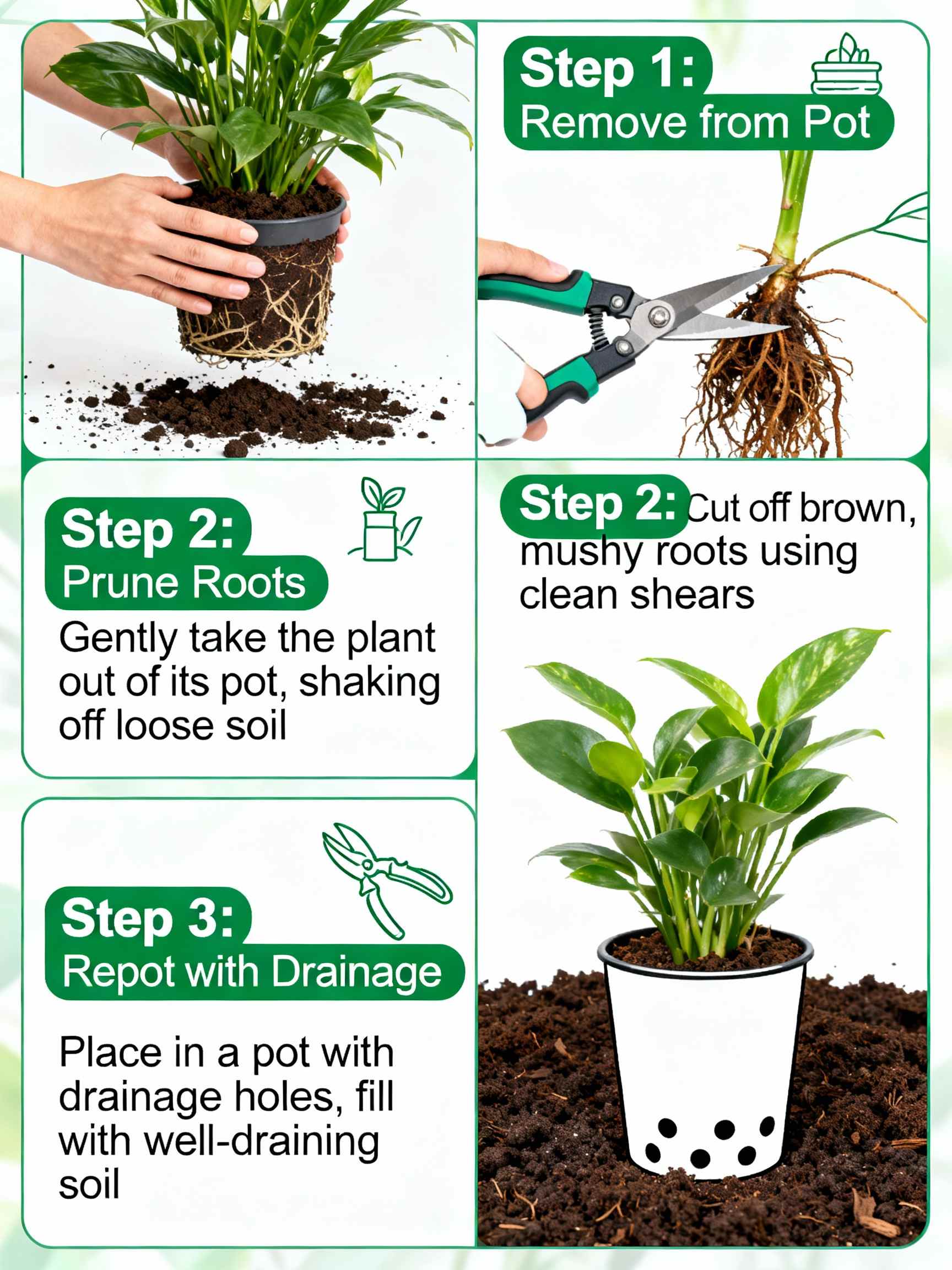
Carefully remove your plant from its pot. Don’t be rough—the roots are already stressed. Gently shake away excess soil from the root ball.
Now inspect the roots carefully:
Healthy roots appear white, light tan, or pale yellow. They’re firm, slightly flexible, and smell fresh or neutral.
Rotting roots are dark brown or black, mushy, and smell terrible. They fall apart easily when you touch them.
If 25% or less of the roots show rot with healthy roots still present, your plant can be saved. If more than 50% of the root system is rotted, it’s a more serious situation, but recovery is still possible if you act fast.
Step 4: Prune Away Damaged Roots and Foliage
Using clean, sharp scissors or a razor blade, carefully trim away all mushy, black, or brown roots. Cut them back to where the tissue is still firm and white. This is not the time to be conservative—removing damaged roots prevents the spread of rot.
Next, prune back the plant’s foliage by removing any yellowed, brown, or dying leaves and stems. This serves multiple purposes: it removes the visual reminder of the problem, it redirects the plant’s energy toward survival instead of maintaining stressed foliage, and it reduces the photosynthetic load on the weakened root system.
You can safely remove up to one-third to one-half of the foliage. Yes, this feels harsh, but it’s often necessary.
Step 5: Optional Protective Treatment for Severe Root Rot
For plants with significant root rot, you have two safe treatment options before repotting:
Option A: Hydrogen Peroxide Soak
Mix a solution of 3% hydrogen peroxide with water in a 1:1 or 2:1 ratio (1 part hydrogen peroxide to 1-2 parts water). Submerge or dip the cleaned root ball in this solution for about 1 hour or until the solution stops fizzing. This kills remaining bacteria and pathogens while providing oxygen to the roots. After soaking, allow the roots to air-dry for a few hours before repotting.
Option B: Cinnamon (For Wound Protection)
While cinnamon is often recommended for root rot treatment, research shows it’s actually too drying for fragile rotting roots. However, cinnamon is excellent as a preventative antifungal for fresh cuts you’ve just made on roots and stems. After trimming, lightly dust the cut areas with ground cinnamon. It acts as a natural fungicide and accelerates wound callusing.
Note: Do not use both treatments simultaneously. Choose one based on the severity of your situation.
Root rot: How to spot it and fix it | Patch
Step 6: Repot in Fresh, Well-Draining Soil
This step is critical. Never return your overwatered plant to the same wet soil. Use a clean pot with drainage holes—either the same size or slightly smaller than the original pot.
Fill the bottom with a layer of fresh, well-draining potting mix. The ideal mix includes:
- High-quality potting soil as the base
- Perlite (20-30% of the mix) for drainage and aeration
- Optional: orchid bark or coarse sand for plants that prefer even faster drainage (succulents, orchids)
Never use garden soil or regular outdoor soil—it’s too dense and compacts easily, trapping moisture and restricting airflow.
Gently position your plant at the same depth it was originally planted. Avoid burying the stem deeper, as this can lead to stem rot. Backfill gently with fresh soil, pressing lightly to eliminate large air pockets.
Step 7: Water Lightly After Repotting
Yes, water right after repotting. This is counterintuitive but essential. Watering helps settle the soil and makes root-to-soil contact, which supports faster recovery. However, “water” here means one gentle pour—not a soaking. Stop when you see water draining from the holes. Allow all excess water to drain completely before placing the pot in its saucer.
Check the saucer 20 minutes later. If water has accumulated, empty it immediately. The plant must never sit in standing water.
Step 8: Adjust Your Watering Routine Going Forward
This is where you prevent the cycle from repeating. The most effective approach is the soak-and-dry method: water thoroughly (so water drains from the bottom), then wait until the top 1-2 inches of soil feel dry before watering again.
Test the soil regularly using the finger test: Insert your finger into the soil up to your first knuckle. If it feels dry, it’s safe to water. If it still feels moist, wait another day or two.
Alternatively, invest in a simple soil moisture meter (inexpensive and accurate) to remove guesswork. These are particularly helpful for beginners.
Recovery Timeline: What to Expect
Recovery isn’t overnight. Mild overwatering situations (just a few yellow leaves) may recover in 1-3 weeks, while moderate damage with wilting and some root loss can take 3-8 weeks. Severe cases with significant root rot might require 2-3 months or longer.
The timeline depends on:
| Factor | Impact on Recovery |
|---|---|
| Plant type | Hardy plants (pothos, spider plants) recover in 2-4 weeks; delicate plants (orchids, succulents) need 8-12 weeks or longer |
| Damage severity | Mild (few yellowed leaves) recovers faster; severe (extensive root rot) takes much longer |
| Season | Spring and summer recovery is faster; fall and winter recovery is slower because plants are naturally dormant |
| Care quality | Proper humidity, light, and patience speed recovery; continued neglect or repeated mistakes slow it down |
Signs your plant is recovering include: new leaf growth (even tiny buds), existing leaves becoming firmer and more upright, brighter leaf color returning, and most importantly, the plant simply stopping getting worse.
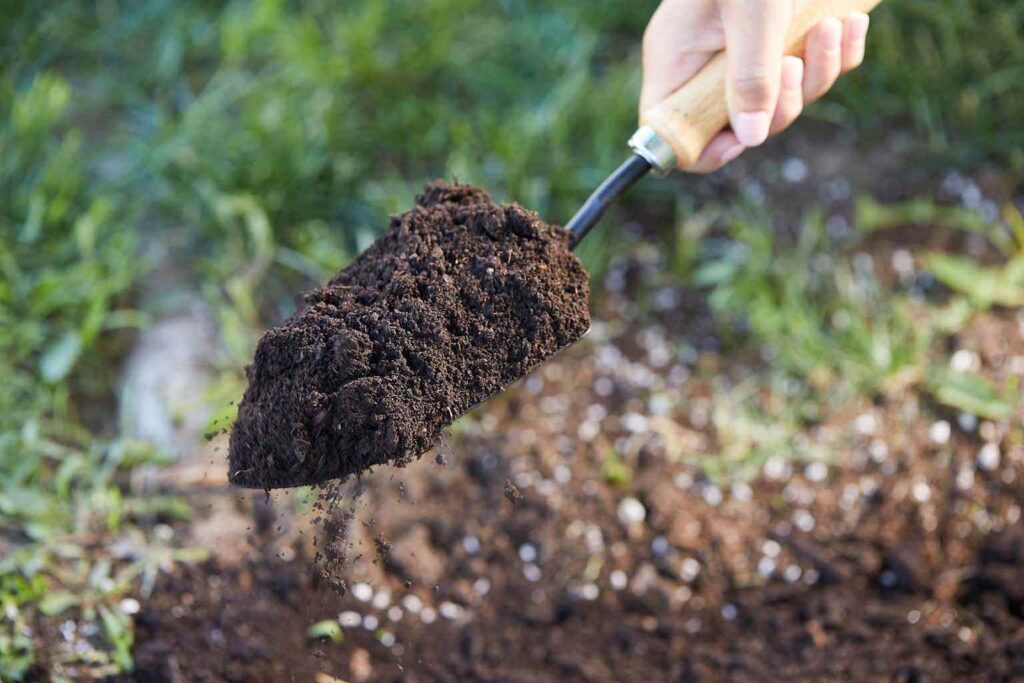
What to Know About Well-Drained Soil and Boosting Plant Drainage
Prevention: Never Let This Happen Again
Once you’ve saved your plant, you never want to repeat this experience. Prevention is always easier than recovery.
Know Your Plant’s Water Needs
Different plants have vastly different hydration requirements. Succulents and cacti can go weeks between waterings. Tropical plants like Peace Lilies and Monsteras prefer consistent moisture but not waterlogging. Ferns love humidity and frequent watering but still need decent drainage.
Before buying a plant, research its origin and natural habitat. This single step prevents most overwatering problems.
Use the Right Soil Mix
The potting soil you use is just as important as your watering frequency. Dense, compact soils hold too much moisture. Always choose a light, airy mix with perlite, orchid bark, or other amendments that improve drainage.
For succulents: use specialized cactus/succulent mix (very fast-draining).
For tropical plants: use a balanced potting mix with added perlite.
For orchids: use orchid bark or specialty orchid mix.
Ensure Proper Drainage
Every pot must have drainage holes. No exceptions. A beautiful pot without drainage holes is a plant death sentence. If you love a pot without drainage, place a draining pot inside it, or use a plant liner.
Also remove standing water from saucers within 20 minutes of watering. If water sits in the saucer, the plant will reabsorb it through capillary action, defeating the purpose of drainage.
Develop a Checking Habit, Not a Watering Schedule
This is the game-changer for most plant parents: abandon fixed watering schedules in favor of checking soil moisture before every watering. Plants don’t follow a calendar—their water needs change with season, humidity, light, and pot size.
Make checking soil moisture part of your routine. It takes 10 seconds and prevents disaster.
Frequently Asked Questions About How to save an overwatered plant at home
Q: Can I save a plant with severe root rot?
A: Yes, often yes—if you catch it early enough. If more than 75% of the root system is rotted and the smell is overwhelming, the plant may not survive. However, if any healthy roots remain, there’s hope. Remove all rotted material, treat with hydrogen peroxide if desired, repot in fresh soil, and provide excellent care. Many plants (especially pothos, philodendrons, and snake plants) can regenerate new roots even after severe damage.
Q: Should I fertilize my plant after fixing overwatering?
A: No. Avoid fertilizing for at least one month after repotting. Fertilizer adds stress to a recovering plant. The fresh potting soil already contains adequate nutrients to support recovery. Once you see new growth emerging, you can resume a light fertilizing schedule.
Q: How long should I wait before watering again after repotting?
A: Wait 3-5 days before checking soil moisture. Many plant parents panic and water too soon after repotting, restarting the overwatering cycle. Check the soil first—it’s usually still adequately moist from repotting.
Q: Can I propagate cuttings from a plant I couldn’t save?
A: Absolutely. If your plant doesn’t recover, take healthy stem cuttings (if any exist) and propagate them in water or moist soil. This “resurrection” technique has saved many plant parents’ favorite plants. Healthy cutting material can root in 2-4 weeks under good conditions.
Q: Is it better to repot into a larger pot to “give more room”?
A: No. Use the same size pot or go slightly smaller. A pot that’s too large holds too much soil and too much moisture. The plant roots can’t access all that soil, and it stays waterlogged. Match the pot size to the root ball size.
Q: Why do my new leaves still look small and weak even after recovery?
A: Your plant is still rebuilding its root system. Weak new growth is normal during early recovery and indicates the plant is directing energy into root regeneration rather than foliage growth. Once the root system strengthens, new leaves will be larger and more vibrant.
Q: What indoor plants are most forgiving of overwatering?
A: Plants like Peace Lilies, Pothos, Philodendrons, ZZ plants, Spider plants, and Ferns are relatively tolerant of moisture and recover well from overwatering. Succulents, orchids, and Fiddle Leaf Figs are the most vulnerable and should be watered cautiously.
Final Thoughts: Your Plant Can Recover
How to save an overwatered plant at home: Overwatering your plant is not a death sentence—it’s a learning opportunity. Thousands of plant parents have successfully revived severely overwatered plants by following these steps: removing excess water, inspecting roots, pruning damage, repotting in fresh soil, and adjusting watering habits.
The difference between a dead plant and a thriving one often comes down to one thing: understanding that plants need air around their roots just as much as they need water. Respect this principle, check your soil before watering, and your plants will reward you with vibrant, healthy growth.
Your plant has survived worse than this. Give it the chance to recover.

Asif Ali is a gardening blogger with over 2 years of experience writing about garden inspiration, eco-friendly gardening, and beautiful garden destinations. He focuses on practical, sustainable ideas that help beginners create inspiring gardens with ease.