Rainwater harvesting for gardens: Have you ever watched your garden wilt under the summer sun while your water bill climbs higher? There’s a simple, sustainable solution right above your head. Every time it rains, thousands of gallons of fresh water cascade off your roof and disappear into storm drains. That’s free water your garden desperately needs.
Rainwater harvesting isn’t just for eco-warriors or off-grid homesteaders anymore. Regular gardeners across America are discovering how catching and storing rainwater can keep their plants thriving even during the driest months. It’s nature that feels straight out of a dream—collecting what the sky freely gives and using it exactly when your garden needs it most.
The best part? You don’t need fancy equipment or technical expertise to get started. Let’s explore how rainwater harvesting can revolutionize your gardening experience.
Introduction to Rainwater Harvesting
What Is Rainwater Harvesting?
Rainwater harvesting is the practice of collecting and storing rain that falls on your roof or other surfaces. Instead of letting this water run off into the street, you capture it in barrels, tanks, or other containers for later use. Think of it as saving water for a rainy day—except you’re saving it from a rainy day.
The concept is ancient. Civilizations have collected rainwater for thousands of years, but modern systems make it easier and more efficient than ever. Whether you live in a suburban home or a rural property, you can harvest rainwater with systems ranging from a single barrel to elaborate multi-tank setups.
Why Water Conservation Matters for Home Gardens
Water is becoming increasingly precious. Many parts of the United States face periodic droughts, water restrictions, and rising utility costs. Your garden doesn’t stop needing water just because the weather gets dry or the municipality implements conservation measures.
By harvesting rainwater, you create your own reliable water supply that doesn’t strain public resources or your wallet. You’re also reducing stormwater runoff, which helps prevent erosion and reduces the burden on local drainage systems. It’s a win-win for your garden and your community.
Understanding Dry Seasons and Garden Challenges
Common Problems Gardens Face During Dry Weather
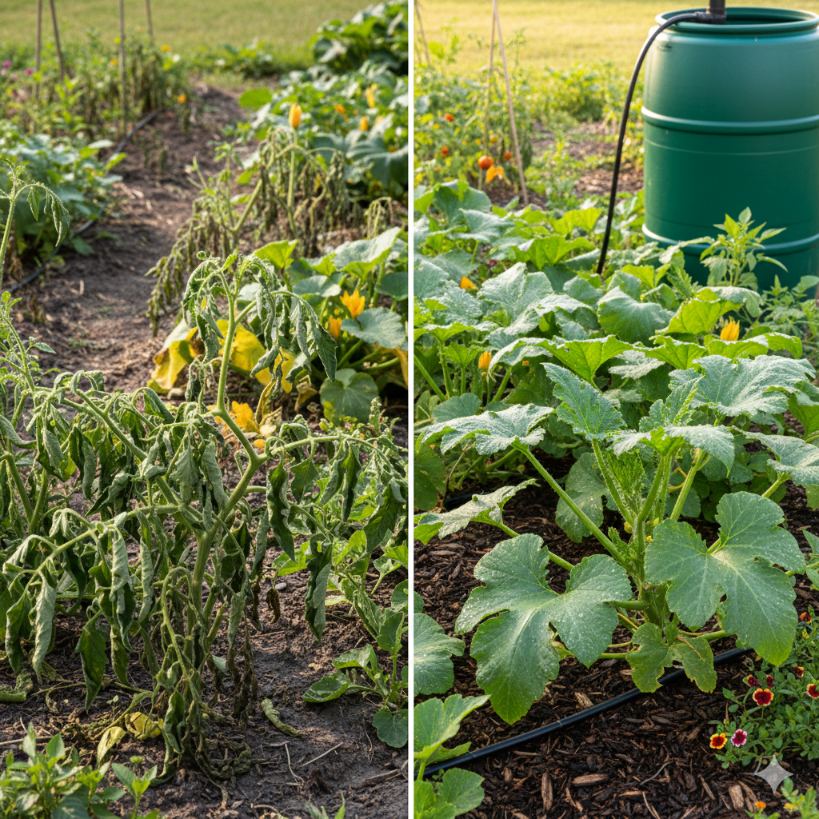
When dry seasons hit, gardens suffer in predictable ways. Plants wilt, leaves turn brown at the edges, and growth slows to a crawl. Vegetables produce smaller harvests or stop producing altogether. The soil becomes hard and cracked, making it difficult for roots to absorb whatever moisture remains.
Flowers drop their blooms early. Lawns turn patchy and brown. Even established trees and shrubs show signs of stress. Without consistent moisture, your entire landscape can transform from vibrant to struggling in just a few weeks.
Impact of Water Shortages on Soil and Plants
Dry soil isn’t just a surface problem—it affects the entire ecosystem beneath your garden. Beneficial microorganisms that help plants absorb nutrients become less active in dry conditions. The soil structure breaks down, becoming either dusty or compacted, neither of which is good for root development.
Plants under water stress become more vulnerable to pests and diseases. Their weakened state makes them easy targets for insects and fungal infections. Recovery from dry periods takes time and resources, sometimes requiring you to replace plants entirely if the stress was too severe.
How Rainwater Harvesting Works
Basic Components of a Rainwater Harvesting System
A rainwater harvesting system has three main parts working together: something to catch the rain, something to move the water, and something to store it. The beauty lies in its simplicity. You probably already have most of the system in place—your roof and gutters.
Roof Catchment Areas
Your roof is the collection surface. The size of your roof directly determines how much water you can harvest. A typical residential roof can collect thousands of gallons during a moderate rainstorm. The material matters less than you might think—asphalt shingles, metal, and tile all work fine, though some materials are cleaner than others.
Gutters and Downspouts
Gutters channel the water from your roof to specific collection points. They need to be clean and properly sloped to function effectively. Downspouts are where you’ll connect your storage containers, making them the critical link between collection and storage.
Storage Barrels or Tanks
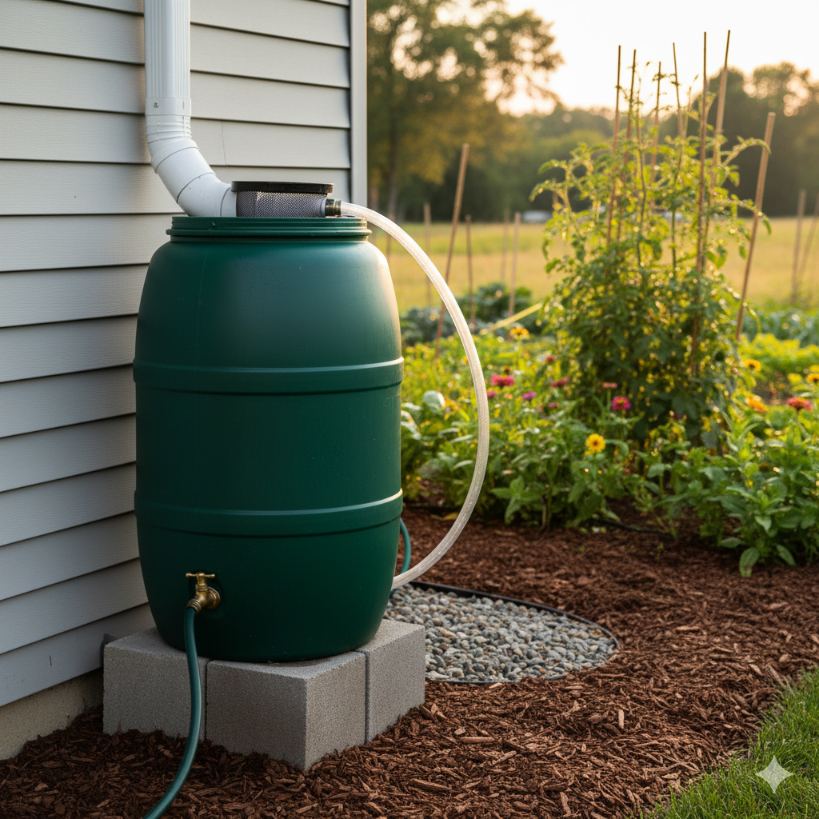
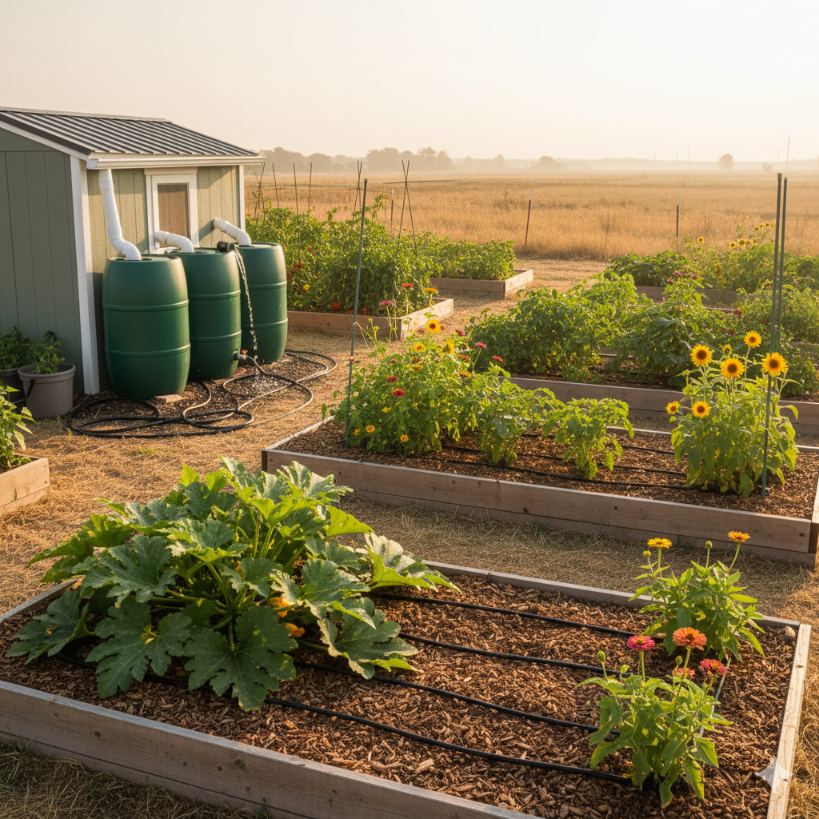
Rain barrels are the most common storage solution for home gardeners. They typically hold 50 to 100 gallons and connect directly to your downspouts. For larger systems, you might use multiple barrels or upgrade to cisterns that can store hundreds or thousands of gallons.
Simple Rainwater Harvesting Methods for Homes
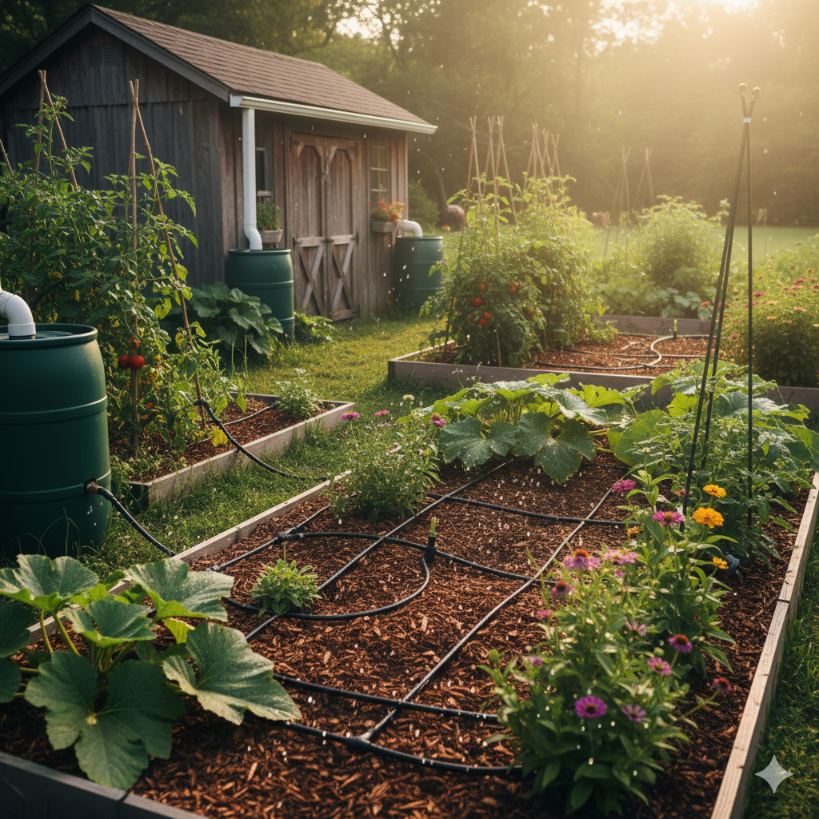
The simplest method is a rain barrel with a spigot at the bottom. You place it under a downspout, and it fills automatically when it rains. From there, you can fill watering cans, attach a hose, or even set up a gravity-fed drip irrigation system.
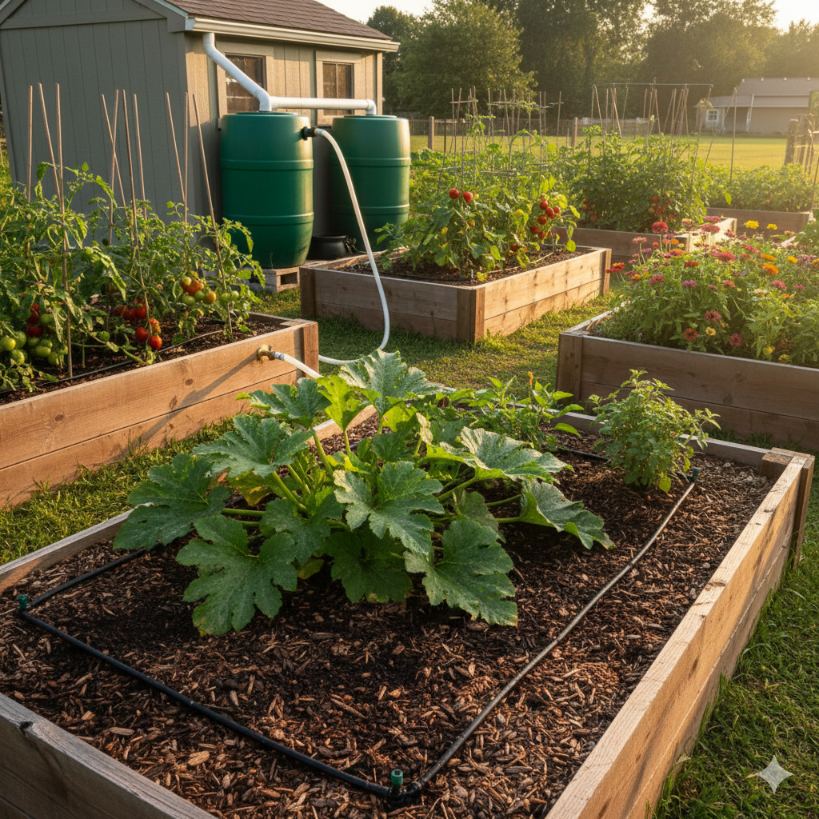
For slightly more sophisticated setups, you can link multiple barrels together to increase capacity. Some gardeners use first-flush diverters that discard the initial dirty water from each storm, ensuring cleaner water enters storage.
Key Benefits of Rainwater Harvesting for Gardens
Provides a Reliable Water Source During Dry Seasons
The most obvious benefit is having water when you need it most. During summer dry spells or drought restrictions, your stored rainwater keeps your garden going. You’re not at the mercy of weather patterns or water department schedules.
This reliability means you can maintain consistent watering routines, which plants prefer over sporadic drenching. Consistent moisture leads to better growth, more flowers, and higher vegetable yields.
Improves Soil Health and Plant Growth
Rainwater naturally improves soil structure over time. It helps maintain the beneficial microbe populations that plants depend on. Because it doesn’t contain the chemicals found in treated water, rainwater supports a healthier soil ecosystem overall.
Plants watered with rainwater often show more vigorous growth and deeper green foliage. The natural softness of rainwater makes it easier for plants to absorb, and it doesn’t leave behind the mineral deposits that hard tap water can create.
Reduces Dependence on Municipal Water Supplies
Every gallon of rainwater you use is a gallon you’re not drawing from the municipal supply. During drought conditions, this reduced demand helps the entire community. You’re part of the solution rather than part of the strain on water resources.
Independence from municipal water also means you’re unaffected by water restrictions, pressure fluctuations, or service interruptions. Your garden gets what it needs regardless of external circumstances.
Lowers Water Bills and Gardening Costs
Gardens can consume hundreds of gallons of water weekly during hot weather. At current utility rates, that adds up quickly. Rainwater is free. After the initial setup cost, every gallon you collect represents direct savings on your water bill.
Over time, these savings can offset your system costs entirely. Many gardeners find their systems pay for themselves within a few seasons, and everything after that is pure savings.
Why Rainwater Is Better Than Tap Water for Plants
Natural Nutrients in Rainwater
Rainwater picks up small amounts of nitrogen as it falls through the atmosphere. This natural fertilizer is in a form plants can readily use. It’s like giving your garden a gentle feeding every time you water.
No Chlorine or Harmful Chemicals
Municipal water contains chlorine and chloramine to keep it safe for human consumption. While these chemicals are safe for people, they can harm beneficial soil organisms and aren’t ideal for plants. Rainwater is naturally free from these additives.
Some tap water also contains fluoride, salts, and other minerals that can build up in soil over time. Rainwater avoids this accumulation problem entirely.
Ideal pH Level for Most Garden Plants
Rainwater is naturally slightly acidic, with a pH around 5.6. This happens to be close to ideal for most garden plants, which prefer slightly acidic to neutral soil conditions. Using rainwater helps maintain appropriate soil pH without requiring amendments.
Rainwater Harvesting and Sustainable Gardening
Supports Eco-Friendly and Organic Gardening Practices
Organic gardeners particularly appreciate rainwater harvesting. It aligns perfectly with organic principles of working with natural systems rather than against them. You’re using a renewable resource in its purest form.
Chemical-free rainwater also means you’re not introducing any substances that might interfere with organic certification or principles.
Reduces Water Runoff and Soil Erosion
When rain pours off your roof and onto the ground, it can cause erosion, wash away mulch, and create muddy conditions. By capturing that water, you prevent these problems while also reducing the amount of stormwater entering municipal systems.
Less runoff means less pollution washing into streams and rivers. Your small action contributes to larger watershed health.
Helps Conserve Local Water Resources
Every community has finite water resources. Aquifers recharge slowly, reservoirs can run low, and treatment plants have capacity limits. By harvesting rainwater, you’re directly reducing demand on these shared resources.
In areas prone to drought, widespread rainwater harvesting can make a measurable difference in water availability for everyone.
Best Plants That Benefit Most from Rainwater Harvesting
Vegetables and Herbs
Edible gardens benefit tremendously from consistent rainwater irrigation. Tomatoes, peppers, cucumbers, and squash all thrive with regular moisture. Herbs like basil, cilantro, and parsley show improved flavor when watered with rainwater rather than chlorinated tap water.
Leafy greens stay tender and productive longer when their water supply remains steady throughout the growing season.
Flowering Plants and Shrubs
Roses, hydrangeas, and other flowering shrubs produce more blooms when watered with rainwater. Perennial flowers establish stronger root systems and return more vigorously each year.
Annual flowers maintain continuous blooming throughout the season when moisture levels stay consistent.
Native and Drought-Resistant Plants
Even drought-tolerant plants benefit from occasional deep watering with harvested rainwater. This helps them establish faster and look their best, especially during extended dry periods that push even adapted plants to their limits.
Setting Up a Rainwater Harvesting System at Home
Choosing the Right Location
Place your rain barrels where they’ll be easy to access and where they can receive maximum runoff from your roof. Consider how you’ll use the water—having barrels near your garden reduces the effort required to water.
Make sure the location has a stable, level base. A full 55-gallon barrel weighs over 400 pounds, so proper foundation is essential for safety and longevity.
Selecting the Right Storage Size
Calculate your roof’s collection potential and your garden’s water needs. A general rule: one inch of rain on 1,000 square feet of roof yields about 600 gallons of water.
Start with at least 50-gallon capacity and expand as needed. Multiple smaller barrels are often more practical than one large tank for most home gardens.
Basic Maintenance Tips for Long-Term Use
Clean gutters regularly to prevent debris from clogging your system. Check screens and filters monthly during active collection seasons. Drain barrels before winter in freezing climates to prevent ice damage.
Once yearly, give barrels a thorough cleaning to prevent algae growth and maintain water quality.
Common Mistakes to Avoid in Rainwater Harvesting
Poor Filtration and Overflow Issues
Not using proper screening allows leaves, twigs, and insects into your water supply. Always use fine mesh screens at collection points. Also, plan for overflow—every barrel needs a way to divert excess water away from your home’s foundation.
Ignoring Local Regulations or Safety Measures
Some areas have regulations about rainwater harvesting, though most U.S. locations encourage it. Check local codes before installing large systems. Also ensure your barrels are child-safe and mosquito-proof to avoid creating hazards.
Inadequate Storage During Peak Rainfall
Don’t let perfect rainfall go to waste because your barrels filled up too quickly. Scale your storage to handle typical storms in your area, or create systems that fill multiple containers sequentially.
Rainwater Harvesting Tips for Dry and Hot Climates
Combining Rainwater Harvesting with Mulching
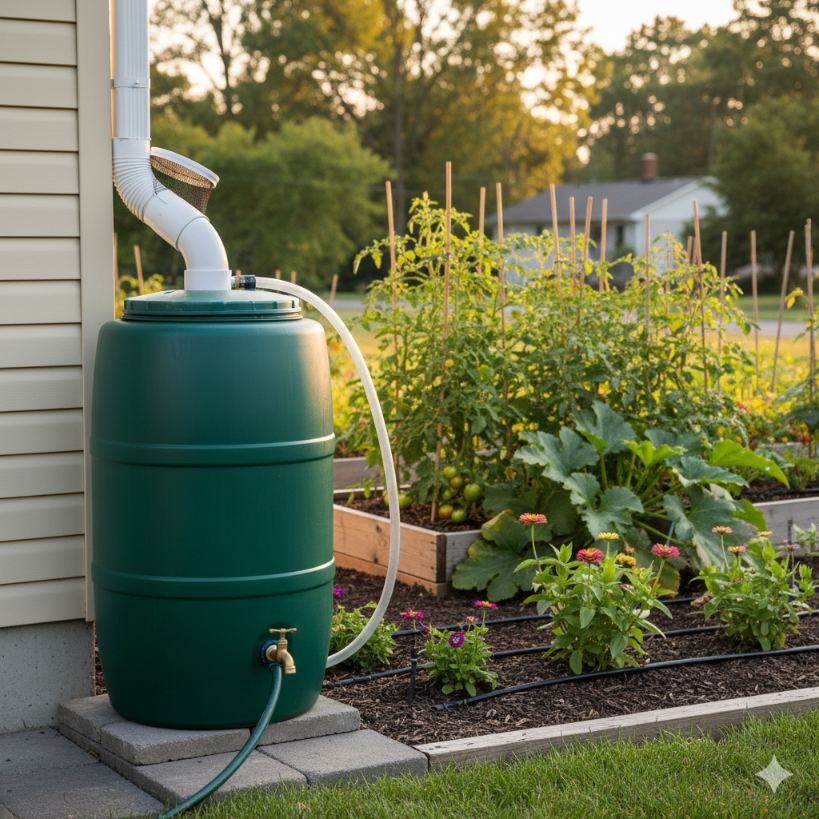
Mulch around plants helps retained moisture in the soil. When you combine rainwater irrigation with a good mulch layer, you maximize every drop’s effectiveness. This combination is especially powerful in arid regions.
Using Drip Irrigation with Stored Rainwater
Drip systems deliver water directly to plant roots with minimal evaporation. Connect a drip line to your rain barrel for the most efficient possible watering system. Gravity provides enough pressure for most drip setups.
Smart Watering Schedules for Dry Seasons
Water deeply but less frequently to encourage deep root growth. Early morning watering reduces evaporation. With harvested rainwater, you can maintain optimal schedules even during restrictions that limit municipal water use.
Natural Fertilizers for Plants: The Ultimate Guide to Organic vs Chemical Options for Thriving Gardens
Cost vs. Long-Term Savings
Initial Setup Costs Explained
A basic rain barrel system costs between $100 and $300 for most homeowners. This includes the barrel, connection hardware, and basic filtration. Larger or more sophisticated systems naturally cost more but offer proportionally greater benefits.
Many water utilities offer rebates for rainwater harvesting systems, which can significantly reduce your out-of-pocket expenses.
How Rainwater Harvesting Saves Money Over Time
Average gardens use 40-60 gallons per watering session. If you water three times weekly through a six-month growing season, that’s over 4,000 gallons annually. At typical water rates, the savings add up to hundreds of dollars per year.
The system pays for itself within two to three years, then provides savings for decades with minimal maintenance.
Is Rainwater Harvesting Worth It for Home Gardeners?
Who Benefits the Most from Rainwater Harvesting
Gardeners in areas with seasonal rainfall patterns benefit tremendously. If your region gets most of its rain in winter and spring but faces dry summers, capturing that water becomes invaluable.
Large gardens, vegetable growers, and anyone facing high water costs will see the most dramatic benefits, though even small gardens and container plantings benefit from free, chemical-free water.
Long-Term Environmental and Gardening Benefits
Beyond immediate cost savings, you’re reducing your environmental footprint, supporting healthier soil ecosystems, and contributing to community water conservation efforts. Your plants grow better, your garden stays productive longer, and you gain independence from external water sources.
The peace of mind knowing your garden won’t suffer during dry spells is worth the modest investment alone.
Conclusion
Final Thoughts on Growing Healthier Gardens During Dry Seasons
Rainwater harvesting transforms how you approach gardening during challenging dry seasons. Instead of watching helplessly as your plants struggle and your water bills climb, you’ll have a sustainable, cost-effective solution right outside your door.
The simple act of catching rain opens up possibilities—more ambitious gardens, better plant health, lower costs, and the satisfaction of working in harmony with nature’s cycles. Whether you start with a single barrel or eventually expand to a comprehensive system, every gallon you harvest represents progress toward a more resilient and sustainable garden.
Frequently Asked Questions (FAQs)
How much rainwater can I collect from my roof?
For every inch of rainfall, you can collect about 0.6 gallons per square foot of roof area. A typical 1,500 square foot roof yields about 900 gallons from just one inch of rain. Annual collection potential varies by location but can easily reach thousands of gallons.
Is rainwater safe for edible plants?
Yes, rainwater is safe and actually beneficial for vegetables, fruits, and herbs. It’s free from chlorine and other treatment chemicals found in tap water. Just ensure your collection surfaces are clean and your storage containers are food-grade if you’re being cautious.
Can rainwater harvesting work in low-rainfall areas?
Absolutely. In fact, these areas often benefit most because every drop counts more. Even areas receiving only 10-15 inches annually can collect significant water during their rainy seasons. The key is sizing your storage to capture what does fall.
How long can rainwater be stored safely?
Properly stored rainwater remains usable for months. Keep barrels covered to prevent algae growth and mosquito breeding. If water develops an odor or visible growth, it’s time to clean the system. For drinking water standards, different rules apply, but for gardens, stored rainwater remains perfectly fine for extended periods.
Do I need a permit for rainwater harvesting?
Most U.S. states actively encourage rainwater harvesting for residential use, and permits aren’t typically required for basic systems. Colorado and a few western states have specific regulations due to water rights laws. Always check with your local building department or water authority to confirm local requirements before installing large systems.

Asif Ali is a gardening blogger with over 2 years of experience writing about garden inspiration, eco-friendly gardening, and beautiful garden destinations. He focuses on practical, sustainable ideas that help beginners create inspiring gardens with ease.