Are you tired of spending every weekend mowing, watering, and maintaining a traditional grass lawn? You’re not alone. More homeowners across the United States are discovering that beautiful front yards don’t need grass to look stunning.
Whether you’re dealing with drought conditions, want to reduce your water bill, or simply prefer a low-maintenance landscape, there are countless creative ways to design a lush, inviting front yard without a single blade of turf. From colorful ground covers to elegant gravel gardens, these front yard garden ideas without grass will transform your home’s curb appeal while saving you time and money.
Let’s explore fifteen gorgeous alternatives that prove grass isn’t the only way to create an eye-catching entrance to your home.
Native Wildflower Meadow
What Makes It Special
A native wildflower meadow brings natural beauty and wildlife to your doorstep. Instead of uniform green grass, imagine a tapestry of colors changing with the seasons—purple coneflowers, black-eyed Susans, and California poppies swaying in the breeze.
Best Location and Climate
This approach works beautifully across most U.S. regions. Choose wildflowers native to your specific area for the best results. In Texas, bluebonnets and Indian paintbrush thrive naturally. Pacific Northwest gardeners might opt for lupines and Oregon sunshine.
What to Expect
Your meadow will attract butterflies, bees, and hummingbirds throughout the growing season. It requires minimal watering once established—typically just rainfall—making it one of the most effective water saving gardening techniques available. You’ll only need to mow once or twice a year.
Succulent Tapestry Garden
What Makes It Special
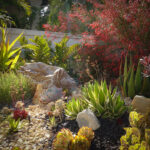
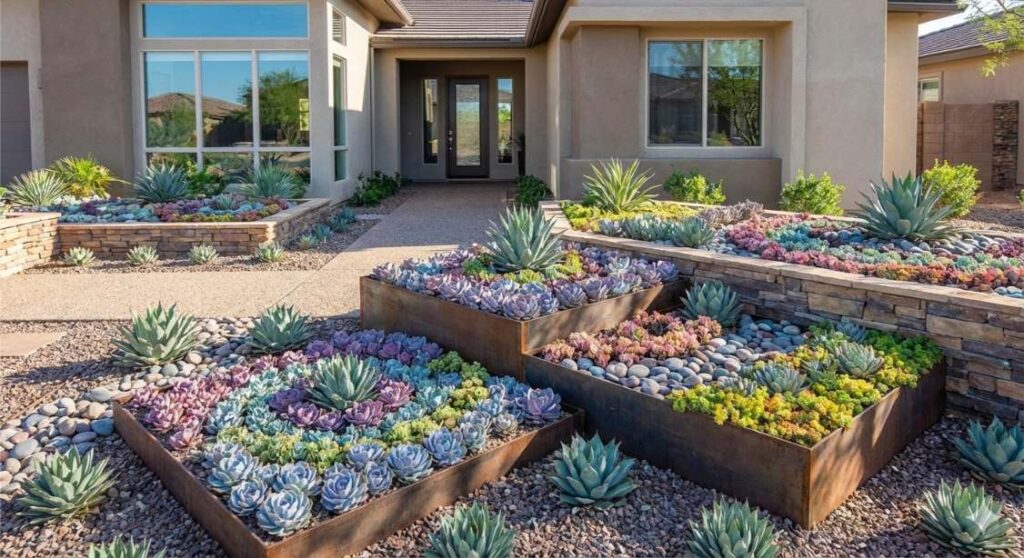
Succulents create living artwork with their geometric shapes and stunning variety of colors. From blue-gray echeveria to purple aeoniums, these drought-tolerant plants form intricate patterns that look intentionally designed.
Best Location and Climate
Perfect for dry climates like Southern California, Arizona, and parts of Texas. Succulents need excellent drainage and plenty of sunshine. In cooler regions, choose cold-hardy varieties like sempervivum (hens and chicks).
What to Expect
This garden style requires almost no maintenance once established. Succulents store water in their leaves, so you’ll water maybe once every few weeks during hot months. The visual impact is immediate and lasts year-round.
Image Prompt: A front yard filled with colorful succulent arrangements in various shades of blue, green, purple, and pink, arranged in artistic patterns, some in raised beds with decorative rocks, modern home visible, desert landscape style
Clover Lawn Alternative
What Makes It Special
White or micro clover creates a soft, green carpet that feels wonderful underfoot. It stays green during droughts when regular grass turns brown, and it actually enriches your soil by fixing nitrogen naturally.
Best Location and Climate
Clover works in most climates across the United States, from cool New England to warm Southern states. It tolerates both sun and partial shade, making it incredibly versatile.
What to Expect
You’ll enjoy a lush, green yard that requires far less water than traditional grass. Clover grows low to the ground and only needs occasional mowing if you want a manicured look. The small white flowers attract pollinators, and the soft texture makes it great for families.
Mediterranean Gravel Garden
What Makes It Special
Inspired by the dry gardens of Spain and Greece, this style combines decorative gravel with drought-tolerant plants like lavender, rosemary, and ornamental grasses. The result is elegant, fragrant, and incredibly low-maintenance.
Best Location and Climate
Ideal for hot, dry regions but adaptable to most climates with proper plant selection. California, Arizona, and Nevada homeowners particularly love this style.
What to Expect
Gravel suppresses weeds while allowing water to drain properly. Your plants will thrive with minimal irrigation, and the garden will look intentionally designed year-round. The herbs provide wonderful scents when you brush past them.
Image Prompt: A Mediterranean-style front yard with pale gravel pathways, purple lavender bushes, silvery rosemary, ornamental grasses, terracotta pots, warm earth tones, sunny Mediterranean aesthetic
Moss Garden Retreat
What Makes It Special
Moss creates a magical, forest-like atmosphere that feels cool and peaceful. This ancient plant forms a soft, emerald carpet that stays green year-round in the right conditions.
Best Location and Climate
Perfect for shady, humid areas like the Pacific Northwest, parts of the Southeast, and New England. Moss needs moisture and shade to thrive.
What to Expect
Once established, moss requires virtually no maintenance—no mowing, no fertilizing. It grows slowly but steadily, creating a serene, Japanese garden aesthetic. This is one of the ultimate water saving gardening techniques for shady yards since moss needs far less water than grass.
Image Prompt: A peaceful front yard covered in lush green moss with scattered stepping stones, shade from mature trees, subtle lighting, Japanese-inspired garden with small rocks and a simple water feature
Flowering Ground Cover Patchwork
What Makes It Special
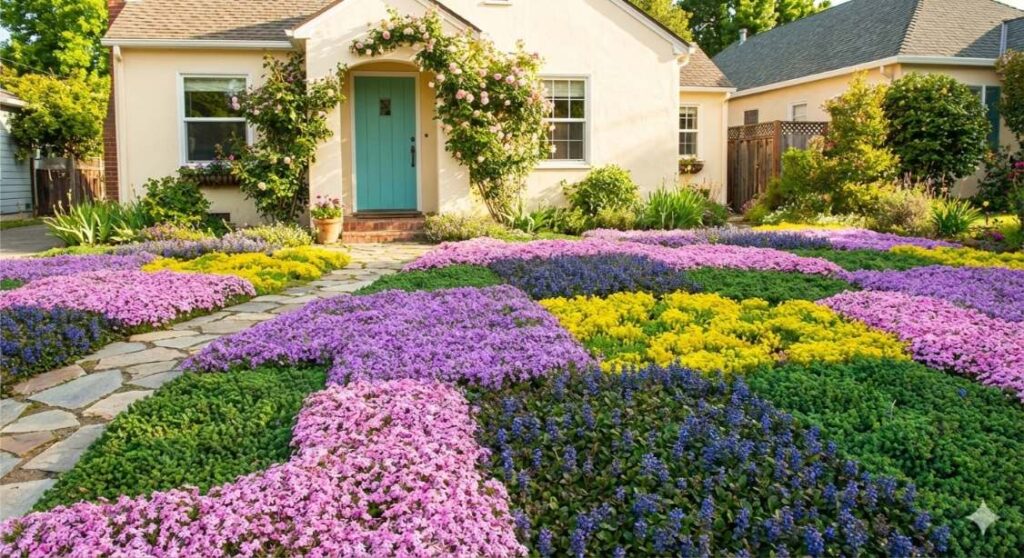
Combining different flowering ground covers creates a living quilt of colors and textures. Creeping thyme, phlox, sedum, and ajuga spread naturally to fill spaces while blooming at different times.
Best Location and Climate
Works in most U.S. climates with appropriate plant selection. Mix species that bloom in spring, summer, and fall for continuous color.
What to Expect
Your yard will transform with the seasons. Spring might bring pink phlox, summer adds purple thyme flowers, and fall showcases sedum blooms. These plants require minimal watering once established and naturally suppress weeds.
Rock Garden with Alpine Plants
What Makes It Special
Rock gardens create dramatic visual interest using natural stone arrangements and hardy alpine plants. This style works particularly well on slopes and adds architectural elements to your landscape.
Best Location and Climate
Excellent for areas with poor soil or challenging terrain. Works across most climates, especially in mountainous regions like Colorado, Montana, and parts of California.
What to Expect
Large decorative rocks create structure while small alpine plants like saxifraga, dianthus, and miniature conifers fill the spaces. Drainage is excellent, so you’ll water infrequently. The garden looks established and mature relatively quickly.
Image Prompt: A terraced rock garden in a front yard with large boulders, small alpine flowers in pink and white, miniature evergreens, natural stone arrangement, mountain home setting, dramatic and sculptural
Water-Saving Gardening Techniques for Front Yards That Still Look Luxury
Perennial Flower Borders
What Makes It Special
Dense plantings of perennial flowers eliminate the need for grass while providing spectacular color shows. Grouping plants in drifts creates a cottage garden feel that’s both romantic and practical.
Best Location and Climate
Adaptable to any region by choosing appropriate perennials. New England gardeners might choose peonies and daylilies, while Southern gardeners could opt for salvia and coreopsis.
What to Expect
Your garden will evolve through the seasons with different plants taking center stage. Perennials return year after year, becoming fuller and more impressive. Mulch between plants suppresses weeds and retains moisture.
Image Prompt: A lush front yard filled with layered perennial flowers including tall purple delphiniums, pink roses, yellow coreopsis, and white daisies, cottage-style garden, overflowing with blooms, charming wooden fence
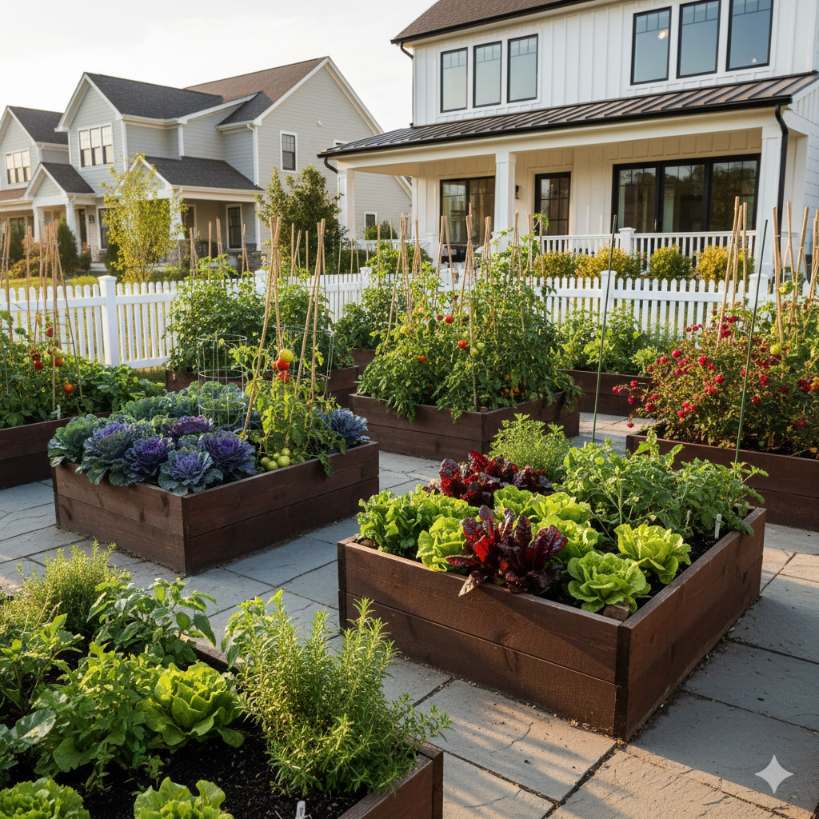
Edible Front Yard Garden
What Makes It Special
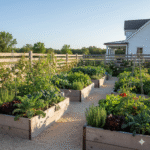
Why grow grass when you could grow food? Edible landscaping combines vegetables, herbs, and fruit plants in attractive arrangements that are both beautiful and productive.
Best Location and Climate
Works everywhere with proper plant selection. Choose varieties suited to your growing season and climate zone. Urban homeowners across America are embracing this practical trend.
What to Expect
You’ll harvest fresh produce steps from your front door. Mix ornamental and edible plants—purple cabbage looks like flowers, while strawberry plants make excellent ground covers. This approach requires more active management than grass but provides real value.
Ornamental Grass Meadow
What Makes It Special
Who says you need traditional grass? Ornamental grasses like fountain grass, switchgrass, and blue fescue create movement, texture, and year-round interest without the maintenance of a lawn.
Best Location and Climate
Ornamental grasses are remarkably adaptable and grow well across the United States. Many varieties are drought-tolerant once established.
What to Expect
These grasses sway beautifully in the breeze, creating a dynamic landscape that changes with the light. Most need cutting back just once a year. They look stunning in winter when frosted or covered with snow.
Image Prompt: A front yard meadow of tall ornamental grasses including feathery fountain grass and purple muhly grass, swaying in the wind, golden hour lighting, contemporary house, natural and flowing movement
Hardscape with Container Gardens
What Makes It Special
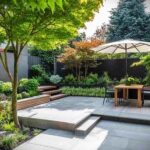
Combining patios, pathways, and decorative paving with strategically placed container gardens gives you complete control over your design. This approach is perfect for modern, minimalist aesthetics.
Best Location and Climate
Works in any climate since you can move containers or swap plants seasonally. Particularly popular in urban and suburban settings across the country.
What to Expect
You’ll have a clean, organized front yard with pops of color exactly where you want them. Containers allow you to grow plants that might not thrive in your native soil. Maintenance focuses on the containers rather than an entire lawn.
Image Prompt: A modern front yard with geometric paver patterns, clean lines, large decorative containers with colorful flowers and small trees, contemporary architecture, minimalist design, stylish and low-maintenance
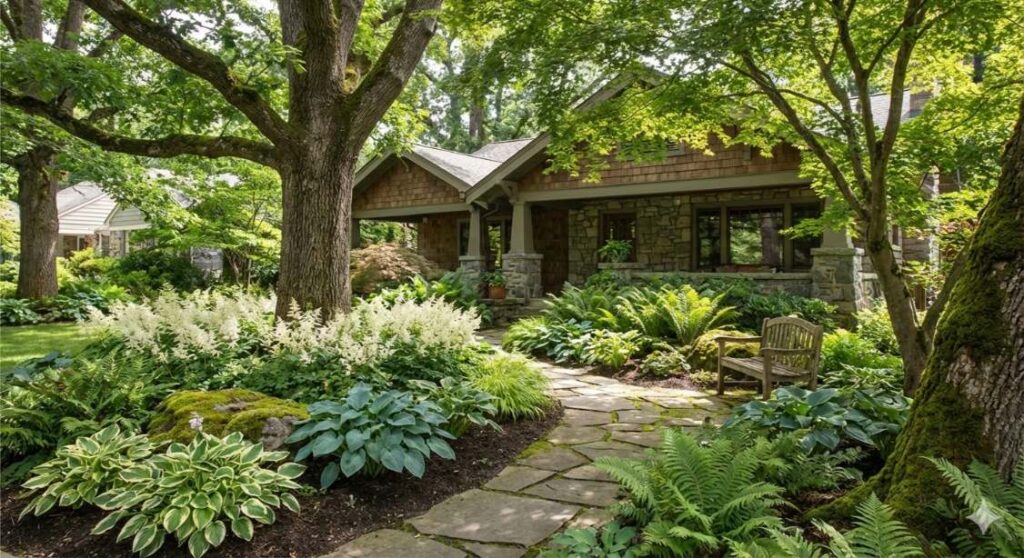
Shade Garden Under Trees
What Makes It Special
If large trees dominate your front yard, embrace the shade with hostas, ferns, astilbe, and other shade-loving plants. This creates a woodland garden atmosphere that feels cool and established.
Best Location and Climate
Perfect for properties with mature trees in any region. The Pacific Northwest, parts of the Midwest, and the Northeast have ideal conditions for shade gardens.
What to Expect
Your garden will look lush and full without competing with tree roots. Shade plants typically need less water than sun-loving varieties, and the tree canopy provides natural mulch with fallen leaves. This tranquil setting requires minimal maintenance.
Desert Landscape with Native Plants
What Makes It Special
Embracing your natural desert environment with native cacti, agave, yucca, and desert wildflowers creates stunning visual drama while conserving precious water resources.
Best Location and Climate
Designed for arid regions like Arizona, Nevada, New Mexico, and parts of Southern California and Texas. These plants have evolved to thrive in harsh conditions.
What to Expect
Your landscape will require virtually no supplemental watering once established. Desert plants offer striking architectural forms and surprising blooms. Decomposed granite or desert sand makes an attractive, practical base.
Image Prompt: A dramatic desert front yard with tall saguaro cactus, blue agave plants, red yucca, colorful desert wildflowers, natural rock formations, decomposed granite ground cover, Southwest-style adobe home, vibrant sunset lighting
Pollinator Paradise Garden
What Makes It Special
Designing specifically for bees, butterflies, and hummingbirds creates a garden that’s alive with activity. Native plants that provide nectar and host caterpillars transform your front yard into a wildlife sanctuary.
Best Location and Climate
Works in every region by choosing native pollinator plants. This approach supports local ecosystems and helps threatened pollinator populations.
What to Expect
You’ll enjoy constant wildlife entertainment as different species visit throughout the day. These gardens require minimal maintenance since native plants are adapted to local conditions. Watching monarchs emerge or hummingbirds feed becomes part of your daily experience.
Image Prompt: A front yard bursting with native wildflowers in purples, yellows, and oranges, monarch butterflies and bees visiting blooms, hummingbird feeding station, natural and abundant, wildlife-friendly garden, charming cottage in background
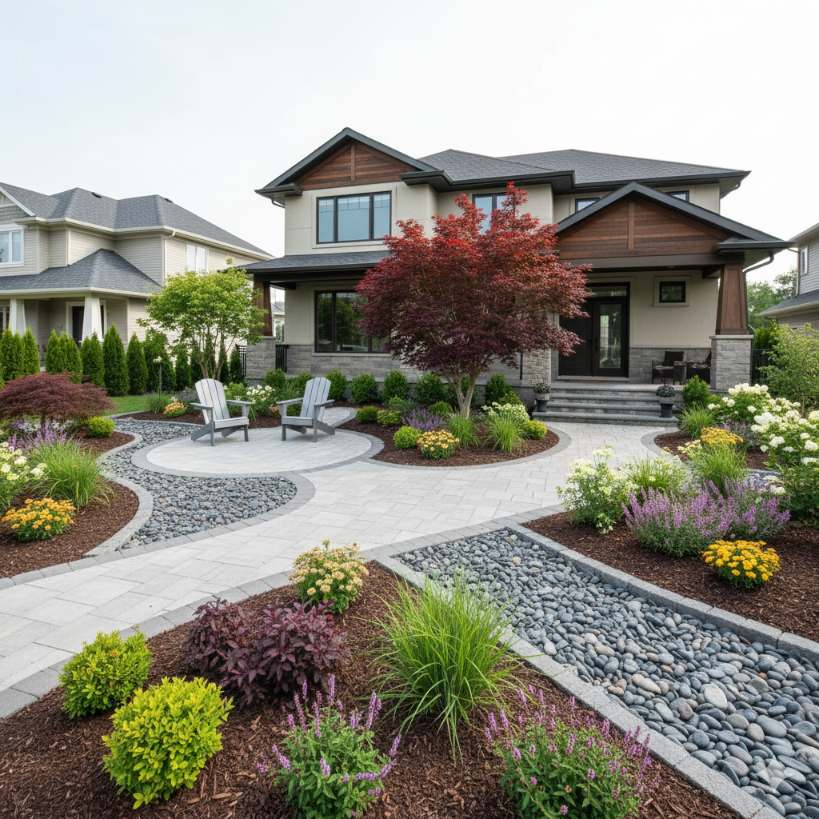
Mixed Hardscape and Softscape Design
What Makes It Special
Combining permeable paving, decorative rocks, mulched beds, and diverse plantings creates zones within your front yard. This balanced approach offers visual interest and practical functionality.
Best Location and Climate
This versatile design works anywhere because you customize plant and material selections to your specific climate and style preferences.
What to Expect
Different areas serve different purposes—a seating area, a display garden, a pathway. The varied textures and materials create depth and sophistication. Maintenance is manageable because you’re working with distinct zones rather than one large lawn.
Frequently Asked Questions
How much does it cost to replace grass in a front yard?
Costs vary widely depending on your chosen design and yard size. Simple ground covers like clover might cost just a few hundred dollars for seed and soil prep. More elaborate designs with hardscaping, mature plants, or professional installation could range from two thousand to ten thousand dollars or more. However, you’ll save money long-term through reduced water bills and eliminated lawn care expenses.
What is the easiest grass alternative for a front yard?
Clover is often the easiest transition because it’s inexpensive, grows quickly, and requires minimal preparation. Micro clover varieties stay low and green without much maintenance. For hot, dry climates, native ground covers or mulch with drought-tolerant plants offer similarly easy alternatives.
Will removing grass increase my home value?
A well-designed, attractive grass alternative can absolutely increase curb appeal and home value, especially in drought-prone areas where water conservation is valued. The key is professional execution—a thoughtfully designed landscape shows better than an abandoned or weedy yard.
How do I prepare my yard for removing grass?
Most methods involve either smothering the grass with cardboard and mulch (sheet mulching), using a sod cutter to physically remove it, or applying natural methods to kill the grass before planting. The best approach depends on your timeline and chosen replacement. Many gardeners find sheet mulching over several months to be the most environmentally friendly option.
Are grass alternatives good for kids and pets?
Yes! Many alternatives work beautifully for active families. Clover creates a soft play surface. Mulched pathways between planting beds provide clear play areas. Avoid thorny plants near play zones, and ensure any gravel is rounded rather than sharp. Some alternatives like ornamental grasses or hardscaping might be better for “look but don’t touch” front yards, while edible gardens and flower meadows can be wonderful for curious children.
Do grass alternatives attract more bugs?
Flowering alternatives do attract beneficial insects like butterflies and bees, which is actually positive for the environment. However, they don’t typically attract problematic pests any more than traditional lawns. In fact, diverse plantings often create balanced ecosystems where beneficial insects help control pest populations naturally.
Making the switch from traditional grass to creative alternatives transforms your front yard into something unique and personal. These front yard garden ideas without grass prove that beautiful, lush landscapes come in countless forms beyond the conventional lawn.
Whether you choose colorful wildflowers, practical edibles, or elegant hardscaping, you’ll enjoy reduced maintenance, lower water bills, and a distinctive home entrance that reflects your style. The best part? You’re contributing to environmental conservation through water saving gardening techniques while creating habitat for pollinators and wildlife.
Your perfect grass-free front yard is waiting—choose the style that speaks to you and start planning your transformation today.

Asif Ali is a gardening blogger with over 2 years of experience writing about garden inspiration, eco-friendly gardening, and beautiful garden destinations. He focuses on practical, sustainable ideas that help beginners create inspiring gardens with ease.