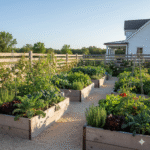
Cottage Garden Inspiration from US Countryside: Cottage gardens have long captured our imaginations—those enchanting, overflowing spaces where flowers spill freely, winding paths invite exploration, and every corner reveals a new surprise. While many associate this aesthetic with the English countryside, America has its own rich tradition of cottage-style gardens that blend romantic formality with native plants and regional character. Whether you’re seeking real, visitable destinations or practical inspiration for your own backyard, discovering these cottage garden locations can spark ideas that transform your outdoor space into a fairytale refuge. From Pennsylvania’s historic estates to California’s formal gardens and the wildflower meadows of rural New England, American cottage gardens offer abundant inspiration that feels both timeless and genuinely rooted in the US landscape.
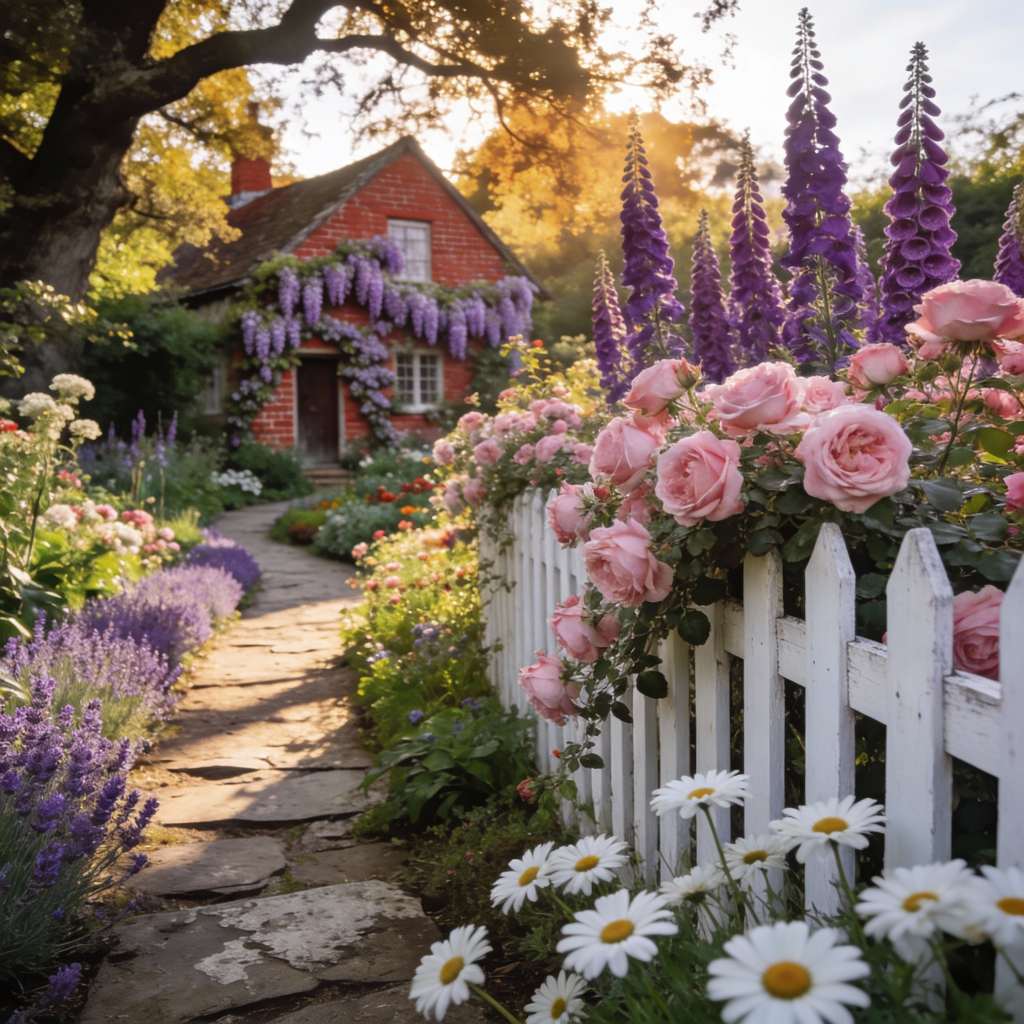
1. Longwood Gardens — Kennett Square, Pennsylvania
Location: Brandywine Valley, Chester County, Pennsylvania
Best Time to Visit: Late spring through early fall for peak blooms; winter holiday displays are spectacular
What Makes It Special: A hidden gem even for seasoned gardeners, Longwood’s Flower Garden Walk stretches 600 feet along a main axis lined with color-changing displays. Designed by Pierre S. du Pont, this garden showcases how formal garden rooms can feel intimate despite the expansive acreage.
Longwood spans over 1,100 acres of meticulously maintained outdoor gardens and woodlands, but it’s the compartmentalized garden rooms closest to the conservatory that truly inspire cottage garden enthusiasts. The Flower Garden Walk features a pool known as the Round Fountain at the center, with symmetrical planting beds bursting with seasonal blooms. Unlike larger public gardens that can feel overwhelming, these defined spaces create that cozy, enclosed feeling cottage gardeners crave. The newer Meadow Garden showcases 86 acres of native plantings, proving that cottage garden principles work beautifully with regional wildflowers and native perennials. Walking these paths, you’ll notice how repetition of plants—masses of a single variety—creates visual impact without chaos, a key cottage garden technique you can adapt to your own space.
2. Chanticleer Garden — Wayne, Pennsylvania
Location: Main Line, near Philadelphia, Pennsylvania
Best Time to Visit: April through October (seasonal hours)
What Makes It Special: Called a “pleasure garden,” Chanticleer transforms a 1920s estate into a living laboratory of horticultural artistry where foliage matters as much as flowers.
Chanticleer proves that cottage gardens thrive when you embrace bold, experimental combinations. The garden contains 14 distinct rooms, each with its own personality—from the whimsical Teacup Garden entrance to the atmospheric Ruin Garden, where old stone structures are surrounded by artistic plantings. The Cutting and Vegetable Garden demonstrates how practical elements enhance visual appeal, while the Creek Garden flows like a natural waterway through the property. What makes Chanticleer quintessentially cottage-inspired is how textures matter; gardeners use foliage from sedges, ornamental grasses, and variegated plants to create interest beyond flowers alone. The staff includes seven resident horticulturists who each design and maintain their own garden area, giving each space authentic, lived-in charm rather than sterile perfection.
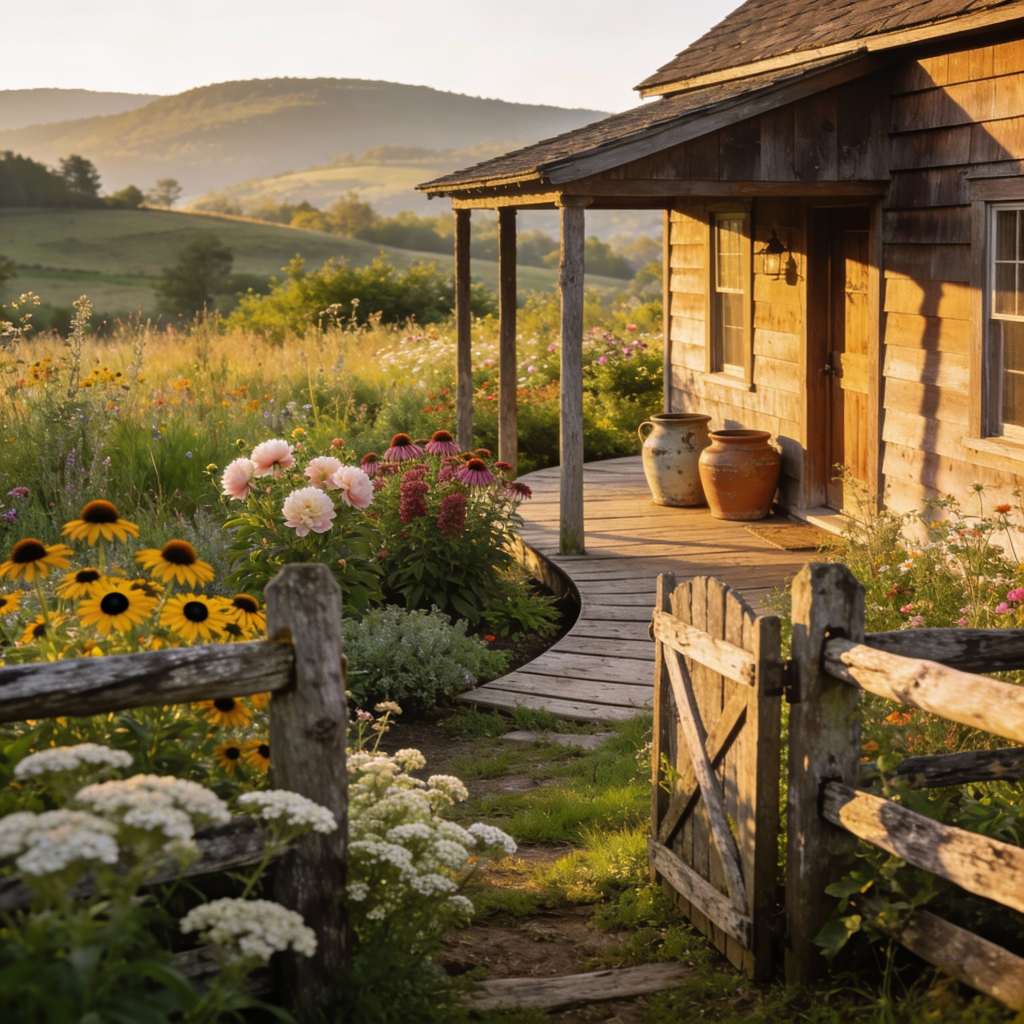
3. Filoli — Woodside, California
Location: San Francisco Peninsula, Santa Cruz Mountains (30 miles south of San Francisco)
Best Time to Visit: Spring for daffodil meadows; summer for roses and perennials
What Makes It Special: Built in 1917, this Georgian Revival estate features 16 acres of English Renaissance gardens that capture the romance of a bygone era.
Filoli represents what happens when cottage garden principles meet formal design. The Sunken Garden features a rectangular pool surrounded by clipped yew hedges, with profuse plantings of hardy and annual flowers creating that signature overflowing look. What’s remarkable is how Filoli proves cottage gardens work across American climates—this California property demonstrates that traditional English cottage aesthetics can flourish in Mediterranean climates when you choose appropriate plants. The Daffodil Meadow alone covers multiple acres, transforming into a golden sea each spring. The working orchard and cutting gardens showcase the practical side of cottage gardening—spaces devoted to vegetables, berries, and flowers for cutting. Walking the brick pathways at Filoli, you experience the progression of space typical of cottage estates: formal near the house, increasingly naturalistic as you venture out, then returning to cultivated order as you approach the next garden room.
4. Biltmore Estate Gardens — Asheville, North Carolina
Location: Blue Ridge Mountains, Asheville, North Carolina
Best Time to Visit: Spring (75,000 tulips); spring azalea blooms; fall foliage
What Makes It Special: With 75+ acres of formal and informal gardens designed by Frederick Law Olmsted, Biltmore combines Victorian cottage aesthetics with grand landscape architecture.
Biltmore’s Walled Garden remains one of America’s finest cottage-inspired spaces. This Victorian garden features seasonal rotations—75,000 tulips in spring, colorful annuals in summer, and chrysanthemums in fall. The rose garden contains 50 vintage varieties grown in the late 19th century alongside modern selections. The shrub garden pathway winds through hundreds of ornamental shrubs, while a long arbor covered with grapevines creates the perfect dreamy passageway. What cottage gardeners can steal from Biltmore is the use of themed borders and color coordination—the white border, scented border, and butterfly garden each create distinct moods. The Conservatory adds year-round interest with tropical plants and orchids, reminding us that Victorian cottagers often extended their growing seasons with glass structures.
5. Hudson Valley Estate Gardens — New York (Multiple Properties)
Location: Historic Hudson River Valley, New York (50-90 minutes north of New York City)
Best Time to Visit: May-June for lilacs and roses; spring bulbs; summer perennials
What Makes It Special: The Hudson Valley contains multiple historic estates—Van Cortlandt Manor, Sunnyside, Clermont, and Montgomery Place—each showcasing different interpretations of American cottage gardening.
The Hudson Valley gardens offer inspiration for how cottage aesthetics shifted and evolved in America. Van Cortlandt Manor’s “Long Walk”—a brick pathway bordered by gardens and orchards typical of the late 1700s—contains over 100 species of flowering plants arranged in historically accurate but undeniably charming combinations. Sunnyside, Washington Irving’s home, features hillsides of naturalized daffodils that bloom in early spring alongside wisteria-draped cottages. The Beatrix Farrand Garden at Bellefield (designed in 1912) demonstrates how early 20th-century American landscape architects blended cottage informality with Beaux Arts formality. These properties prove that cottage gardens thrive when they reflect their regional ecology and local plant traditions. The prevalence of lilacs, peonies, and heritage roses in these Hudson Valley gardens shows how cottage gardeners naturally select plants suited to the climate.
6. Montgomery Place — Annandale-on-Hudson, New York
Location: Hudson River, Annandale-on-Hudson, New York
Best Time to Visit: Late spring through early summer; fall foliage
What Makes It Special: Spanning 434 acres with richly varied garden spaces, Montgomery Place includes woodland gardens, a rose garden with old-fashioned varieties arranged by color, and a walled perennial garden in the English tradition.
Montgomery Place exemplifies the cottage garden principle of “rooms within rooms.” The Ellipse, framed by dark hemlocks with an oval pool planted with water lilies and irises, creates an intimate sanctuary within the larger estate. The herb garden contains over 40 varieties—including culinary and medicinal herbs—reminding us that cottage gardens historically blended beauty with utility. The decorative perennial borders feature the type of abundant, slightly wild planting style that inspired the modern cottage garden revival. What makes this property essential for garden inspiration is the thoughtful progression: formal gardens near the house gradually transition to woodland areas, then back to cultivated spaces. This flow demonstrates how cottage garden aesthetics—comfortable, unpretentious, yet carefully considered—create spaces that feel both welcoming and sophisticated.
7. Stonecrop Gardens — Cold Spring, New York
Location: Hudson Highlands, Cold Spring, New York (90 minutes north of Manhattan)
Best Time to Visit: Late spring through early fall
What Makes It Special: Created by collectors Frank and Ann Cabot, Stonecrop showcases over 500 species of Alpine plants, an English-style flower garden with a central vegetable parterre, and perennial collections rivaling major botanical institutions.
Standing 1,100 feet above the Hudson River, Stonecrop proves that cottage gardens can incorporate specialized plant knowledge without losing their accessible charm. The English-style flower garden features a central vegetable parterre (a geometric pattern of garden beds), bordered by ornamental perennials—a brilliant fusion of the practical kitchen garden tradition with aesthetic refinement. The Alpine plants, rock gardens, and carefully curated collections demonstrate how true cottage gardeners are plant enthusiasts who layer multiple interests into single spaces. The 63-acre property feels intimate despite its size, with winding paths and discovery around every corner. For American gardeners, Stonecrop shows how native Northeast plants—woodland species, spring ephemerals, and shade-tolerant perennials—create cottage garden interest without relying entirely on traditional English varieties.
8. Olana — Hudson, New York (Artist Frederic Edwin Church’s Estate)
Location: 500 feet above the Hudson River, Hudson, New York
Best Time to Visit: May-June for lilacs and roses; spring through fall for meadow wildflowers
What Makes It Special: The 250-acre grounds created by artist Frederic Church and his wife Isabel feature a “scatter garden” planted in the 1880s with old roses, peonies, cosmos, bee balm, and self-sowing flowers that still bloom generously today.
Olana represents the aesthetic cottager’s dream—a space designed not just for beauty but for artistic inspiration. Church created carriage trails and surprise vistas to delight guests, principles that apply perfectly to cottage gardens where discovery and wonder matter deeply. The scatter garden showcases how romantic plantings (old roses, cosmos, dahlias) look effortlessly charming when allowed to self-sow and mingle. The meadows sloping toward the river blanket with wildflowers from spring through fall, creating that fairytale aesthetic many cottage gardeners pursue. What’s particularly instructive is how Isabel Church used the Hudson Valley’s native flora—the self-sowing characteristics of cosmos, the long season of bee balm, the cascading display of nasturtiums—to create gardens that felt regional yet romantic. For American gardeners, Olana proves that cottage gardens flourish when you embrace self-seeding plants suited to your climate.
9. Cape Cottage Garden — Princeton, New Jersey
Location: Princeton, New Jersey
Best Time to Visit: Late spring through summer
What Makes It Special: A private, cottage-style garden created by designer Heather Thomas, showcasing how individual homeowners can capture cottage aesthetics on a smaller, personal scale.
While smaller and less famous than grand estates, Cape Cottage Garden proves that cottage garden magic happens at every scale. The garden demonstrates principles that translate perfectly to home landscapes: enclosed spaces using fencing and hedges, abundant mixed planting of perennials and annuals, and the layering of textures and colors. The property shows that you don’t need 600 acres to create a fairytale garden—intimate spaces designed with intention feel just as enchanting. For practical inspiration, this garden illustrates how suburban properties can be transformed through thoughtful plant selection and the strategic use of hardscape elements. The cottage garden philosophy—that beauty comes from abundance, self-expression, and working with regional plants—shines through whether you’re visiting a historic estate or a contemporary home garden.
10. Boscobel Restoration — Garrison-on-Hudson, New York
Location: Hudson River, Garrison, New York
Best Time to Visit: Spring through fall
What Makes It Special: This Federal-period estate features a brick walkway leading past apple and quince trees, an extensive herb garden, perennial beds, and a formal rose garden opening onto a great lawn with sweeping Hudson River views.
Boscobel captures the working cottage garden tradition—spaces designed not just for beauty but for functionality and sustenance. The herb garden traditionally provided medicines, culinary ingredients, and fragrance, and at Boscobel you see how these practical plantings integrate seamlessly with ornamental flowers. The rose garden’s transformation from working kitchen garden to ornamental display reflects how cottage gardens evolved in America, adapting English traditions to serve new purposes. The woodland trail with its stream, waterfall, and gazebo demonstrates how natural features enhance cottage aesthetics—the rushing water, the dappled light, the sense of hidden discovery. For gardeners aspiring to cottage style, Boscobel shows how roses, perennials, herbs, and naturalized plantings combine in a space that feels simultaneously cultivated and wild.
Bonus Inspiration: Cottage Garden Inspiration from US Countryside
Many modern American gardeners have discovered that Japanese garden design principles—asymmetry, balance, layered perspectives, and seasonal interest—blend beautifully with cottage garden abundance. While seemingly opposite aesthetics, both value restraint in certain elements to showcase nature’s beauty. Consider incorporating Japanese design principles: framing views strategically, using asymmetrical balance to place plants, selecting evergreens for year-round structure, and creating “garden rooms” with plants rather than walls. The cottage garden’s informal abundance pairs remarkably well with Japanese principles of appreciating imperfection (wabi-sabi) and highlighting quiet beauty.
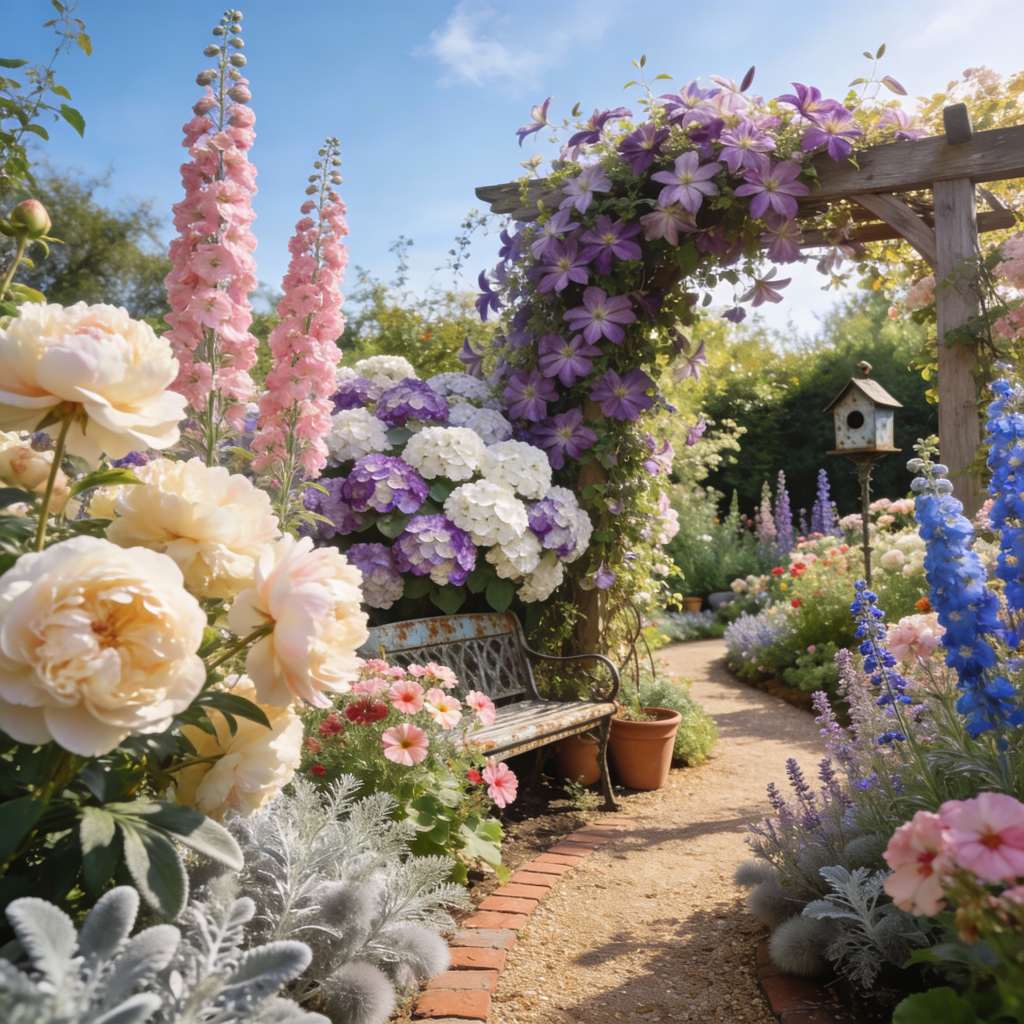
Frequently Asked Questions About Cottage Garden Inspiration from US Countryside
Q: Can I create a cottage garden in a small space?
A: Absolutely. Cottage gardens thrive in modest spaces—many successful gardens occupy a quarter-acre or less. The key is choosing plants suited to your light conditions and allowing them to grow abundantly. Even a 20-foot-by-30-foot space can become a charming cottage garden with proper plant selection and layering.
Q: What are the best plants for a beginner cottage gardener?
A: Start with hardy perennials like peonies, coneflowers, black-eyed Susans, daylilies, and ornamental grasses. Add self-sowing biennials like foxgloves and hollyhocks. Fill gaps with annual flowers like zinnias and cosmos. These plants are forgiving, long-lived, and create authentic cottage garden abundance.
Q: Should I plan my cottage garden or let it happen naturally?
A: The best approach combines intention with spontaneity. Plan your structure (paths, permanent plantings, general color schemes), but allow room for self-sowing plants and happy accidents. Visit these real cottage gardens to observe how they balance design with organic growth.
Q: Is a cottage garden high-maintenance?
A: Not necessarily. Once established, cottage gardens require less maintenance than formal gardens because loose, abundant plantings tolerate imperfection. Regular deadheading extends blooms, and dividing perennials keeps plants vigorous, but you’re not constantly weeding or pruning for sharp edges.
Q: Can I include vegetables and herbs in a cottage garden?
A: Yes—historically, cottage gardens were primarily practical, growing vegetables, fruits, and medicinal herbs. Interplant edibles among ornamentals; the combinations are beautiful and functional. Tall herbs like fennel and borage add structure, while lower herbs like sage and catmint edge pathways.
Q: What’s the best time to visit these real cottage gardens for inspiration?
A: Visit during peak bloom (late spring through early summer for most Northeast gardens) to see maximum color and understand plant combinations. Visit again in different seasons to appreciate structure plants and year-round interest. October visits showcase late-season bloomers like asters and chrysanthemums.
Q: How do I incorporate my region’s native plants into a cottage garden aesthetic?
A: Native plants adapt perfectly to cottage gardening. Choose species that naturally grow in meadows, woodlands, or prairies of your region. Black-eyed Susans, coneflowers, bee balm, and rudbeckia work beautifully in Midwestern and Eastern gardens. Western gardeners find success with salvias, blanket flower, and native perennials that thrive without supplemental water. The New American cottage garden movement embraces regional plants while maintaining the romantic, abundant aesthetic of traditional cottage gardens.
Conclusion:
Visiting real cottage gardens across the American countryside reveals an essential truth: these fairytale spaces aren’t the exclusive domain of grand estates or professional gardeners. Every garden you’ve read about began with someone’s vision of abundance, beauty, and personal expression. Whether you’re standing in Longwood’s 600-foot Flower Garden Walk, wandering through Chanticleer’s artistic garden rooms, or strolling the wildflower meadows at Olana, you’re witnessing the same principle: cottage gardens succeed through intention combined with generosity.
The cottage garden tradition represents something deeply human—the desire to surround ourselves with beauty, to nurture growing things, and to create spaces that feel like escape. The American countryside has always fostered these gardens, whether they appeared on rural homesteads, estate grounds, or suburban properties. By studying the real cottage gardens from Pennsylvania’s Brandywine Valley to California’s San Francisco Peninsula, you gain permission to create your own version—one that reflects your region, your climate, your personality, and your dreams.
Start with a pathway. Select plants that grow readily in your area. Allow self-sowing flowers to establish themselves. Resist the urge to police every plant for geometric perfection. In a few seasons, you’ll have created your own fairytale garden from the US countryside, and anyone who visits will feel transported to someplace magical.

Asif Ali is a gardening blogger with over 2 years of experience writing about garden inspiration, eco-friendly gardening, and beautiful garden destinations. He focuses on practical, sustainable ideas that help beginners create inspiring gardens with ease.