How to Make Organic Compost at Home: Making compost at home is one of the easiest and most rewarding ways to reduce household waste while creating nutrient-rich soil for your garden. This complete guide walks you through everything you need to know—from choosing the right materials and setting up your first pile to troubleshooting common problems and harvesting finished compost. Whether you have a large backyard or a tiny apartment, there’s a composting method that fits your lifestyle. In as little as 4 to 6 months, you can transform kitchen scraps and yard waste into dark, crumbly “black gold” that will transform your soil, improve plant health, and help reduce methane emissions from landfills.
Understanding Composting: The Natural Recycling Process
Composting is nature’s way of recycling. It’s an aerobic decomposition process where beneficial microorganisms—bacteria and fungi—break down organic waste into stable, nutrient-rich soil amendment called compost. What makes this process so magical is that it happens right in your backyard without any chemicals or complicated equipment. You simply layer your materials and let microbes do the heavy lifting.
At its core, composting mimics what happens naturally on the forest floor. Dead leaves, fallen branches, and decomposed plant matter gradually transform into rich humus that feeds new plant growth. By creating a home compost pile, you’re essentially accelerating this natural process by providing the right conditions—moisture, oxygen, and a balanced mix of materials. The microbes multiply rapidly, generating heat as a byproduct, which further speeds decomposition. Within months, what started as vegetable peels and yard clippings becomes dark, earthy-smelling compost that’s perfect for gardens, potted plants, and landscaping projects.
The environmental impact of home composting is significant. When organic waste ends up in landfills, it decomposes anaerobically (without oxygen), producing methane—a greenhouse gas significantly more potent than carbon dioxide. By composting at home, you divert this waste from landfills and sequester carbon in the soil instead. Additionally, using homemade compost reduces your dependence on chemical fertilizers, which saves money and protects water quality from nutrient runoff.
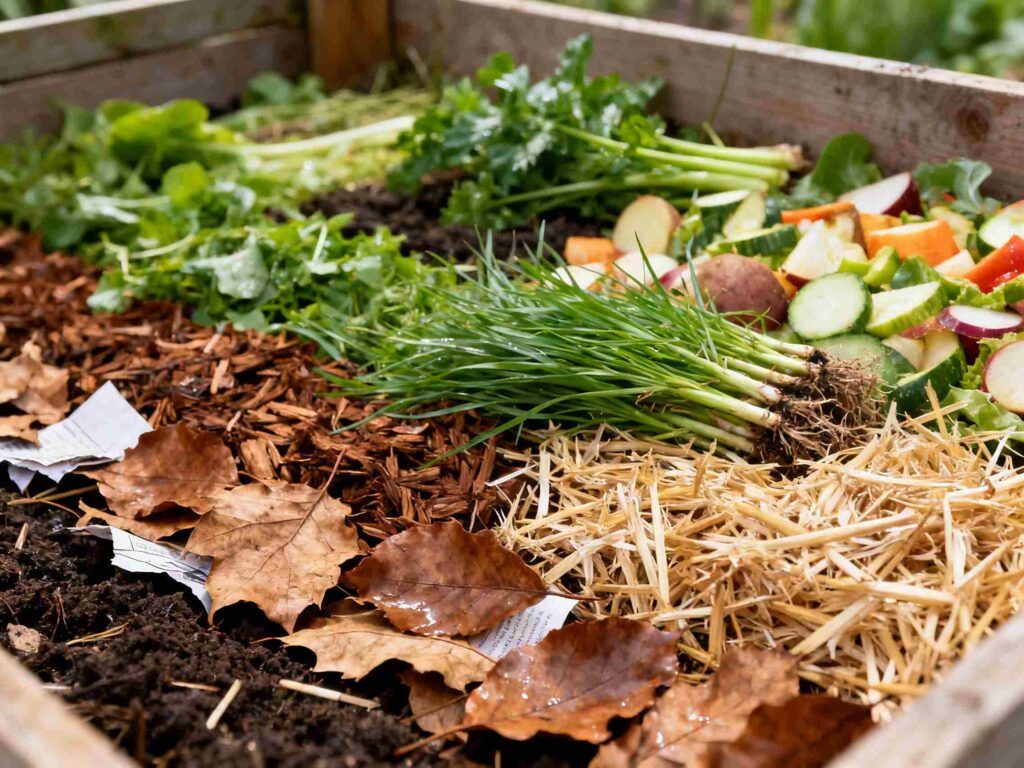
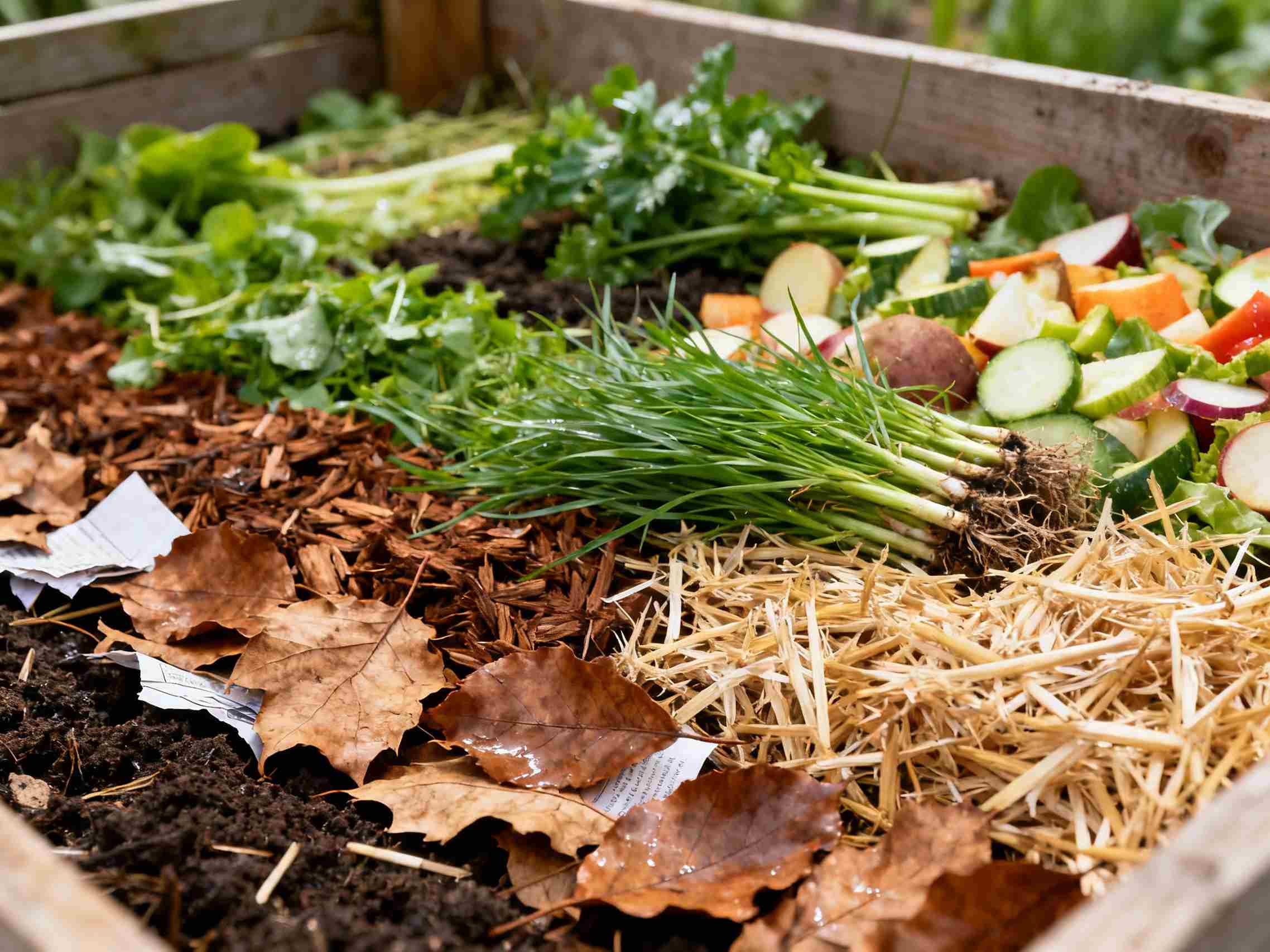
Layers of composting materials showing browns and greens in a home compost bin
Why Make Your Own Compost at Home?
How to make organic compost at home extend “free” fertilizer. There are practical, environmental, and economic advantages that make it worth the minimal effort required.
Soil Health and Plant Growth
The most immediate benefit you’ll notice is the dramatic improvement in your soil and plant health. Finished compost is rich in organic matter, nitrogen, phosphorus, and potassium—the three essential nutrients plants need. When you add compost to garden beds, potted plants, or lawn areas, it improves soil structure by binding particles together into stable aggregates. This creates better aeration, allowing roots to penetrate deeper and oxygen to reach beneficial soil organisms.
Compost also dramatically improves the water-holding capacity of soil. Clay soils that tend to compact and become waterlogged become more friable and drainable. Sandy soils that dry out quickly develop better water retention. This means less frequent watering and healthier plants that are more resistant to stress. Additionally, the organic matter in compost feeds soil microbes and earthworms, creating a living soil ecosystem that naturally suppresses plant diseases and pests.
Waste Reduction and Environmental Impact
The average household throws away significant amounts of organic waste—vegetable scraps, fruit peels, coffee grounds, yard clippings, and paper. Most of this ends up in landfills where it takes up space and generates methane. Home composting tackles this problem directly. Instead of filling garbage cans, you’re diverting waste to a productive use. For environmentally conscious homeowners, this is one of the most impactful sustainability actions you can take.
Cost Savings
While you might eventually invest in a commercial compost bin, you can start composting with zero cost if you have space for an open pile or a simple container with drilled holes. Once established, you eliminate the need to purchase commercial potting soil, mulch, or chemical fertilizers—savings that add up quickly for gardeners. A single homemade compost pile can produce hundreds of pounds of finished compost per year.
Getting Started: How to Make Organic Compost at Home
Before you build your first compost pile, gather a few basic materials. You don’t need to spend much money—many items can be found around your home or neighborhood.
The Two Types of Composting Materials: Greens and Browns
All composting materials fall into two categories: greens and browns. Understanding this distinction is absolutely fundamental to successful composting.
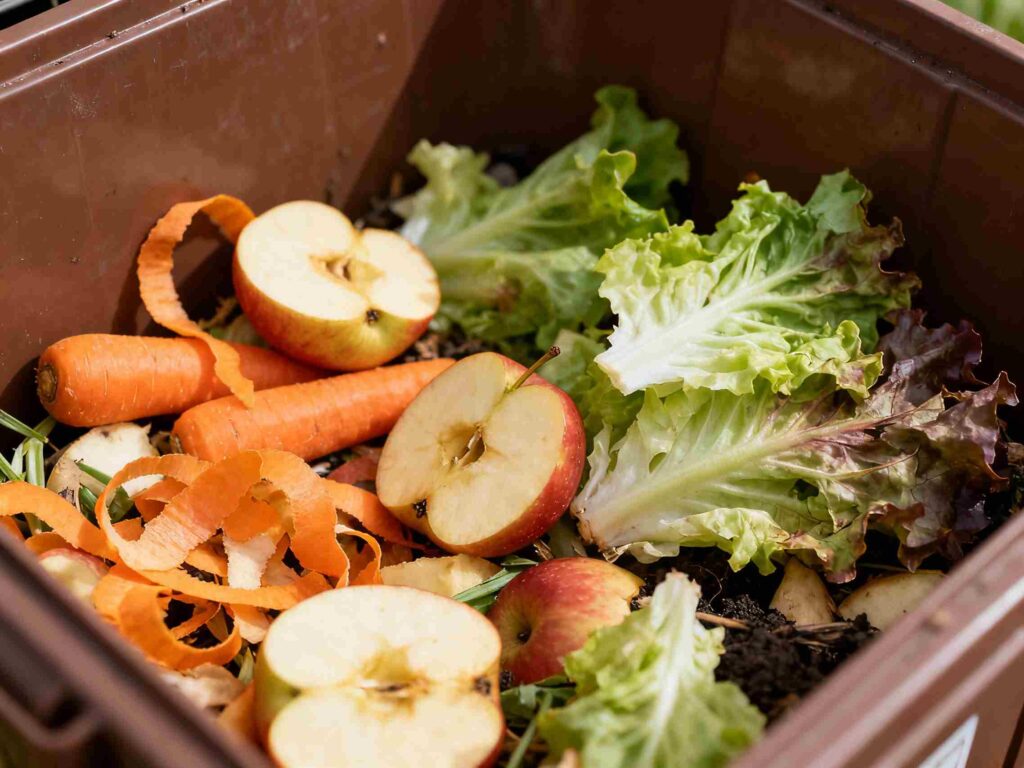
Greens (nitrogen-rich materials) include:
- Fruit and vegetable peels and scraps
- Coffee grounds and tea bags (without plastic)
- Crushed eggshells
- Fresh grass clippings
- Plant trimmings and garden waste
- Bread and grains (in moderation)
Browns (carbon-rich materials) include:
- Dry leaves and dead grass
- Shredded newspaper and cardboard
- Wood chips and saw dust
- Straw and hay
- Paper towels and napkins
- Twigs and small branches
The ideal ratio is approximately two to three parts brown materials to one part green materials. This balance is critical—too much green material creates a smelly, anaerobic pile, while too much brown material slows decomposition dramatically. Many beginners make the mistake of adding too many kitchen scraps without enough dry leaves and cardboard to balance them out.
Fresh kitchen vegetable scraps and food waste suitable for composting
Materials You Should Never Compost
Just as important as knowing what to compost is understanding what absolutely must be avoided. Never add:
- Meat, fish, and bones: These attract pests and create foul odors
- Dairy products and oils: Can cause the pile to become greasy and attract animals
- Pet waste: May contain harmful pathogens
- Diseased plants or weeds with seeds: Can spread problems to your garden
- Treated wood or glossy paper: Contains chemicals that don’t belong in your soil
- Synthetic materials: Plastics, rubber, and metals don’t decompose
- Coal or charcoal ash: Unlike wood ash, these contain harmful substances
Some materials are debatable—citrus peels, garlic, and onion scraps are technically compostable but should be added sparingly since they can deter beneficial microbes. If you’re uncertain about something, it’s better to err on the side of caution and leave it out.
Simple Tools You’ll Need
Composting requires almost no special equipment:
- A shovel or garden fork for turning the pile
- A pitchfork for aerating (optional but helpful)
- A thermometer to monitor temperature (optional)
- A container or bin (optional—you can simply pile materials on the ground)
- A water source for moistening the pile
- Gloves for handling materials (optional)
Many beginners start with just a shovel and a designated spot in their yard.
Three Proven Methods for Home Composting
Different composting methods work better for different situations. Choose based on your available space, time commitment, and desired speed.
Method 1: Hot (Active) Composting—The Fast Track
Hot composting is ideal if you want finished compost in 4 to 6 months and don’t mind regular maintenance. This method produces heat through rapid microbial activity, which speeds decomposition and kills pathogens and weed seeds.
How to start hot composting:
Begin with a pile that’s at least 3 feet by 3 feet by 3 feet (or 27 cubic feet) in volume. Size matters because smaller piles don’t retain enough heat. Start by laying down a 4 to 6-inch layer of bulky brown materials like small twigs or wood chips—this creates air space at the base. Then alternate layers of greens and browns, like lasagna, keeping the overall ratio at about 1 part green to 2–3 parts brown. Lightly water each layer as you build so the entire pile is moist but not soggy—like a wrung-out sponge.
Within 24 to 48 hours, you should feel heat radiating from the pile as the temperature rises to 120–150°F (50–65°C). This thermophilic (heat-loving) stage is when the most active decomposition occurs. The heat kills disease-causing pathogens, fly larvae, and weed seeds—making hot compost excellent for disease-prone materials.
Managing your hot pile:
Turn the pile every 1 to 2 weeks using a shovel or fork, moving material from the outside edges to the center. Each turn introduces more oxygen and speeds decomposition. Turning weekly can produce finished compost in as little as 6 weeks using the Berkeley method, though typically it takes 4 to 6 months. Monitor moisture—the pile should feel moist like a wrung-out sponge. If it’s too dry, decomposition stalls; if it’s too wet, it becomes anaerobic and smelly. Add water during dry weather and cover with a layer of brown material if it gets saturated.
Method 2: Cold (Passive) Composting—The Low-Maintenance Option
If you prefer to simply pile materials and let nature take its time, cold composting is for you. This method requires minimal effort but takes longer—typically 6 months to 2 years depending on the materials.
How to start cold composting:
Simply pile green and brown materials together without worrying too much about ratios or turning. You can continuously add materials to the top of the pile. The pile won’t heat up significantly, so decomposition happens at the pace of slower-acting mesophilic (moderate-temperature) microbes. To harvest finished compost, remove the top portion of the pile and harvest the dark, finished material from the bottom.
Cold composting is perfect for apartment dwellers using small bins, people with limited mobility, or anyone who doesn’t want the regular maintenance of turning. The tradeoff is patience—but the end product is just as nutrient-rich.
Method 3: Trench and Sheet Composting—Compost in Place
For vegetable gardeners, trench composting offers a unique advantage: you compost right where you want the benefits. Dig a trench 8 to 12 inches deep in your garden bed and bury kitchen scraps, covering them with soil. The materials decompose underground, enriching the soil without requiring a separate bin. Sheet composting is similar—you layer materials directly on a garden bed and cover them with soil or cardboard, creating a new planting bed for next season.
Setting Up Your First Compost Pile: Step-by-Step
Whether you’re creating a contained bin or an open pile, the fundamental setup process is the same.
Step 1: Choose Your Location
Select a spot in your yard that’s conveniently accessible (you’ll visit often), has good drainage, and receives at least partial sun. A level spot is easier to manage than sloping ground. If possible, place the pile on bare earth or grass rather than concrete, allowing beneficial organisms and earthworms to migrate into the pile. Shade from afternoon sun helps maintain moisture in hot climates, while morning sun in cool climates speeds decomposition.
Step 2: Assemble or Build Your Container (Optional)
If you want a contained system, you have several options:
- DIY bins from pallets or wire mesh: Free or very cheap; easy to build
- Plastic storage containers: Drill holes in the sides and bottom for drainage
- Simple wooden frame: Use untreated wood or cedar
- Commercial plastic bins: Range from $30–150; retain heat well
- Tumblers or insulated bins: $100–300; produce finished compost fastest
For beginning composters on a budget, the pallet or wire bin is an excellent starting point.
Step 3: Build Your First Pile
Layer materials starting with 4 to 6 inches of brown material (twigs, leaves, cardboard), then alternate 2–3-inch layers of green and brown material. After each layer, lightly water so the pile is uniformly moist. If materials are difficult to layer (like long grass or leaves), shred them first—this increases surface area and speeds decomposition.
Step 4: Cover and Maintain
Cover the pile with a layer of brown material to minimize odors, reduce pests, and retain moisture. If using an open pile, consider draping with landscape fabric weighted at the edges. For the first hot pile, begin turning after 3 to 7 days when you notice significant heating. For cold piles, turn occasionally if desired (but it’s not necessary).
The Critical Factors: Temperature, Moisture, and Aeration
Success in composting depends on managing three interconnected factors.
Temperature: The Engine of Decomposition
Temperature is the primary indicator of composting progress. A healthy hot compost pile reaches 120–150°F (50–65°C) within 24 to 48 hours. At this thermophilic stage, microbes work most efficiently. If your pile doesn’t heat up, it usually means:
- Pile is too small (under 3’x3’x3′)
- Wrong ratio of materials (too much brown, not enough green)
- Too dry (add water)
- Insufficient oxygen (turn more frequently)
After several weeks of active decomposition, temperature naturally drops as the easily digestible materials are consumed. When the pile cools to ambient temperature, mesophilic microbes take over and tackle tougher materials like cellulose. This cooling phase is normal—don’t assume your compost failed.
Moisture: The Goldilocks Factor
Optimal moisture content is approximately 50–60% by weight. This sounds technical, but practically, squeeze a handful of compost: a few drops of water should come out, but it shouldn’t be dripping. If the pile is too dry, microbes can’t survive and decomposition stops. If it’s too wet, oxygen becomes depleted and the pile turns anaerobic, causing foul smells.
In hot, dry climates, water loss can be 1% per day. Regular watering—at least once weekly in warm weather—prevents this. Add water slowly, either through gentle sprinkling or drip irrigation, and time watering for cooler parts of the day (early morning or evening) to minimize evaporation. In wet climates, you may need to cover the pile to prevent saturation.
Aeration: The Oxygen Essential
Composting microbes are primarily aerobic, meaning they require oxygen to thrive. Without adequate oxygen, the pile becomes anaerobic, producing methane and hydrogen sulfide (rotten egg smell). Aeration happens passively through convection—heat rising pulls cool air up from the pile’s base. You can enhance aeration by:
- Turning the pile every 1–2 weeks (the primary method)
- Inserting perforated pipes through the pile
- Choosing a porous material mix with good air spaces
- Avoiding compaction when layering materials
Many beginning gardeners underestimate the importance of aeration. A pile that smells bad almost always has an aeration or moisture problem, not a content problem.
Timeline: How Long Until You Have Compost?
The time to finished compost varies dramatically based on your method and management.
Hot Composting: 4–6 months with regular turning; possibly 2–3 weeks using intensive Berkeley method (daily turning, precise ratios, small particle size)
Cold Composting: 6 months to 2 years depending on materials and climate
Insulated Commercial Bins: 4 weeks to 3 months for rough compost; 3–6 months for fine, fully mature compost
Trench Composting: 3–6 months underground, but it continues improving the soil for years
A practical timeline for most beginners: pile materials in spring, turn occasionally through summer, and have usable compost by fall or early winter.
How Do You Know When Compost Is Ready?
Finished compost looks nothing like the materials you started with. It should be:
- Dark brown or black in color
- Crumbly with a loose, aggregated structure
- Earthy-smelling, like the forest floor
- Unrecognizable—you shouldn’t see banana peels or grass clippings
Immature compost appears lighter, contains visible pieces of original material, and may still smell fresh or fermenting. If you use immature compost, it can tie up nitrogen in the soil, making it temporarily unavailable to plants. When in doubt, give your compost another month to mature before using it.
Common Composting Mistakes and How to Avoid Them
Learning from others’ experiences accelerates your success.
Mistake 1: Wrong Material Balance
Adding too much green material (kitchen scraps) without enough brown creates an oxygen-depleted, smelly mess. Solution: Aim for 2–3 parts brown to 1 part green, and always bury food scraps under a layer of brown material.
Mistake 2: Pile Too Small
Piles under 3’x3’x3′ don’t retain sufficient heat for hot composting. Solution: If your pile isn’t heating, consolidate existing materials into a smaller, more compact pile and ensure it’s adequately moist.
Mistake 3: Adding Wrong Items
Meat, dairy, oils, and pet waste create odors, attract pests, and may introduce pathogens. Solution: Stick to the approved materials list. If unsure, compost it separately or skip it.
Mistake 4: Ignoring Moisture
The most common beginner mistake is not monitoring moisture adequately. Solution: Check regularly and maintain a moist (not soggy) pile. Add water during dry spells; cover during heavy rain.
Mistake 5: Compacting Materials
Pressing down heavily on materials drives out oxygen. Solution: Layer loosely and allow air spaces between materials. Let gravity and settling compress the pile naturally.
Mistake 6: Never Turning the Pile
While cold composting doesn’t require turning, occasional turning in hot composting dramatically speeds results. Solution: Turn at least every 2 weeks if you want compost in 4–6 months.
Composting Solutions for Different Living Situations
Apartment or small-space dwellers shouldn’t feel excluded from composting. Multiple options exist.
Composting in Small Spaces and Apartments
Vermicomposting (worm composting) is perfect for indoor spaces. Red wiggler worms break down food scraps in a compact bin (roughly 16″x16″x12″). It produces finished compost and nutrient-rich “worm tea” without odor or pests. Initial cost is $120–150, but it requires minimal space and maintenance.
Countertop electric composters process food waste into nutrient-rich material in hours, though they don’t create traditional compost—the product is more of a dry garden amendment. These range from $300–500.
Small bokashi bins (fermentation-based composting) use beneficial microbes to pre-process food waste in an airtight container. The fermented material is then buried in a garden bin or donated to a community compost program to complete decomposition.
Trench composting in raised beds or containers allows apartment balcony gardeners to bury food scraps directly where they want the benefits.
Multi-Bin Systems for High-Volume Gardeners
If you generate significant garden waste, a three-bin system is ideal:
- Bin 1: Active composting pile currently being managed
- Bin 2: Maturing pile from the previous batch
- Bin 3: Collection area for new materials
This system allows continuous composting without stopping to harvest.
Frequently Asked Questions
Q: Will my compost pile attract rats and mice?
A: Properly managed piles do not attract rodents. The key is using a bin with a solid base and tight-fitting lid, maintaining correct moisture and aeration (smelly conditions attract pests), and most importantly—never adding meat, dairy, or oily foods. Rats are attracted to the smell, not the pile itself.
Q: How often do I need to turn my pile?
A: For hot composting targeting rapid results, turn every 1–2 weeks. For cold composting, turning is optional—you’ll get compost eventually without any turning. Turning every 2 weeks is a reasonable middle ground.
Q: Can I compost in winter?
A: Cold composting continues year-round, though more slowly. Hot composting slows significantly in winter since microbes are less active in cold temperatures. Cover piles with extra insulation (straw, leaves, or compost blankets) to maintain heat and continue winter composting.
Q: Is finished compost different from potting soil?
A: Yes. Compost is organic matter—an amendment for existing soil. Potting soil is a growing medium designed for containers, typically containing compost, peat or coco coir, and perlite or vermiculite for drainage. You can use finished compost as an ingredient in homemade potting mix (roughly 40% compost, 40% peat/coco, 20% perlite).
Q: Can I use too much compost on my garden?
A: Compost is generally forgiving, but excessive amounts (more than 2–3 inches worked into the top 6–8 inches of soil) can sometimes cause nutrient imbalances or create overly rich soil that’s not ideal for all plants. Most vegetables and ornamentals thrive with an annual 1–2-inch topdressing.
Q: What if my compost smells bad?
A: Foul odors indicate anaerobic (oxygen-free) conditions. Turn the pile immediately to add oxygen. If the smell persists, add more brown materials and reduce watering. Also verify you haven’t accidentally added meat, dairy, or oily foods. Finished compost should smell earthy and pleasant.
Q: How long will my finished compost last in storage?
A: Finished compost remains viable indefinitely if stored dry in a covered container or tarp. However, it’s better used within the first year of production while it’s most nutritious. Once applied to soil, beneficial microbes continue improving soil structure for years.
Q: Can I compost diseased plants or weeds?
A: Only if your pile consistently reaches 120°F+ and stays there for at least two weeks—hot composting’s thermophilic stage kills many pathogens and weed seeds. Cold composting typically doesn’t get hot enough to eliminate these risks, so it’s safer to avoid disease-prone materials unless you’re confident in your setup.
Q: Is composting expensive to get started?
A: Not at all. You can begin with zero cost if you have a yard (just pile materials on the ground), or invest $30–100 in a simple DIY bin using pallets or a plastic container. Commercial composters cost $100–300, but aren’t necessary for success.
Using Your Finished Compost
Once your compost is dark, crumbly, and mature, it’s time to put it to work.
For gardens: Mix 1–3 inches of compost into the top 6–8 inches of soil before planting. This improves structure, water retention, and nutrient availability.
For potted plants: Layer finished compost at the bottom of pots before adding potting soil. Or mix compost (40%) with peat/coco (40%) and perlite (20%) to create your own potting mix.
For lawns: Spread a thin layer (1/2 inch) of finished compost over turf in spring or fall. The soil organisms and organic matter improve soil health beneath the grass.
For mulch: Use less-finished compost as mulch around plants to suppress weeds, retain moisture, and gradually improve soil.
Final Thoughts: Your Path to Sustainable Gardening
How to make organic compost at home your relationship with waste. Instead of seeing vegetable scraps and yard clippings as trash, you recognize them as valuable ingredients for creating living soil. Within months, you’ll have dark, crumbly compost that makes plants thrive while reducing your environmental footprint.
The beauty of home composting is that it doesn’t require perfection. Whether you turn your pile religiously or leave it alone for months, decomposition happens. Beginners often overthink the process when really it’s quite forgiving—nature wants to decompose organic matter. By simply layering materials, maintaining moisture, and keeping oxygen flowing, you’ll succeed.
Start small if you’re nervous. A single 3’x3′ pile or even a small container on your apartment balcony proves the concept works. Once you experience the satisfaction of transforming waste into garden gold, you’ll never look back. The nutrients flowing from your compost into your soil represent a closed-loop system that benefits your garden, your wallet, and the planet. That’s the true power of home composting.

Asif Ali is a gardening blogger with over 2 years of experience writing about garden inspiration, eco-friendly gardening, and beautiful garden destinations. He focuses on practical, sustainable ideas that help beginners create inspiring gardens with ease.