Have you ever dreamed of transforming your garden into a lush, tropical paradise but thought it was impossible in your temperate climate? Well, think again! Creating a tropical garden in temperate climates is not only possible but can be absolutely breathtaking when done right. From my years of gardening experience and countless conversations with fellow enthusiasts, I’ve discovered that with the right plant choices and design tricks, you can enjoy that exotic, resort-like atmosphere right in your backyard.
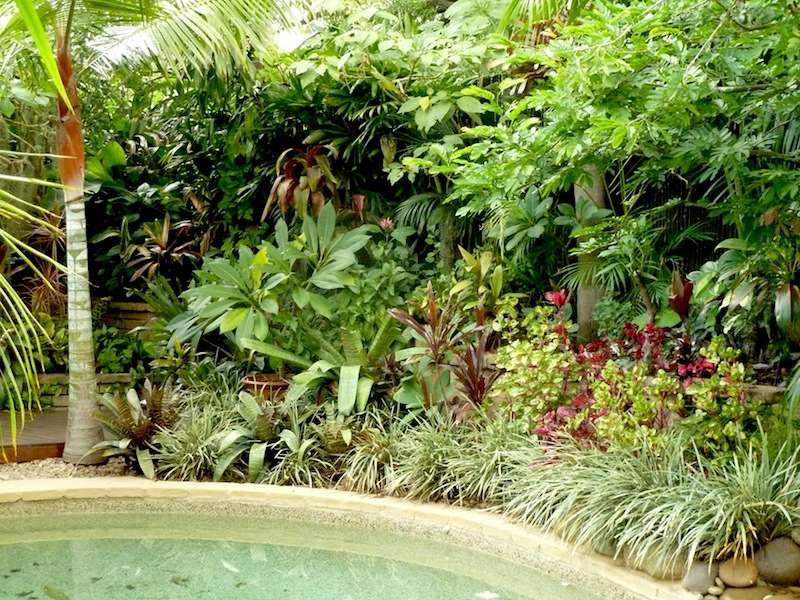
The beauty of tropical garden in temperate climates in cooler regions lies in understanding which plants can handle the chill and how to create microclimates that support your green dreams. Many gardeners in temperate zones have successfully created stunning tropical oases that fool even the most discerning eye. Let’s dive into ten fantastic ideas that will help you achieve that coveted tropical look, regardless of where you live.
1. Create Dramatic Layers with Cold-Hardy Palms
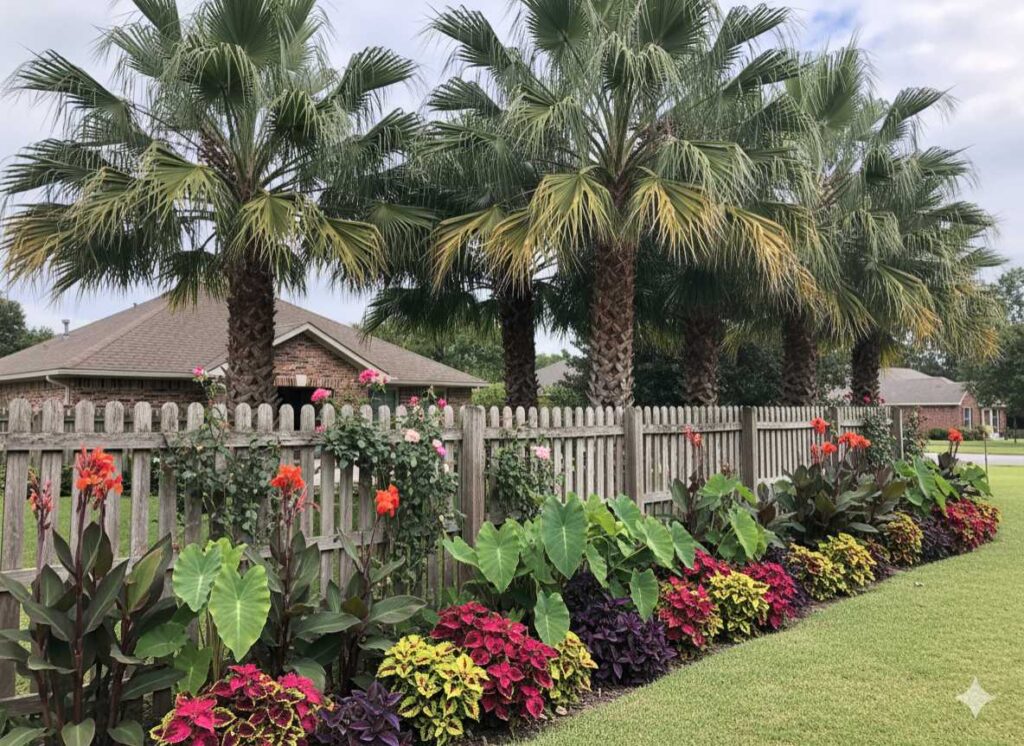
Nothing says “tropical” quite like swaying palm fronds, and fortunately, several palm varieties can survive surprisingly cold temperatures. The windmill palm (Trachycarpus fortunei) is your best friend here – this hardy champion can withstand temperatures as low as 5°F (-15°C) and thrives in USDA zones 7-11.
Other excellent cold-hardy options include the European fan palm (Chamaerops humilis), which tolerates temperatures down to 12°F, and the needle palm (Rhapidophyllum hystrix), considered the most cold-hardy palm in the world, surviving down to -10°F. These palms provide the essential canopy layer that defines tropical gardens, creating that authentic jungle-like atmosphere we all crave.
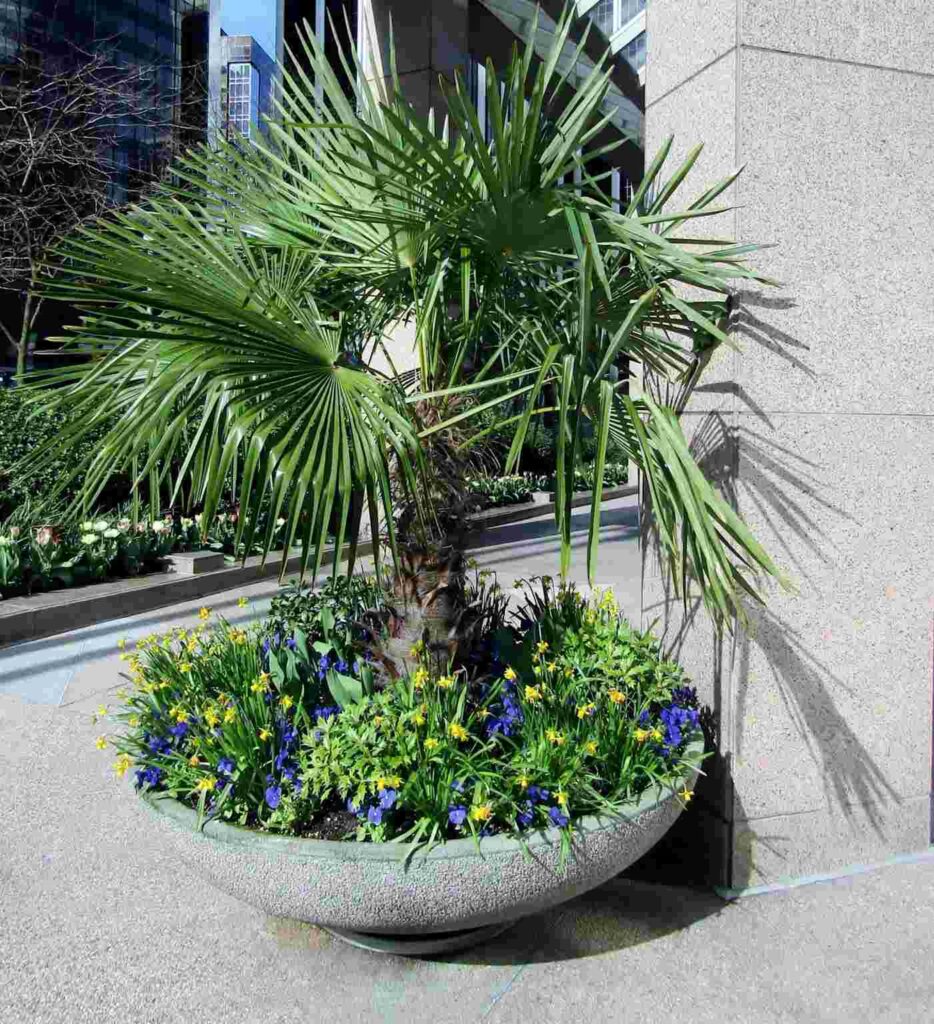
The key to success with palms in temperate climates is choosing the right location. Plant them in protected spots, preferably on the south side of buildings or near walls that radiate heat during winter months. This simple positioning can make the difference between a thriving palm and a struggling one.
2. Add Vertical Drama with Hardy Bamboo
Bamboo instantly transforms any space into an exotic retreat, and the good news is that many bamboo varieties are incredibly cold-hardy. Phyllostachys species, including the striking black bamboo (Phyllostachys nigra) and golden bamboo varieties, can create that authentic Asian tropical feel while surviving harsh winters.
For those worried about bamboo’s spreading nature, clumping varieties like Fargesia rufa (fountain bamboo) stay put while providing beautiful, dense screening. These bamboo species not only add height and movement to your garden but also create natural privacy screens and windbreaks that benefit other tropical plants.
Consider using bamboo strategically to create garden “rooms” or to hide unsightly boundaries. The gentle rustling sound of bamboo leaves in the breeze adds an authentic tropical audio experience that complements the visual impact.
3. Go Big with Elephant Ears
Elephant ears (Colocasia and Alocasia species) are absolute game-changers for tropical garden design. Their massive, heart-shaped leaves create instant drama and that essential “jungle” feel. What’s brilliant about these plants is that many varieties are surprisingly cold-tolerant, with some surviving in zones 6-8 with proper care.
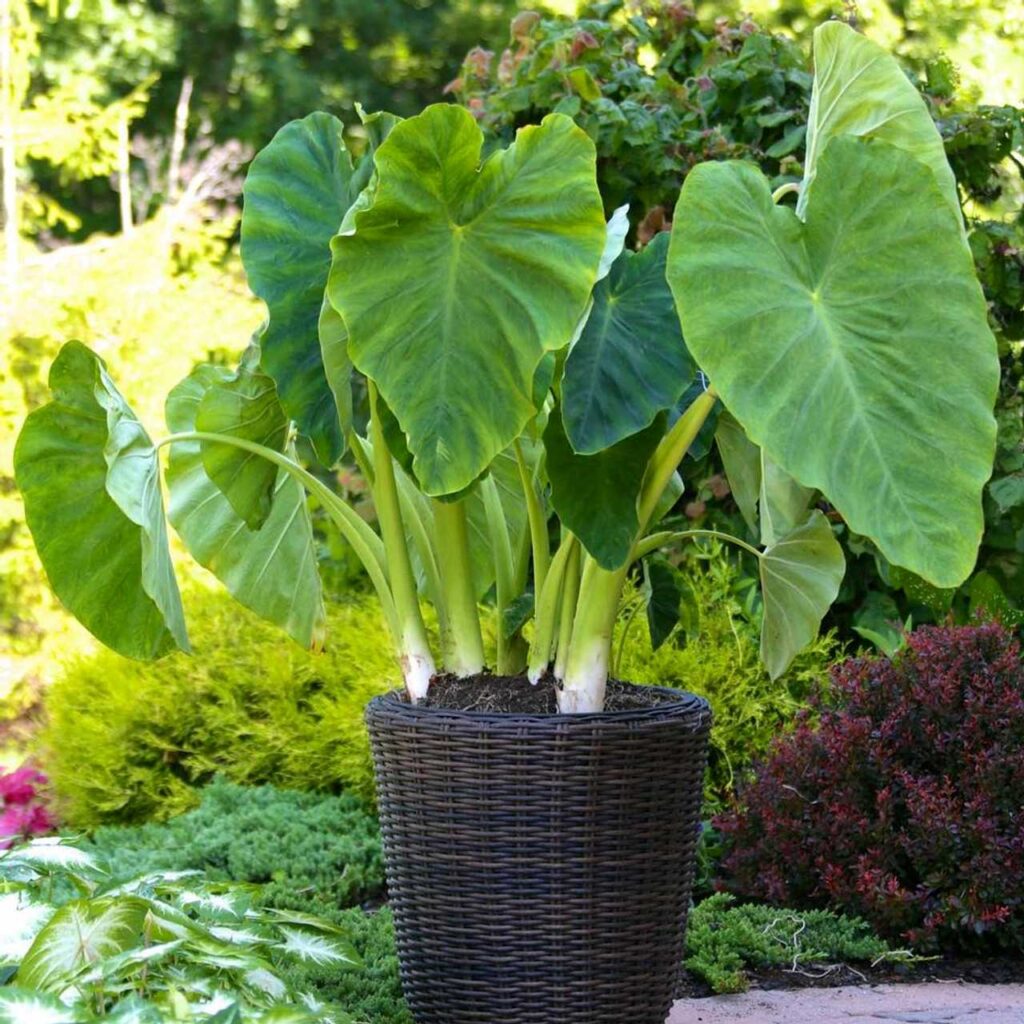
Colocasia esculenta ‘Pink China’ is reportedly hardy to zone 6, while Colocasia gigantea ‘Thailand Giant’ is solid in zone 8b. The secret to success with elephant ears in temperate climates lies in understanding their winter behaviour and providing appropriate protection.
In zones 7 and above, you can often leave them in the ground with a thick mulch covering of shredded leaves. For colder areas, growing them in large containers allows you to move them indoors during winter or store the tubers in a cool, dry place.
4. Create a Container Paradise
Container gardening opens up incredible possibilities for tropical gardening in temperate climates. You can grow tender tropical plants in pots during summer and easily protect them during winter. Large containers create impressive displays and allow you to position plants in optimal microclimates around your garden.
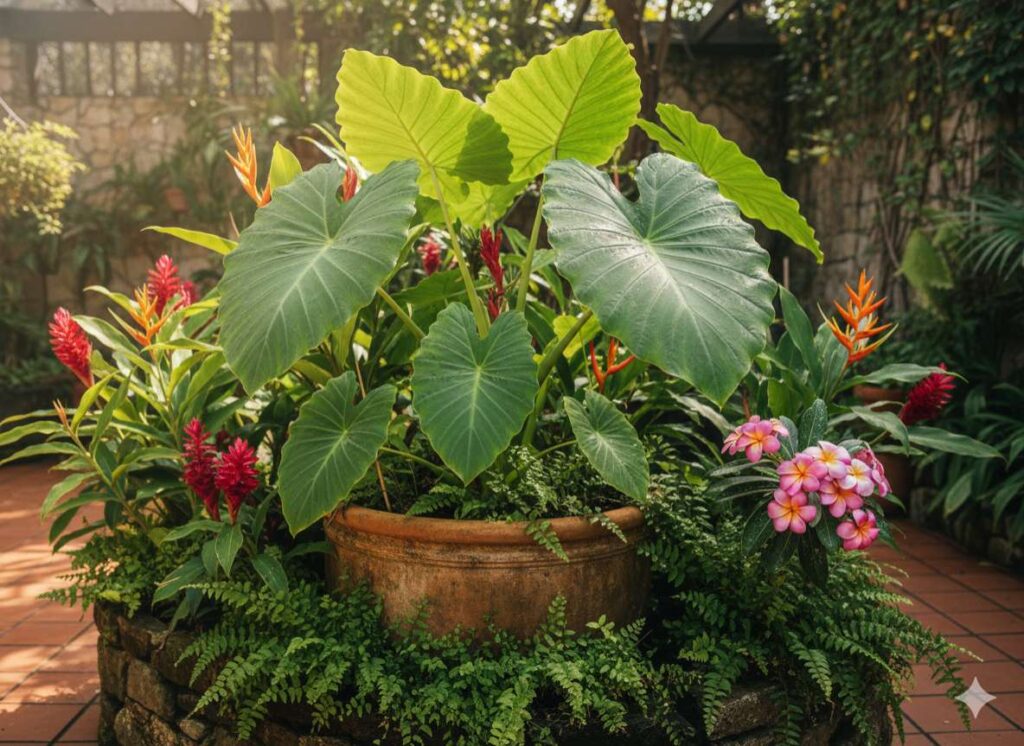
Consider creating a “container constellation” – group containers of different sizes and heights to create layers and depth. Use large containers for statement plants like banana trees or large palms, medium containers for colorful foliage plants, and smaller pots for trailing varieties that soften the edges.
The beauty of container gardening lies in its flexibility. You can rearrange your tropical display throughout the season, moving plants to catch the best light or creating different focal points as plants come into their prime.
5. Introduce Hardy Banana Plants
Nothing captures tropical essence quite like banana plants, and the hardy banana (Musa basjoo) can survive temperatures down to 0°F with proper protection. These magnificent plants can reach heights of 12-15 feet in a single season, creating instant tropical drama with their massive paddle-shaped leaves.
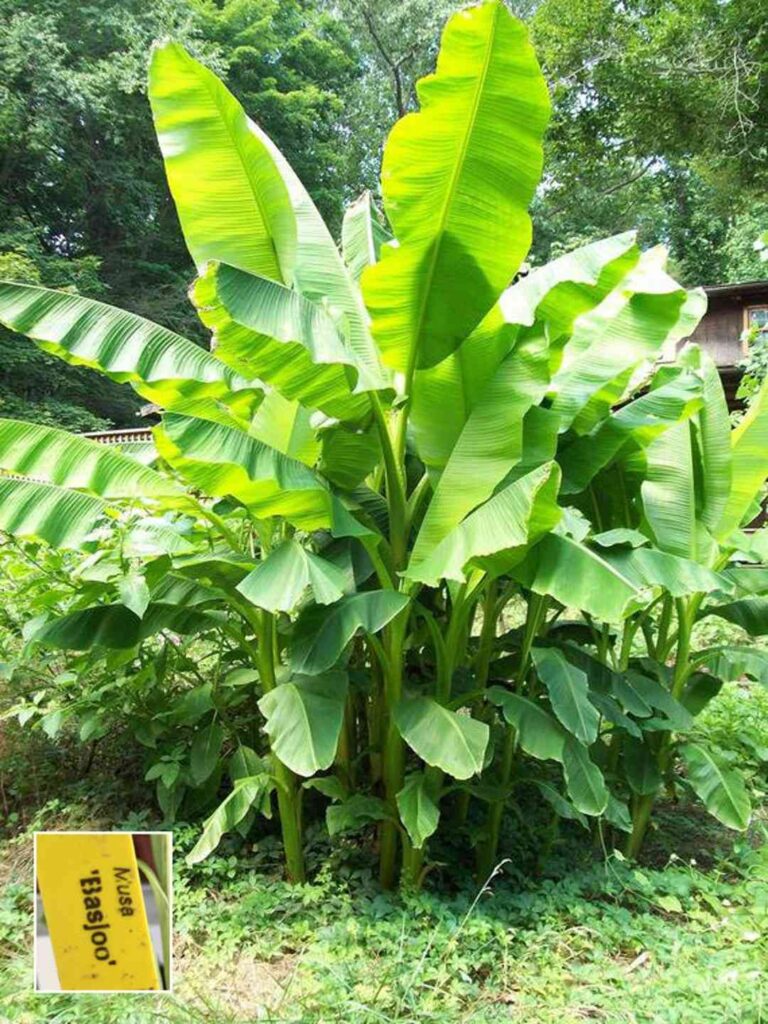
Even if the above-ground portions die back in winter, the root system survives and sends up new shoots in spring. With a protective mulch covering, hardy bananas can thrive in zones 6-9, giving you that authentic tropical jungle look without the tropical climate requirement.
Plant hardy bananas in sheltered locations protected from strong winds, as their large leaves can be damaged by harsh weather. The dramatic foliage effect they create is worth the extra care, and nothing quite matches the satisfaction of successfully growing your own “tropical” bananas in a temperate garden.
6. Install a Water Feature
Water features are essential elements in tropical garden design, creating both visual and auditory appeal. The sound of trickling water instantly transports visitors to a tropical paradise, while the water itself provides humidity for nearby plants and attracts beneficial wildlife.
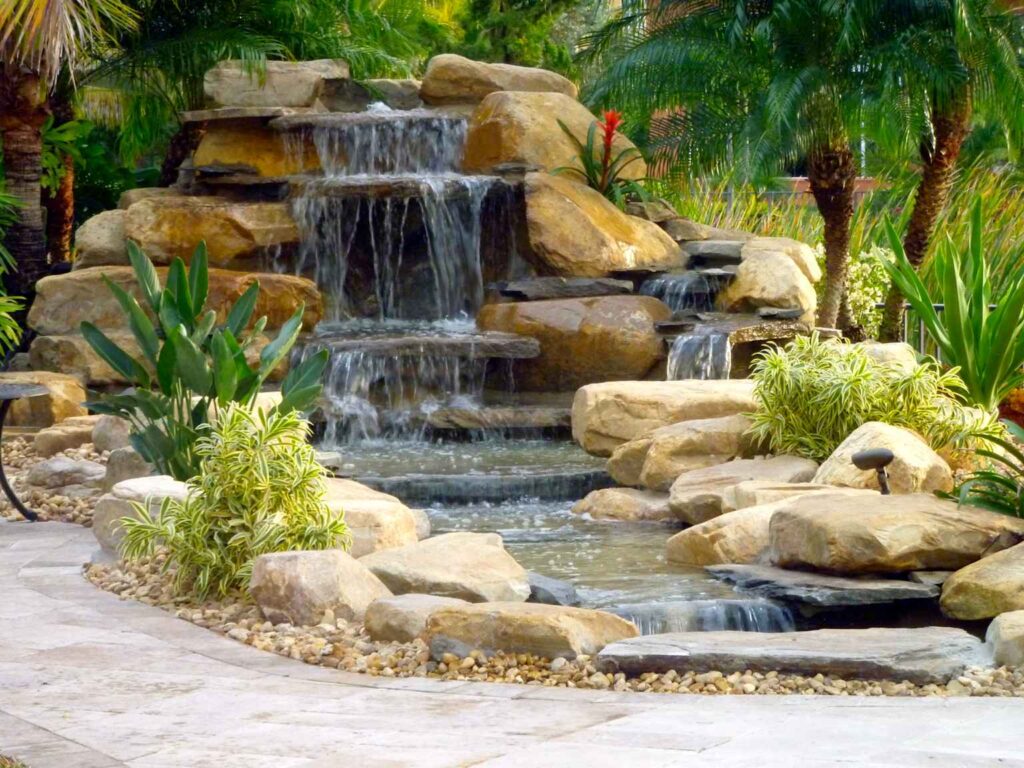
Consider installing a tiered fountain, a small pond with aquatic plants, or even a simple bubbling boulder feature. Water features work particularly well when surrounded by lush plantings – imagine the sound of flowing water combined with the rustle of bamboo and the gentle swaying of palm fronds.
For temperate climates, choose freeze-resistant materials and consider seasonal shut-down procedures. Many gardeners find that even simple water features dramatically enhance the tropical atmosphere of their gardens while providing practical benefits for plant health.
7. Design with Architectural Foliage Plants
Beyond the traditional tropical suspects, many cold-hardy plants offer that coveted tropical look through their dramatic foliage. Fatsia japonica (Japanese aralia) provides glossy, deeply lobed leaves that scream tropical despite being hardy to zone 7.
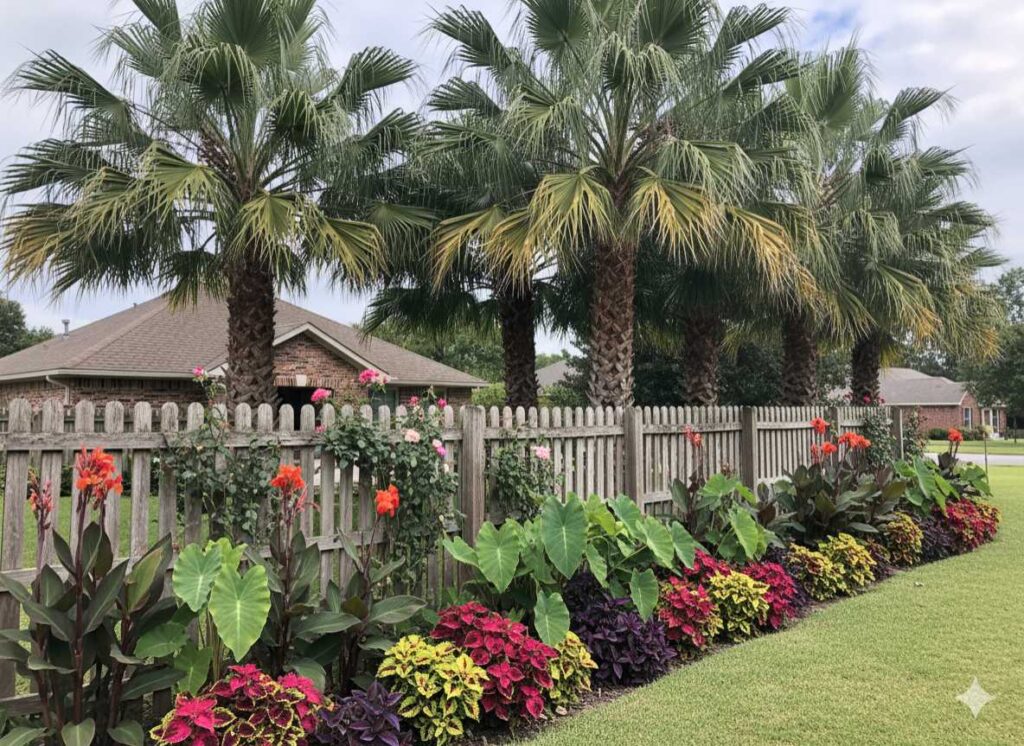
Plants like Euphorbia x pasteurii ‘John Phillips’ create stunning architectural forms with their unique structure and can survive temperatures down to -5°C. These plants bridge the gap between true tropical plants and temperate alternatives, offering exotic appeal with cold-weather resilience.
Look for plants with large, bold leaves, unusual textures, or striking forms. Hostas, while not tropical, can contribute to the layered, lush look when planted strategically beneath taller tropical specimens. The key is creating combinations that feel cohesive and authentically tropical.
8. Create Microclimates
Smart garden design can create pockets of warmth that extend your tropical plant palette. South-facing walls that absorb and radiate heat, protected courtyards, and areas near large bodies of water all create microclimates that can be several degrees warmer than the surrounding area.
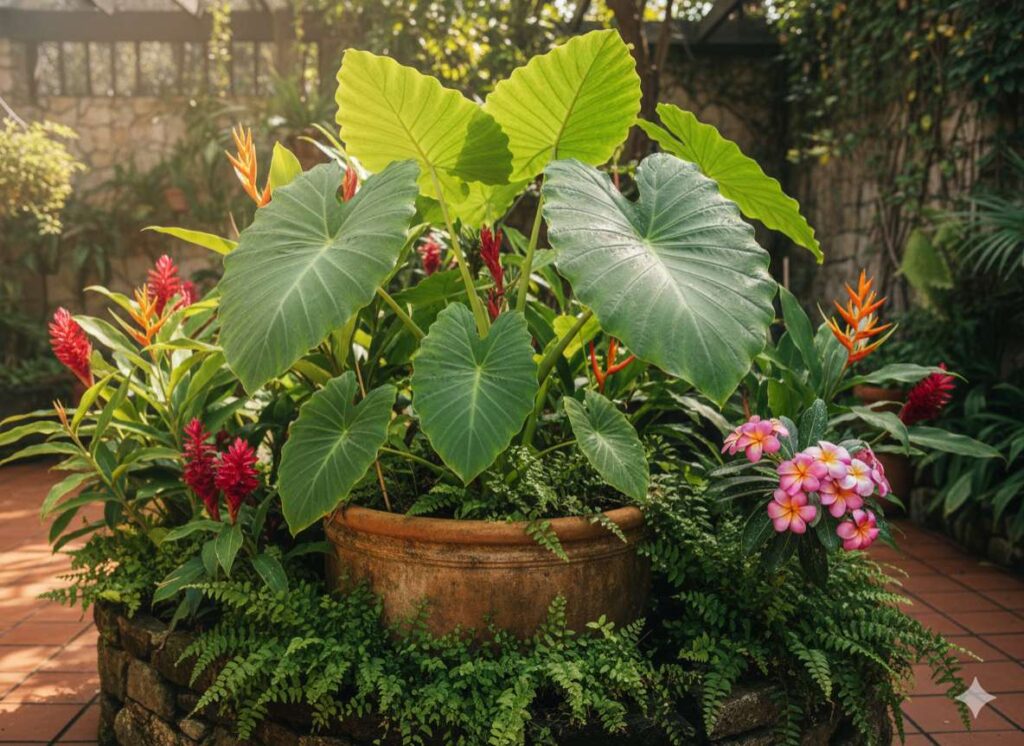
Use these natural advantages strategically. Plant your most tender tropical plants in these protected spots, while using hardier species in more exposed areas. Dense planting also helps trap warm air and exclude cold winter winds, creating additional protection for marginally hardy plants.
Consider installing temporary protection systems like hoop houses or plant wraps for borderline hardy plants. These simple measures can expand your tropical plant possibilities significantly.
9. Master the Art of Succession Planting
tropical garden in temperate climates should look lush throughout the growing season, which requires careful planning and succession planting. Start with cold-hardy perennial tropical plants as your backbone – palms, bamboo, and hardy bananas that return year after year.
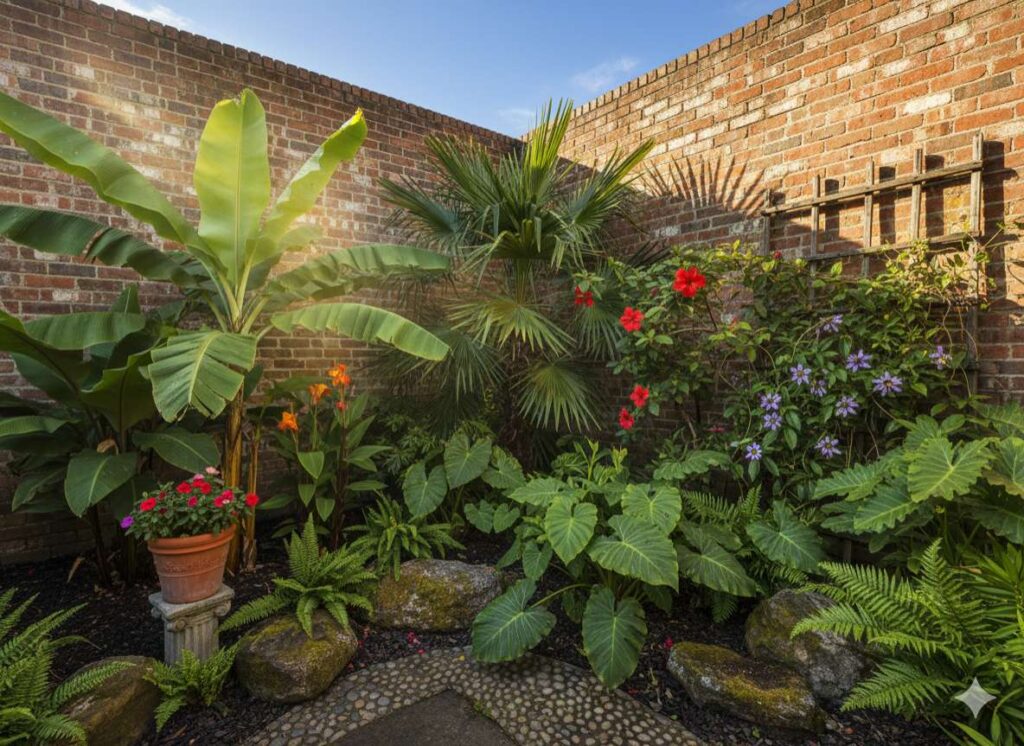
tropical garden in temperate climatesl annuals as the weather warms – colorful coleus, tropical hibiscus, and heat-loving vines that provide seasonal color and interest. This approach gives you the best of both worlds: reliable structure from hardy plants and exciting seasonal variety from tender tropicals.
Plan your planting timeline so different plants peak at different times throughout the season, ensuring your tropical garden never looks sparse or boring. This strategic approach maximizes impact while working within the constraints of your temperate climate.
10. Focus on Texture and Movement
The final touch in creating an authentic tropical garden in temperate climates. Tropical gardens are characterized by constant gentle motion – palm fronds swaying, bamboo rustling, large leaves catching the breeze.
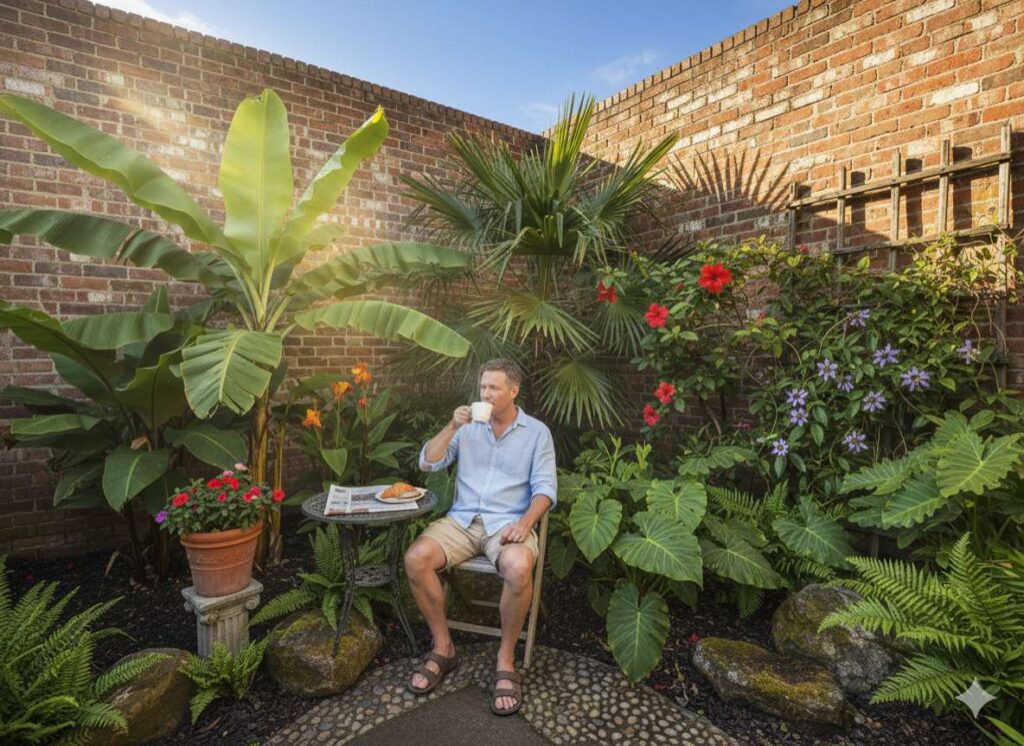
Choose plants specifically for their ability to create this dynamic quality. Ornamental grasses add movement at ground level, while climbing vines on structures create vertical interest and gentle motion. The interplay of different textures – from glossy palm fronds to fuzzy elephant ear leaves to delicate bamboo foliage – creates visual richness that defines successful tropical gardens.
Don’t forget about seasonal interest. Even in temperate climates, you can maintain some tropical appeal through winter by choosing plants with interesting bark, seed heads, or evergreen foliage that continues the story when tender plants have gone dormant.
Bringing Your Tropical Dreams to Life
Creating a tropical garden in temperate climates is entirely achievable with the right approach and plant selections. The key lies in understanding which plants can handle your specific climate conditions while still delivering that coveted tropical aesthetic. From cold-hardy palms that provide essential canopy to dramatic elephant ears that create jungle-like atmosphere, your options are more extensive than you might imagine.
Remember, successful tropical garden in temperate climates about creating the illusion of the tropics while working within your climate’s constraints. Use microclimates to your advantage, embrace container gardening for flexibility, and don’t be afraid to experiment with different plant combinations.
Start small with one or two of these ideas, then expand as you gain confidence and experience. Before you know it, you’ll have created your own slice of tropical paradise that friends and neighbors will admire and envy. The joy of sipping your morning chai surrounded by swaying palms and lush foliage – right in your own backyard – is an experience that makes all the effort worthwhile.
Whether you’re drawn to the architectural drama of bamboo, the bold statements of elephant ears, or the soothing sounds of water features, these ten ideas provide the foundation for creating stunning tropical gardens that thrive in temperate climates. Your tropical garden adventure starts now – which idea will you try first?
Can you really grow a tropical garden in temperate climates?
Yes! With the right plant selection and garden design, it’s completely possible to create a tropical garden in temperate climates. Cold-hardy tropical plants like windmill palms, bamboo, and elephant ears can handle cooler temperatures while giving your garden that lush, exotic look.
What tropical plants grow best in temperate climates?
Elephant Ears (Colocasia and Alocasia)
Hardy Banana (Musa basjoo)
Fatsia Japonica (Japanese Aralia)
Windmill Palm (Trachycarpus fortunei)
Hardy Bamboo (Fargesia rufa or Phyllostachys nigra)
Do tropical gardens require a lot of maintenance?
Not necessarily. Once established, many hardy tropical plants are surprisingly low-maintenance. The key is to choose the right mix of evergreen and perennial tropical-looking species, ensure good soil drainage, and provide occasional feeding and pruning.
How long does it take to establish a tropical garden in a temperate climate?
It usually takes 2–3 growing seasons for a tropical garden to fully mature. Hardy tropical plants like bamboo and palms grow steadily, while annuals and container plants provide instant impact within the first season.

Asif Ali is a gardening blogger with over 2 years of experience writing about garden inspiration, eco-friendly gardening, and beautiful garden destinations. He focuses on practical, sustainable ideas that help beginners create inspiring gardens with ease.